For almost two months, a wave of social unrest has been bringing crowds out onto the streets of several European countries, where the persistent rise in the cost of living has become an increasingly difficult burden to bear.
From Albania through Italy, France, Belgium and Germany to Portugal and Spain, the motives for the protests are not always the same, but one of the main grievances, particularly among younger people, is soaring housing costs, which have been rising since 2010.
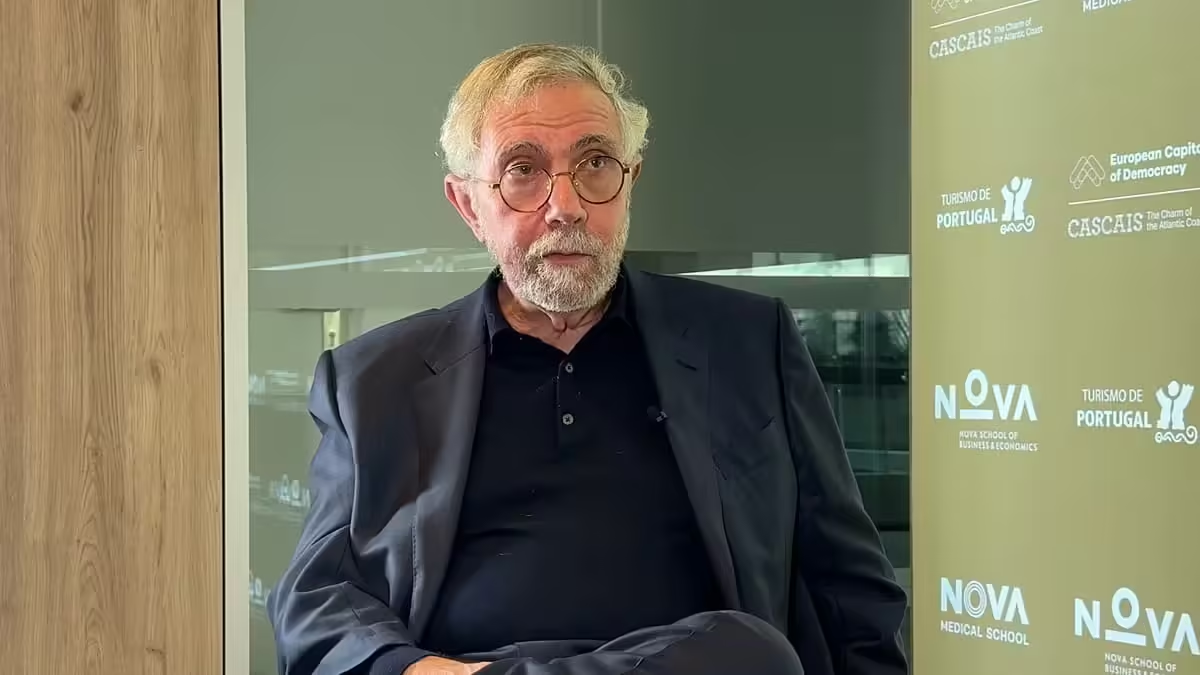
Although the right to housing is enshrined in the Universal Declaration of Human Rights (1948) and is essential to people’s economic security, it was only last September that the European Commission put forward a legislative proposal to address the issue. The problem is not confined to Europe, Paul Krugman tells Euronews, and he supports rent caps as a temporary measure with an immediate impact on speculation.
The American economist says that, from an economic point of view, the issue is simple: build more homes and remove the restrictions that make construction difficult. In places where building has been liberalised, he adds, property prices have fallen significantly.
Even so, Krugman acknowledges that the current state of the housing market is “impossible” to bear. In comments quoted by AFP in coverage of one of the recent demonstrations in Italy, a 21-year-old Italian university student reported that the rent for a single room in Rome has reached €1,200.
Related
In its opinion on the Commission’s housing plan, the European Students’ Union warned that thousands of young people and students are being excluded from higher education by speculative practices. According to the European University Association, students who do not live with their parents spend almost 40% of their monthly income on housing costs.
The Commission itself and the European Parliament also acknowledge that the financialisation of housing, meaning investment in this sector by funds that treat properties as profit-generating assets, is contributing to the sharp rise in prices.
In this context, and given that building new homes in several European countries takes at least three to five years, Paul Krugman opts for a pragmatic approach to the rental market, supporting the introduction of second-generation rent stabilisation models.
The 2008 Nobel laureate in economics notes that his home city, New York, is stabilising rents. He says the mayor, who in European terms would be described as left-wing, is doing so while offering incentives for more construction. Krugman says he is not a purist on this issue, arguing that building and regulation can coexist.
The programme adopted in New York sets a maximum percentage for annual rent increases and offers substantial tax exemptions lasting up to 40 years to private developers in return for a substantial proportion of the new units being subject to rent regulation.
Berlin’s model, extended until 2029, limits rents under new tenancy agreements to 10% above the comparable local average, exempting homes that were first occupied and let after 1 October 2014.
Krugman says that it is an imperfect scheme, but that it will not be needed for very long if construction goes ahead. He suggests it could be needed for just a few years, with benefits felt very quickly.
Related
French economy is ‘too big to be saved’
In the broader economic picture, France’s public debt, which stands at 119% of gross domestic product (GDP), is causing anxiety in the markets. More than a decade on from the sovereign debt crisis, spectres are once again looming over Europe.
Krugman stresses that if France were on a credible path towards fiscal sustainability, it would not need to implement short-term austerity. He sees the French issue as relatively straightforward because he considers the retirement age absurdly low.
The economist expresses concern that France could face a crisis similar to the one Portugal went through between 2010 and 2012. In a scenario where France were to default, it could trigger wider financial instability.
He explains that this would be catastrophic for Europe and that if France experiences a crisis, it could bring down the entire eurozone. Unlike Portugal, a peripheral country, France is the second-largest EU economy and, in Krugman’s view, has gone from being “too big to fail” to being “too big to be saved”.
He warns that it is not possible to bail out an economy accounting for 20% of eurozone GDP because there are not enough resources to do so.
Europe at risk of deindustrialisation
In addition to internal budgetary weaknesses, Europeans are grappling with external shocks caused by US trade tariffs and China’s overproduction, which is flooding the EU market with subsidised products.
Krugman believes that Europe is at risk of deindustrialising to some extent, but he also thinks that its car industry can become competitive again.
There are many challenges ahead during the adjustment period. He observes that the risk is that by the time Europe’s car industry recovers from its past mistakes, it will be too late, because the entire industrial ecosystem will have disappeared.
Therefore, he argues that some buffers will be needed. Krugman, known for defending open markets, makes clear that he still supports free trade but, given today’s geopolitical landscape, recommends playing defence.
He concludes that now, unfortunately, it is time for some temporary protectionism.