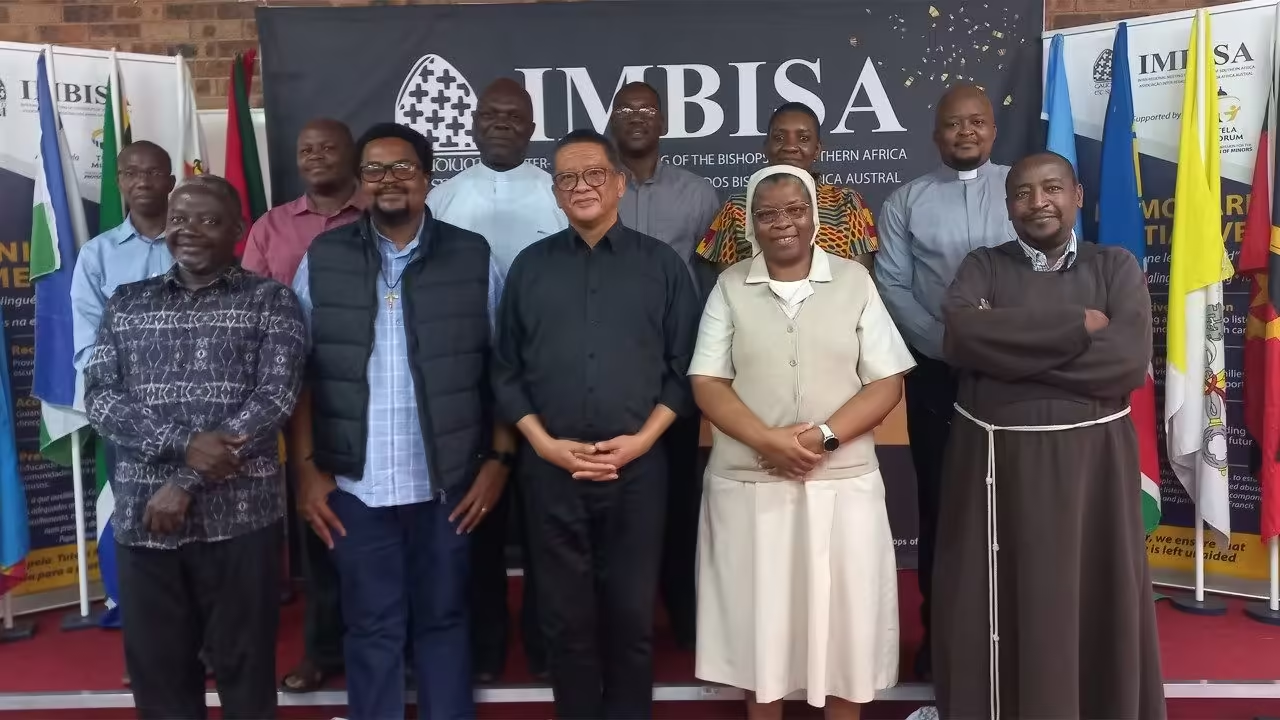

The pastoral challenges of accompanying those in polygamous situations and the wider question of inculturation in the African Church were at the centre of a gathering of theologians representing the six episcopal conferences that make up the Inter-Regional Meeting of the Bishops of Southern Africa (IMBISA): Angola and São Tomé and Príncipe (CEAST), Lesotho (LCBC), Mozambique (CEM), Namibia (NCBC), South Africa, Botswana, and Eswatini (SACBC), and Zimbabwe (ZCBC).
Sheila Pires – Pretoria
At the Padre Pio Retreat Centre in Pretoria, South Africa, participants recently examined how the Church can respond to African cultural realities while remaining faithful to its teaching, particularly on marriage, baptism, and access to the Sacraments.
Study Group 10 of the Synod on Synodality
Speaking to the Southern African Catholic Bishops’ Conference (SACBC) Communications Office, the IMBISA Director explained that the workshop was prompted, in part, by the publication of the final report of Study Group 10 of the Synod on Synodality, which examined the pastoral challenges surrounding polygamy in Africa.
The study was entrusted to the Symposium of Episcopal Conferences of Africa and Madagascar (SECAM), following discussions during the Synod, where African participants highlighted the continuing reality of polygamous marriages and the questions these raise for the Church’s Sacramental and pastoral life.
The resulting document was submitted to the Dicastery for the Doctrine of the Faith before being returned to SECAM for further work and subsequently presented as the final report of Study Group 10.
Fr Enrico Parry said some bishops and Church representatives felt they had not been sufficiently consulted during the process. This prompted IMBISA to invite Sister Ester Lucas, who helped prepare the document, to explain its origins, development and conclusions.
“We thought, what better can we do than get one of those who were involved in authoring this document, Sister Ester Lucas, and interrogate the document together?” he said.
For Fr. Parry, the discussion goes beyond understanding the document. It challenges the African Church to take responsibility for addressing the pastoral circumstances of people living in polygamous unions, particularly in relation to marriage and the reception of the Sacraments.
“We have to deal with it personally. We are the only people who will deal with it,” The IMBISA Secretary General stressed.

The theological workshop in session
Beyond polygamy: the wider question of inculturation
The workshop also examined other cultural practices that present pastoral and theological challenges for the Church in Africa.
Fr Parry cited the SACBC’s ongoing reflection on Ubungoma and the question of respect for ancestors, noting that pastoral ministers frequently face questions from communities seeking guidance on these matters.
He observed that while the bishops examine such questions, priests and pastoral workers on the ground are often expected to provide immediate answers.
Participants at the workshop therefore sought to consider the broader meaning of inculturation, the questions it encompasses and the responsibility for developing appropriate pastoral responses.
Synodality: Listening and discerning together
The workshop combined theological presentations with group discussions using the Conversation in the Spirit methodology, encouraging participants to listen to one another, share experiences and discern possible ways forward.
Contributions include Sr Ester Lucas’s presentation on the SECAM document on polygamy and its pastoral implications, and Fr Ian Chitambo OMI’s presentation on inculturation, its challenges in Africa and the future of African Christianity.
The workshop, which concluded on 6 November, sought to strengthen theological reflection and pastoral discernment among the six episcopal conferences of the IMBISA region.
The theological gathering gave the Church in Southern Africa an opportunity to engage seriously with the realities of its people and take responsibility for addressing the cultural and pastoral questions arising within its own communities.
Source: www.vaticannews.va