

The US midterm elections are usually seen as a domestic political contest. This time, their consequences could travel far beyond Washington. The results will influence everything from global trade and investment to currency markets, energy prices and technology supply chains.
The November 2026 elections will determine whether President Donald Trump retains congressional support or faces a legislature increasingly willing to challenge his economic agenda. For the rest of the world, the outcome could shape the cost of doing business with America and the stability of the global economic environment.
Sohom Banerjee, senior economic and AI expert, told NDTV that the midterms could influence global economic conditions primarily through the balance they establish between congressional restraint and presidential discretion. “Their significance extends beyond the immediate direction of American demand. They will influence the predictability of trade policy, the credibility of fiscal commitments and the allocation of international capital,” Banerjee said.
Also Read | Layoffs Are Rising In Tech, But These Skills Are Helping People Unlock Better Pay
Why US Congressional Control Matters
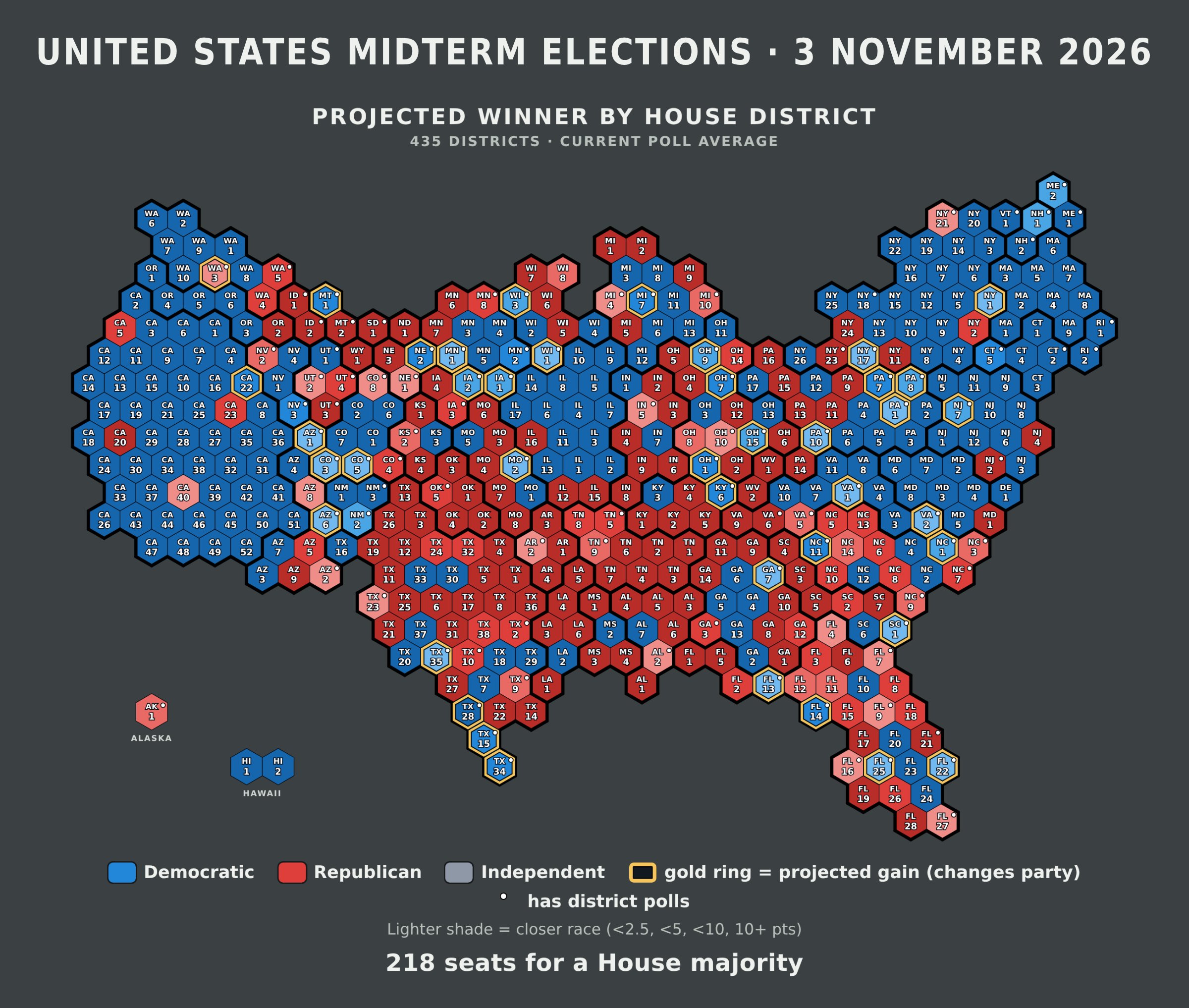
A Republican victory in both chambers of Congress could give the Trump administration greater freedom to pursue tax, spending and regulatory changes. On the other hand, a Democratic takeover of either chamber could intensify oversight, complicate budget negotiations and create new obstacles to legislation.
That does not necessarily mean Trump’s existing policies would disappear. The President would continue to retain substantial executive powers, including his veto. An opposition-controlled Congress could make it harder to introduce new legislation but might struggle to reverse measures already implemented.
Banerjee told NDTV that a divided government could constrain Washington without necessarily making its economic conduct more predictable.
Tariffs Could Keep Global Trade On Edge
Even if Democrats gain congressional control, foreign governments should not assume that American tariff policies will automatically return to earlier conditions.
The Supreme Court’s February ruling curtailed the use of emergency powers for the challenged tariffs. However, other statutory authorities remain available to the administration.
For global businesses, the uncertainty itself can become expensive. A manufacturer planning a new factory may delay investment if future market access remains unclear. Exporters may need additional working capital to manage disrupted orders, while companies dependent on imported components could face higher production costs.
Tariffs can also create winners and losers within the United States.
Protected domestic producers may benefit, but manufacturers using imported inputs could lose competitiveness. Overseas suppliers may face pressure on prices, margins and contractual arrangements. Banerjee told NDTV that restricting imports from a particular country may redirect sourcing without necessarily correcting America’s overall external deficit.
The reason is structural. The US trade deficit also reflects the relationship between national savings and investment.
America’s Borrowing Could Change Global Financing Costs
The bigger economic consequences could emerge from Washington’s fiscal decisions. The Congressional Budget Office estimates the US federal deficit at around $2 trillion in fiscal 2026.
Additional borrowing-financed stimulus could support American consumption and increase demand for imports. That would potentially benefit exporters across Asia and Europe.
But there is another side to the story. Higher borrowing could put pressure on Treasury yieldsincreasing financing costs across international markets. Countries and companies that depend on dollar borrowing could face more expensive debt servicing.
A congressional stalemate would not necessarily solve the problem either. It could block deficit-reducing reforms just as effectively as it obstructs additional spending.
Why The Dollar And US Interest Rates Matter
The dollar remains central to the global financial system. It accounted for 56.7 per cent of global foreign-exchange reserves in the second quarter of 2026. The Federal Reserve maintained its policy-rate range at 3.75-4 per cent on October 28.
Congress does not directly determine monetary policy. However, fiscal decisions influence the economic conditions confronting the Federal Reserve.
Higher US yields can attract international capital towards American assets. This can put pressure on emerging-market currencies and make dollar-denominated borrowing more expensive.
For economies such as India, a weaker currency is not always an advantage. Depreciation can improve export competitiveness in certain sectors, but it also raises the cost of imported oil, machinery and foreign-currency liabilities.
AI And Technology Supply Chains Could See Another Shift
The technology sector is another area where the US midterms could have international consequences. The World Trade Organization reported that AI-enabling goods accounted for 47 per cent of the increase in merchandise trade value in the first half of 2026.
This makes technology policy increasingly important for global trade. Decisions on semiconductor access, research funding, technology partnerships and corporate tax incentives could influence where companies build factories and data centres.
Countries integrated into AI and electronics supply chains could attract new investments. However, tighter technology restrictions or weaker AI spending could expose economies that depend heavily on a narrow set of American customers or suppliers.
For India, this presents both an opportunity and a risk. The country could benefit from supply-chain diversification and increased demand for technology services. But the outcome would depend on investment decisions, infrastructure, skilled labour and policy continuity rather than political developments alone.
Energy And Migration Could Add To Global Uncertainty
Energy policy, sanctions and military spending could also influence global economic conditions. Congress can affect military funding, sanctions legislation and clean-energy incentives, although it cannot directly control physical supply disruptions.
Any increase in oil prices or freight costs would squeeze importing economies and reduce household purchasing power. Migration policy could have similar consequences for the labour market.
Restrictions on skilled workers may affect productive capacity, particularly in technology and professional services. They could also influence corporate spending and international mobility.
Europe, China and North America face different combinations of trade, energy and labour pressures. Lower-income countries could additionally face uncertainty over development finance and external funding.
What The US Midterms Could Mean For India
India has considerable exposure to the American economy. Commerce Ministry figures put merchandise exports to the United States at approximately $92.3 billion in calendar 2025, accounting for 20.75 per cent of India’s total goods exports.
That makes American trade policy particularly important for Indian exporters. Labour-intensive industries could face pressure through narrower margins and less favourable payment terms. IT and professional services depend more heavily on American corporate expenditure and skilled-worker mobility.
Pharmaceuticals and electronics would require sector-specific assessments. Senior economic expert Sohom Banerjee told NDTV that India’s response should focus on securing dependable market access and converting supply-chain diversification into competitive production.
Reliable power, efficient ports, predictable customs procedures and credible origin documentation could become increasingly important for attracting investment. Indian exporters would also need to assess their margins under different tariff scenarios and review contractual exposure.
A weaker rupee may offer some relief to exporters, but higher energy costs, imported inputs and foreign-currency liabilities could offset those gains. Banerjee said that the central question is whether the new political balance reduces the cost of uncertainty or embeds it more deeply into global economic decisions.
Source: www.ndtv.com