





By Rachel Crumpler
Key Takeaways:
- About 4,700 people with mental health diagnoses leave North Carolina state prisons each year.
- Limited staffing and other barriers can make it difficult to coordinate treatment and support as they transition back into their communities.
- A new committee is developing recommendations to improve services and support for people with mental health needs returning to the community.
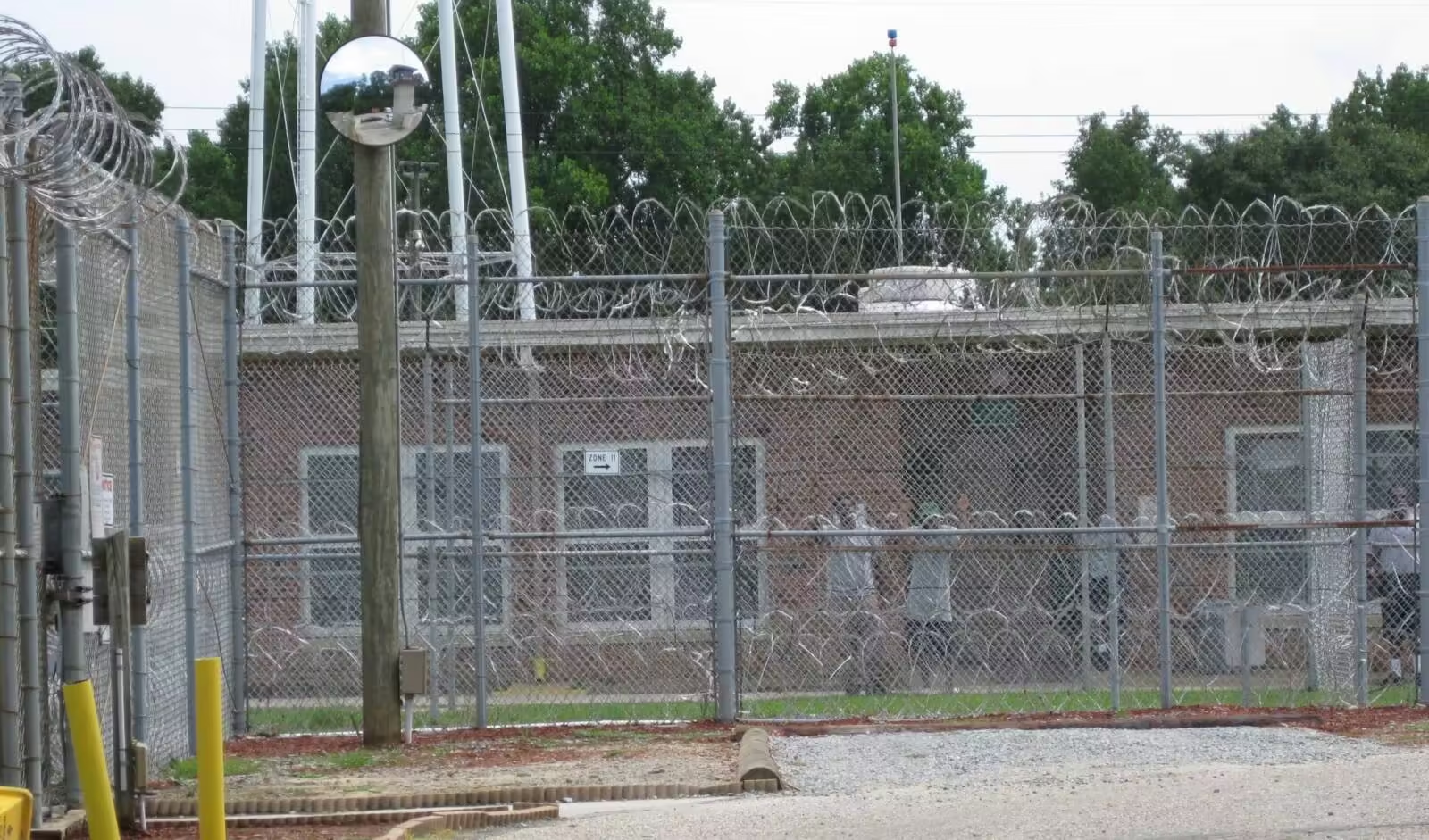
More than one-quarter of North Carolina’s state prison population — just over 9,000 people — has a mental health diagnosis requiring treatment.
The percentage of the prison population on the mental health caseload has more than doubled since 2014, from 12 percent to 26.9 percent now, according to N.C. Department of Adult Correction data.
As the number of people needing mental health care grows, a new committee has been tasked with developing recommendations to improve services and support for them as they return to the community after serving their sentences.
The committee was formed in response to Gov. Josh Stein’s Executive Order No. 33, which directs better coordination between the state’s behavioral health and criminal justice systems and examines gaps in care between the two systems. The 15-member committee met for the first time on Oct. 27.
Lewis Peiper, chief of behavioral health at the Department of Adult Correction, said demand for mental health care among the incarcerated population isn’t leveling off.
“More and more individuals are coming into prison and entering the mental health caseload for ongoing services,” Peiper said.
As of Oct. 20, the department’s mental health staff served 9,031 people out of the state’s prison population of more than 33,000, across 54 prisons.
Since 2020 alone, more than 2,720 people have been added to the caseload.
The growing need presents challenges not only for providing mental health care during incarceration, but also for preparing people to continue treatment after release.
Roughly 4,700 people with mental health diagnoses are released from North Carolina state prisons each year. People leaving prison often face steep hurdles finding housing, employment and health care. Having a mental health diagnosis adds challenges to the transition.
Without a direct connection to care and support, staying stable in the community can be nearly impossible. Some people boomerang right back into jail, prison or the hospital, creating a costly cycle of recidivism. Taxpayers shoulder the bill: Incarcerating one person in a North Carolina prison costs more than $54,000 a year.
The new committee is a subgroup of the state’s Joint Reentry Council — a group of representatives from every state cabinet agency meeting as part of a “whole-of-government” effort to improve reentry success in North Carolina by 2030.
Committee members will meet monthly and plan to develop and discuss initial recommendations for the Governor’s Office and legislature by mid-January, said Steven Mange, the department’s deputy secretary for external affairs and a committee member.
Next meetings, which will be livestreamed:
- Nov. 16, 12:30-2 p.m. — Focus on Speciality Mental Health Supervision Initiative
- Dec. 3, 10:30 a.m.-noon — Focus on High-Priority Reentry Program
- Jan. 11, 3:30-5 p.m. — Discuss interim recommendations
Growing need for mental health care behind bars
When people enter prison to begin serving their sentences, they are screened for various health conditions, including mental health needs.
Peiper said that over the past five years, between 35 percent and 47 percent of men entering prison have been referred to mental health services at intake, based on their responses to mental health screening questions. Among women entering prison, the percentage has ranged from 64 percent to 73 percent.
People can also start receiving mental health services, which are provided at no cost to incarcerated people, at any point during their incarceration. Referrals for mental health services can come directly from the person in need of treatment, prison staff or family members who raise a concern.
Peiper said the Department of Adult Correction offers several levels of care, including inpatient psychiatric treatment at the Raleigh-based Central Prison Healthcare Complex and the North Carolina Correctional Institution for Women Healthcare Complex, specialized therapeutic treatment units, outpatient telepsychiatry clinics and peer support programs.
Most psychiatric care is outpatient, Peiper said. As of Oct. 20, 8,792 people were getting outpatient care, while 239 were in residential or inpatient beds.
More than 30 prisons use telepsychiatry to deliver mental health care, Peiper said, which expands access to care — especially in more rural prisons.
Preparing for release
When people leave prison, continuity of mental health treatment is vital to prevent people from developing mental health crises.
Just 20 social workers at the Department of Adult Correction are responsible for providing aftercare planning for the roughly 4,700 people with mental health diagnoses who leave state prisons each year, said Mary Grillo, the department’s director of social work services. That’s about one social worker for every 235 people needing aftercare planning.
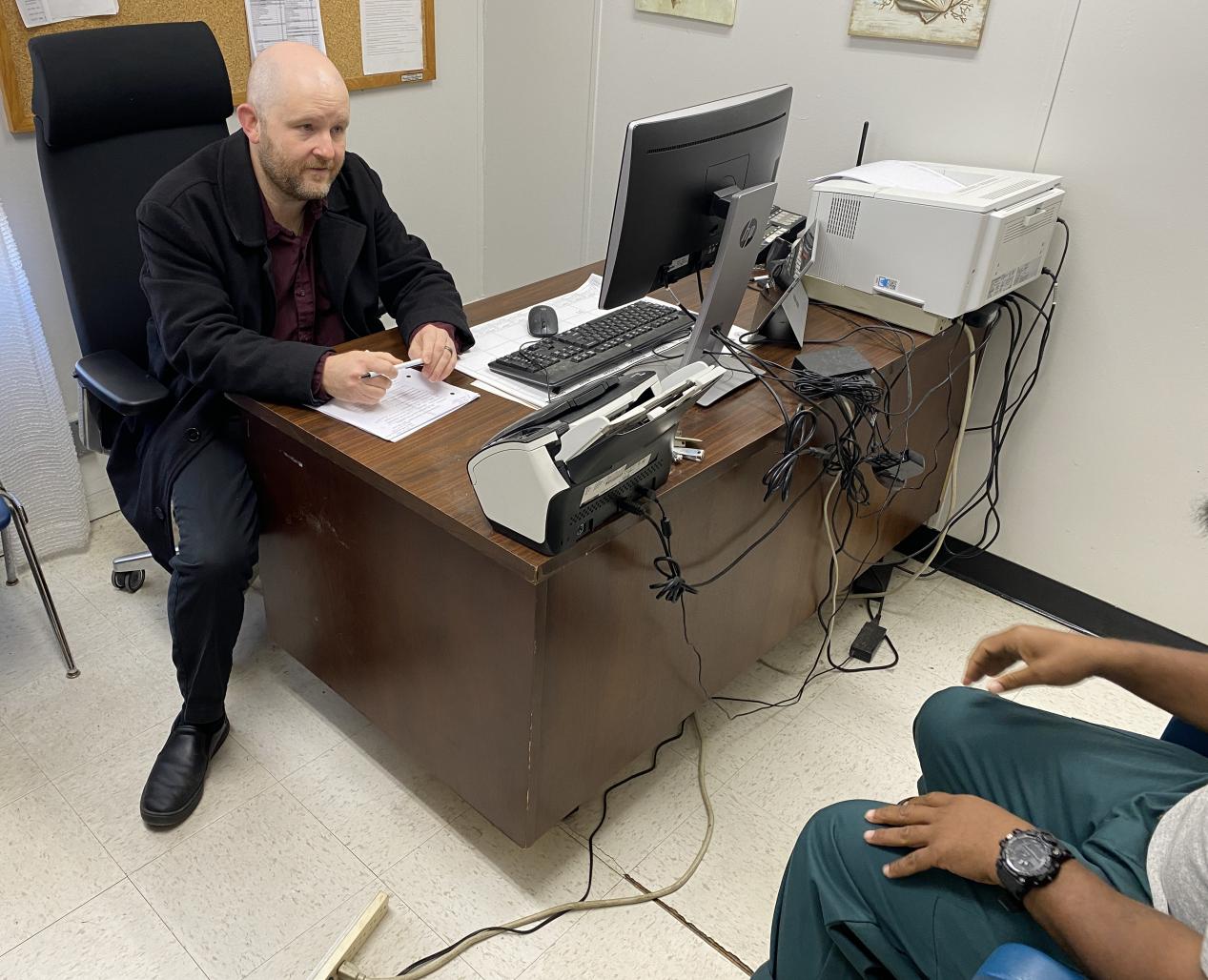
“That doesn’t include all the medical releases, and most social workers cover multiple prison facilities,” Grillo said. “We’ve got 54 prison facilities across the state, and anybody releasing from these prisons could be going to any of the 100 counties in North Carolina.”
Aftercare planning typically starts about 90 days before release, Grillo said. Social workers do needs assessments for housing, transportation and other supports, and they work with the state’s three local mental health management agencies (known as LME-MCOs) to connect people released from prison to behavioral health care services in their communities.
Social workers also help eligible people apply for Medicaid up to 90 days before their projected release — with the goal of it being active on the day they walk out the door. Grillo said about 70 percent of people released from prison are now leaving with active Medicaid, with many qualifying through Medicaid expansion. That coverage helps them pay for needed care.
Grillo contrasted her staffing in the Department of Adult Correction to the N.C. Department of Public Safety’s Division of Juvenile Justice and Delinquency Prevention, which has 21 social workers responsible for aftercare planning for about 150 juveniles leaving youth development centers each year — a fraction of the volume of adult prisons.
“They are better staffed than we are and are able to provide more comprehensive services,” Grillo said. “We could definitely use more social workers.”
More extensive care coordination is provided through DAC’s High-Priority Reentry Program, which launched in 2023. The program serves adults leaving state prisons with a psychotic disorder who had been incarcerated for violent felonies or sexual offenses, or people who were taking powerful antipsychotic medications. The program’s intent is to serve the riskiest, high-need releases with enhanced pre- and post-release care management.
In 2025, DAC made 149 referrals to the program.
Grillo said one key to helping people’s mental health after release is providing direct, person-to-person handoffs to care in the community. Some of the best results involve “in-reach,” when behavioral health providers meet with incarcerated people before their release to build trust and so that once they leave, there’s a familiar face waiting for them. That gives them a higher likelihood of keeping appointments once they’re out, she said.
One program that does this well, Grillo said, is FIT Wellness, part of the North Carolina Formerly Incarcerated Transition Program. Ted Zarzar is the program’s medical director and a psychiatrist who works in the prison system and in the community.
Since FIT Wellness launched in August 2022 to serve people with serious mental illness, Zarzar said the program has enrolled more than 300 people in four counties — Wake, Orange, Durham and New Hanover. He said the show rate for the first behavioral appointment scheduled within seven days of someone’s release from prison is roughly 67 percent.

Zarzar said community health workers with their own experiences of incarceration are key to the program’s success, helping establish trust among FIT Wellness participants.
“Once they get into the community, in their first 48 hours, I’m gonna put that cell phone in their hand, and they’re gonna see my face,” said Shawn Baker, a FIT Wellness community health worker. “It’s also a warmer face, too, that breaks the mistrust in which a lot of our clients face in the carceral system. Upon their first visit, I’m gonna be there working in between the doctors as well as the psychiatrists, and making sure they feel comfortable in the clinic and making sure that all their needs get met.”
The Department of Adult Correction is also assigning specially trained probation/parole officers in all 100 counties to provide extra support to people under community supervision who have serious mental health needs. These officers carry smaller caseloads — up to 40 people with serious mental illness — so they can provide more intensive case management and develop expertise in handling complex cases. Standard probation/parole officers typically carry caseloads of around 60.
Ashlee Barnes, behavioral health administrator for the Division of Community Supervision who oversees Specialty Mental Health Supervision statewide, said about 165 specialty mental health probation/parole officers are supervising about 2,100 people across the state — representing about 3 percent of the more than 75,000 people under probation, parole and post-release supervision.
“While we have them under supervision, we want to make sure that we’re doing our part to connect individuals to the treatment and other resources that they need in the community to hopefully improve their overall well-being and deter any future recidivism that may be a direct result of unmanaged behavioral health symptoms,” Barnes said.
A broader effort to improve reentry outcomes
The committee’s focus specifically on people leaving prison with mental health needs is part of a larger state effort to improve success among formerly incarcerated people. North Carolina is one of eight states participating in Reentry 2030, a national initiative sponsored by the nonprofit, nonpartisan Council of State Governments.
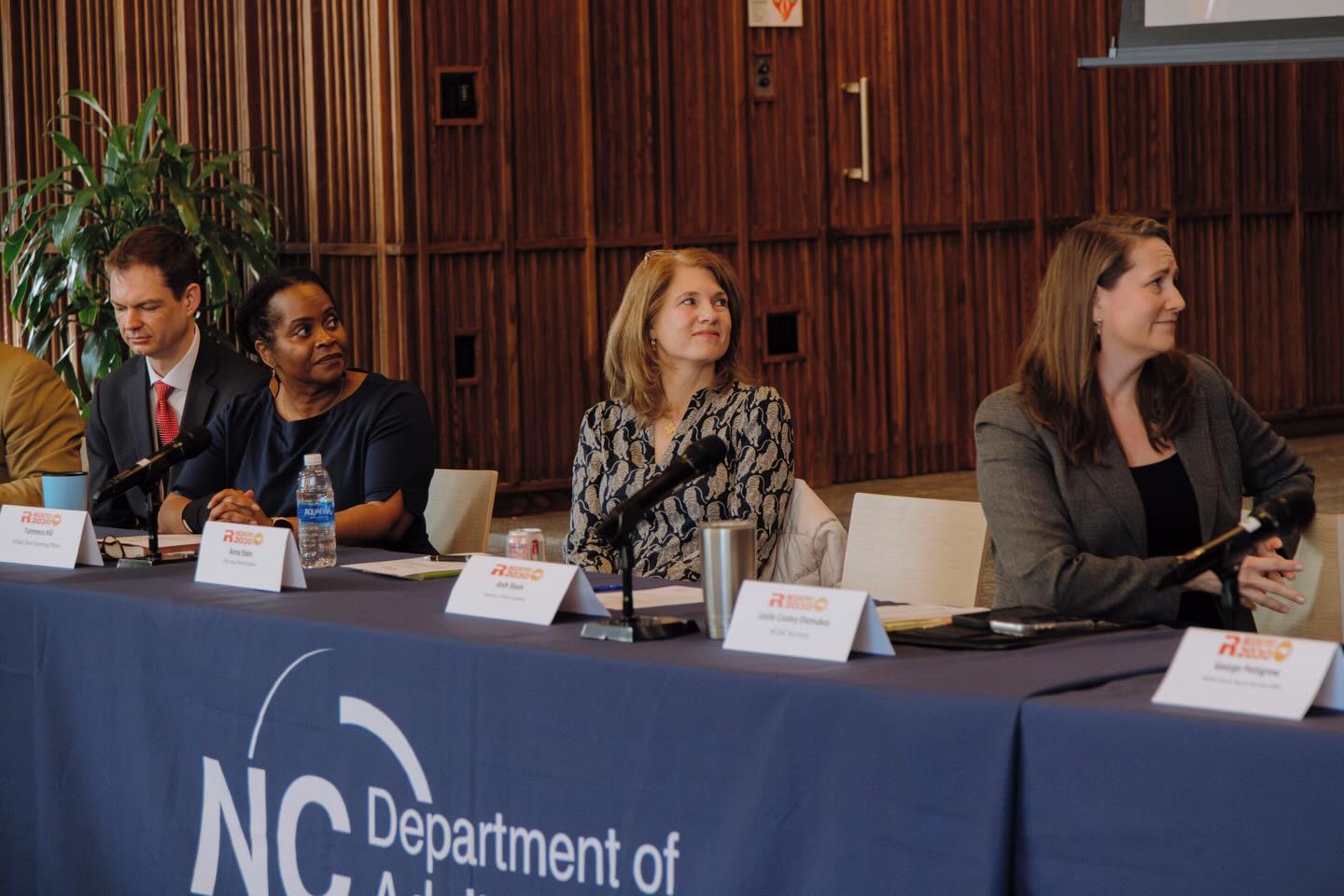
North Carolina’s plans to improve reentry support by 2030 are outlined in a strategic plan, which includes more than 100 strategies.
In July, the Joint Reentry Council identified 10 strategies it plans to prioritize, including expanding access to state identification cards before release, increasing peer support programs inside prisons, and creating an advisory group of previously and currently incarcerated people to advise the department on reentry initiatives.
“We feel fairly confident we can get these done in the next two fiscal years,” George Pettigrew, senior deputy secretary of rehabilitation and reentry at the Department of Adult Correction, said at the July Joint Reentry Council meeting about the prioritized goals.
This article first appeared on North Carolina Health News and is republished here under a Creative Commons Attribution-NoDerivatives 4.0 International License. 
Source: www.northcarolinahealthnews.org