
Donald Trump has called it “most important in our lifetime” while senator Bernie Sanders says it’s the most important “in modern American history”. Barack Obama called it a “circuit-breaker” and the “last, best chance” to rein in the president.
In any case, all eyes will be on the United States on Wednesday Australian time for the 2026 midterm elections. Will Americans use the day as a referendum on Donald Trump’s second term? Will Democrats see a clean sweep of Congress?
It’s all up in the air.
When do polls open, and close?
Polls open at 10pm AEDT Tuesday in New York and other east coast states and will open in the rest of the US throughout the evening. (That’s 9pm Tuesday 3 November in AEST zones, 9.30pm in South Australia, 8.30pm in Northern Territory and 7pm in Western Australia.)
Voting locations begin closing around 10am on Wednesday AEDT, with anyone still in line to vote at that time eligible to cast a ballot.
A batch of US states will continue to close on the hour until 5pm in Sydney.
Which are the key races to watch?
Many one-time Republican strongholds are up for the taking.
Election watchers will be laser-focused on Senate races for seats currently held by Republicans in Texas, Kansas, Maine, Iowa, Ohio and Alaska, as well as close races to hold on to Democratic seats in Michigan and Georgia. Major names such as James Talarico and Abdul El-Sayed are aiming for a win to flip red seats blue.
Every House seat, 435 of them, is up for re-election as sitting members are forced to defend their turf every two years.
And 39 governorships, powerful positions to lead states, are also up for election.
Australia’s ABC will be running coverage of the election all day on free-to-air television and YouTube.
When will we know what has happened?
It depends. Some states report results quickly, while others are notoriously slow. Many states are allowed to process absentee and mail-in ballots before election day so they can report a tranche of results soon after polls close. But some can’t. (There’s a theme here!)
In short, here’s when some key races close on Wednesday, in AEDT:
11am: Georgia Senate
11.30am: Ohio Senate, House
12pm: Maine Senate, Florida House
1pm: Kansas Senate; Texas, Iowa, Michigan Senate, House
5pm: Alaska Senate
It’s difficult to predict when those races will be called.
Democrats tend to vote earlier in greater numbers and Republicans tend to vote more in-person, so those early results can present a type of blue mirage that comes into sharper focus as the counts continue.
What it will come down to is margin. If Democrats win a comfortable number of seats in the House, Senate or both, it could be an early result.
But if key races are tight, and the final breakdown of Congress comes down to a seat or two, the US – and keen onlookers the world over – could be in for a long week. Recent elections have seen some seats take hours to call, or even days.
What’s at stake in the midterms?
Both chambers of the US Congress, the House and the Senate are in play. If either switches hands it will be a major thorn in Trump’s side and sharply influence his agenda. If both do, he’ll be in peak lame duck territory.
The House is needed to pass any legislation, and has the ability to open investigations or demand testimony from Trump officials. A Democratic Senate could also stymie any nominations for positions such as the supreme court.
Many of those decisions come down to a simple majority vote.
But even with Democrats in charge, things such as impeachment remain relatively far-fetched as they need to meet a much higher barrier with a simple majority in the House but a two-thirds majority in the Senate.
What’s election day like in the US?
It’s not like in Australia.
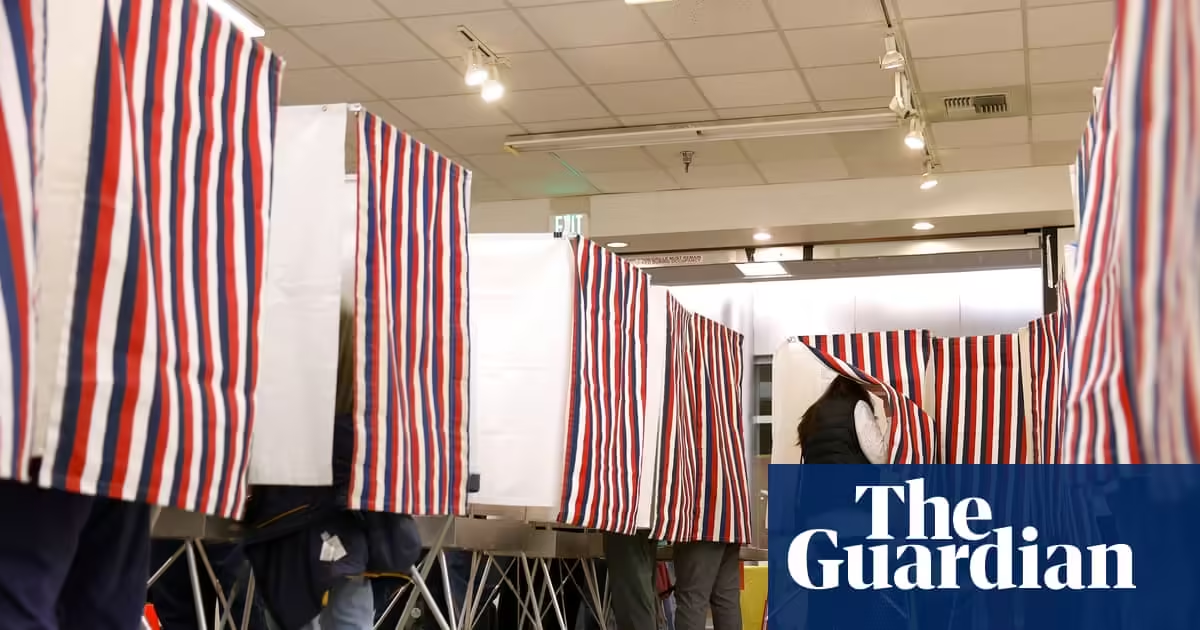
Voters turn up and vote in person throughout the day which can present difficulties for anyone working a nine to five job. Polls generally close between 7pm and 9pm local time.
Election rules also differ in every state. Some states allow early voting and some don’t. Eight states mail ballots to all eligible voters, some allow mail-in ballots for absentee voting with no reason needed, while others require an excuse to request one.
Voters are also required to be registered to vote, and many states require that registration before election day. Voter ID laws are also another barrier, with some states requiring a photo ID, some an ID with just a name and others no ID at all.
It’s a complex endeavour, and midterms usually see far fewer people vote than during presidential elections. Turnout is generally between 40 to 50% of eligible voters, although early voting this year is significantly higher than during the last midterm election.
Source: www.theguardian.com