
EL PASO, Texas (KFOX14/CBS4) — Employees at two of El Paso’s largest school districts are facing significant increases in health insurance premiums, with some educators considering leaving their jobs altogether as the rising costs threaten to take hundreds of additional dollars from their monthly paychecks.
Socorro Independent School District trustees approved a new health insurance funding plan Thursday that will require some employees to pay nearly $4,500 more annually for coverage beginning with the 2027 plan year.
Meanwhile, employees at El Paso Independent School District are also preparing for substantial premium increases beginning in January, with union representatives warning that some employees may no longer be able to afford health insurance.
Socorro ISD employees face hundreds more in monthly premiums
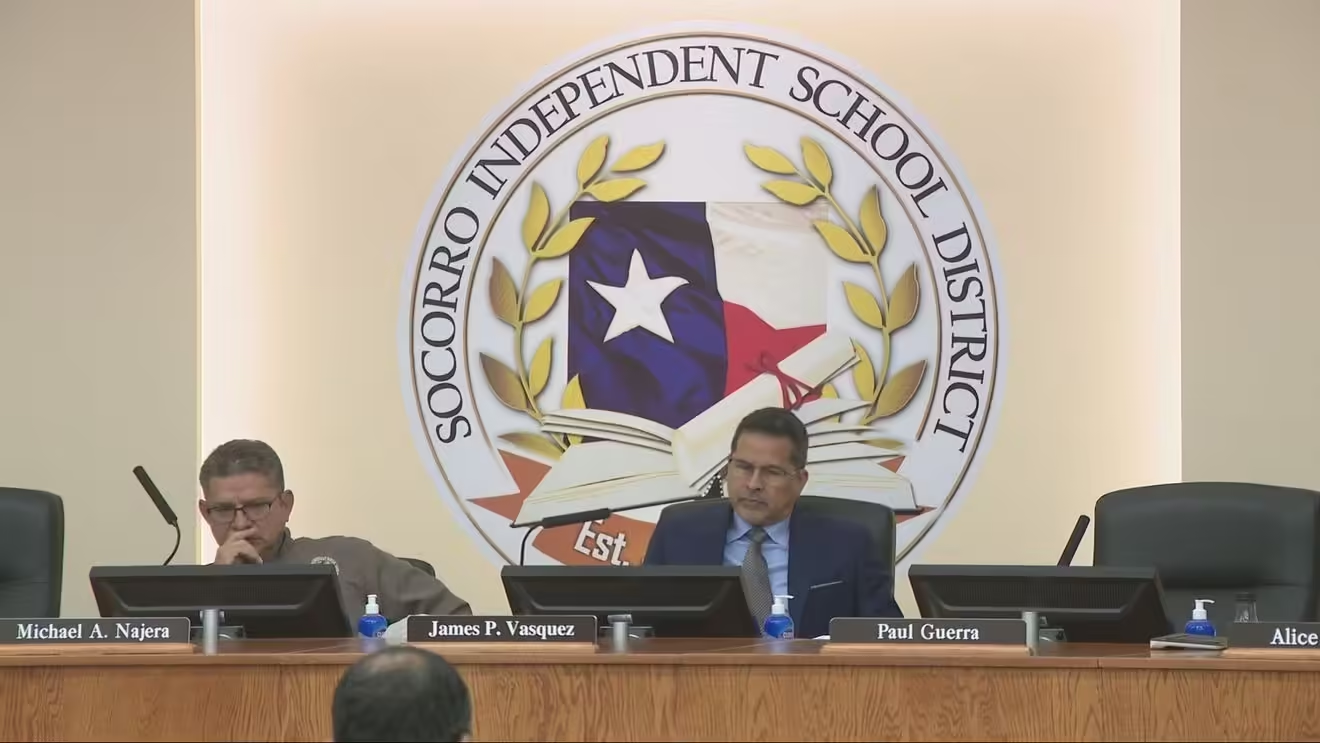
During a special board meeting Thursday, SISD trustees approved Option A, a health insurance funding plan that keeps the district’s contributions unchanged while increasing the amount employees pay.
Under the approved option, monthly employee premium increases will vary depending on coverage:
- Employee only: $150.06 more per month, or $1,800.72 annually.
- Employee and spouse: $265.99 more per month, or $3,191.88 annually.
- Employee and children: $229.75 more per month, or $2,757 annually.
- Employee and family: $374.86 more per month, or $4,498.32 annually.
The decision comes just two days after voters rejected Proposition A, a voter-approval tax rate election that would have generated approximately $49 million in additional funding for the district.
SISD officials said one of the proposed health insurance funding options relied on approximately $5 million in Proposition A revenue to help offset rising costs.
Julia Spencer reports on how school district employees in El Paso are dealing with insurance hikes
RELATED: Socorro ISD employee health insurance cost rise +$100 a month after tax proposal rejected
However, without that funding, administrators recommended Option A as the most financially sustainable approach.
“I mean, plain and simple and saying it as directly as it’s been said to me many, many, many times, is, you know, we need to live within our budget,” SISD Board President Michael Najera said during the meeting.
Najera expressed disappointment over Proposition A’s failure but emphasized that the district must continue addressing other financial priorities, including student safety, technology, transportation and HVAC repairs.
He questioned whether redirecting $5 million from those needs toward employee health insurance would ultimately harm students.
“We still need to fund our safety and security measures. We still need to fund our technology. We still need to fund our buses. We still need to have HVAC repairs,” Najera said.
During the meeting, Mario Carmona, SISD’s director of employee benefits and risk management, explained that rising healthcare costs and insurance claims are placing additional financial pressure on the district’s self-funded health insurance program.
According to Carmona, the projected difference between the 2026 and 2027 health plan costs is approximately $8 million.
When administrative fees, stop-loss claims and other healthcare expenses are included, the total funding need could approach $10 million.
Without corrective action, Carmona warned, the health plan’s financial challenges could continue growing.
“I know that there is a financial burden that is going to be placed on our employees,” Carmona acknowledged.
District officials also revealed that SISD has spent millions of dollars supporting its employee health insurance fund in recent years.
Chief Financial Officer David Solis said the district had transferred approximately $44 million from its general fund to support the health plan through 2025.
With additional transfers during 2026, that amount is expected to reach approximately $50 million.
RELATED: Early vote tally shows El Paso voters reject Socorro and Ysleta ISD Prop A taxes
District leaders said continuing to subsidize the health plan would make it more difficult to rebuild the district’s fund balance and address other operational needs.
The approved plan is intended to cover projected health insurance expenses without requiring additional contributions from the district’s general fund.
Officials also acknowledged that the decision means departing from a previous goal of limiting annual employee premium increases to 25%.
Despite the increases, district officials said they are working to identify additional healthcare options that could reduce employees’ out-of-pocket expenses.
Carmona said SISD is exploring expanded partnerships with University Medical Center and its Nearside Clinic, including additional services, lower-cost treatment options and potential pop-up clinics.
The district is also considering expanding healthcare access in the Socorro area, although no opening date has been established for a possible new location.
The district plans to provide employees with in-person, online and telephone assistance to help them review their coverage options during the open enrollment period from November 6 through December 6.
You can watch Socorro ISD’s special baord meeting below:
El Paso ISD employees also facing major increases
Across town, El Paso ISD employees are dealing with similar financial concerns as they prepare for new health insurance rates taking effect in January.
Kara Cervantes, president of El Paso’s American Federation of Teachers union, told KFOX14/CBS4 that some employees are seeing their monthly premiums double or even triple.
Cervantes said the union began reviewing preliminary premium increases over the summer, but the financial impact is becoming more apparent as employees go through open enrollment and calculate what their future paychecks will look like.
“There’s employees who cannot afford insurance anymore,” Cervantes said.
She explained that some employees have compared their current paychecks with what they expect to take home after the new premiums are deducted.
For some, she said, the difference is comparable to losing several years of earnings growth.
“I’ve had some that they just, they cannot afford, they won’t have anything left on there to take home after the insurance is taken out,” Cervantes said.
The union president said hourly employees and workers who insure spouses or children are among those facing particularly difficult financial decisions.
She also expressed concern for employees and families who rely on health insurance for chronic illnesses, prescriptions or specialized medical treatment.
According to Cervantes, some employees are now considering whether they can continue working for the district.
“There’s veteran teachers that have been teachers for, you know, 20 plus years that now just are really considering leaving, retiring early, going to another profession,” Cervantes said.
Union questions years without gradual premium increases
Cervantes said part of EPISD’s current situation stems from the district not gradually increasing employee health insurance premiums over several years.
She estimated that employee premiums had remained largely unchanged for approximately five years before the recent increases.
Rather than making smaller annual adjustments, Cervantes said employees are now facing substantial increases all at once.
“We did not increase employee premiums for the last, I wanna say five years. And that should have been done in increments,” Cervantes said.
She also connected the situation to EPISD’s broader financial challenges.
The district has spent months addressing a budget crisis that led to financial exigency, staffing reductions and other cost-cutting measures.
Cervantes said employees are already dealing with heavier workloads following staffing cuts, making the additional insurance expenses even more difficult to manage.
The union has been communicating with EPISD administrators and board members about possible alternatives.
Cervantes said she has urged district leaders to explore additional funding sources, local healthcare partnerships and other resources that could help employees afford coverage.
She acknowledged that the union cannot directly negotiate insurance premium rates but said it will continue advocating for financial relief.
While EPISD and SISD are dealing with different financial circumstances, Cervantes said rising health insurance costs are affecting school employees across Texas.
She pointed to insufficient state education funding as one factor contributing to the financial challenges facing school districts.
“We talk about it all the time. State funding for public schools is not where it needs to be, not even close,” Cervantes said.
The union president warned that rising insurance premiums, combined with stagnant wages and increasing workloads, could make it more difficult for school districts to retain experienced educators.
For employees at both districts, the increases represent another major expense at a time when many families are already managing tight household budgets.
Cervantes said the union intends to continue pressing district leaders for solutions.
“It’s a huge burden for their employees,” Cervantes said, adding that the union does not want the issue forgotten until employees receive some form of relief.
Sign up to receive the top interesting stories from in and around our community once daily in your inbox.
Source: kfoxtv.com