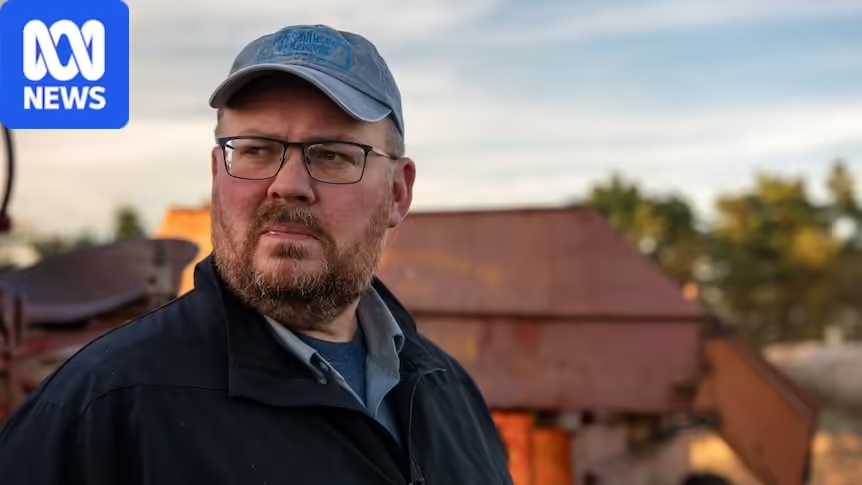

Fred Levendofsky has worked the land in rural Kansas for over half a century and, like many farmers here, was a fervent backer of Donald Trump.
Across the US Midwest, agricultural communities have been among the president’s most fierce defenders and reliable supporters.
Mr Levendofsky, 68, voted for Trump twice. But not a third time.
Fred and Nick Levendofsky have seen their business hurt by the Trump administration’s policies. (ABC News: Daniel Pannett)
Two years into Mr Trump’s second term, Mr Levendofsky’s overheads have skyrocketed.
The cost of diesel fuel he uses to run machinery and vehicles has increased by about 40 per cent from last year, and his total expenses have jumped by about 50 per cent.
“How long are we going to wear the cost? Things need to change,” he told the ABC from his 360-hectare farm in the state’s north.
This week they did. Kansas has sent senators from Mr Trump’s Republican Party to Washington DC for almost a century but at Tuesday’s midterm elections, Democrat Adam Hamilton claimed a comfortable win.
The GOP incumbent, a physician worth an estimated several million dollars, faced criticism after the New York Times reported that his former obstetrics practice sued more than 700 patients over unpaid bills and charged an 18 per cent annual interest rate. Mr Marshall called the report a “hit job”.
Riding a wave of anti-Trump sentiment around the country, the Democrats surged in both the House and Senate races to take control of both chambers. It means the president’s political life over the final two years of his term will be more difficult, although he still wields immense power.
While Kansas had been safe Republican ground for generations, the GOP top brass had grown increasingly worried that Marshall would lose, and pulled out all the stops to save the seat.
The party was so concerned that the president made a last-minute stop in the state last weekend to hold a rally in a bid to energise his base.
Adam Hamilton celebrates at his official election night party on Tuesday. (Reuters: Nathan Howard )
It did not work. Marshall still lost convincingly to megachurch pastor Adam Hamilton, who pitched himself as a religious centrist who would bring decency back to American politics.
“I’m glad a message was sent to Washington,” Fred Levendofsky told the ABC.
“I’d hope that now we’ve got a Democrat-controlled House and Senate, that they’ll work with Mr Trump and hopefully they can sort this oil issue.”
While soaring fuel costs are something being felt around America — and it is particularly pronounced in Kansas — people’s gripes with the federal government run much deeper.
Adam Hamilton is the first Democratic senator from Kansas in almost a century. (ABC News: Daniel Pannett)
The war in Iran, and the billions of dollars being spent on it, is deeply unpopular. The president’s multiple trade wars have also hurt the farmers’ bottom lines.
“Things just aren’t working; it’s all going backwards,” said Nick Levendofsky, Fred’s 41-year-old son and a senior member of the state’s farmers’ union.
International demand for Kansas cereal, grain and beef has withered due to China’s retaliation to the Trump administration’s sweeping tariffs.
The White House announced an assistance package for farmers late last year, in which they could claim one-off lump sums of cash linked to the size of your land.
“It doesn’t matter how big a farm you are, you’re dealing with these same issues and I think more than anything, they want a market. We want trade, not aid,” Nick said.
“Frankly, the government cheques aren’t even covering our losses and, you know, farmers have lost over $US40 billion ($58.3 billion) since the trade war started. It’s probably way more than that now.”
Nick Levendofsky is sceptical about the state of the US under Donald Trump. (ABC News: Daniel Pannett)
Both the Levendofskys were once registered Republicans but are hoping their state’s new blue senator can help stand up to the president.
“As far as what he did when we did the war with Iran, I do think they needed to stop the business with nuclear weapons, I understand that and I understand we all as Americans probably need to shoulder some of that expense,” Fred told the ABC.
“It’s been very difficult. A year ago, we were able to harvest the grain, and at the end of the year I was able to sell the grain and pay my expenses on the crops and had a little bit left over.
“This year, that’s not going to happen. We probably won’t even have enough to pay for the fertiliser and seed because of the increase in fuel.”
Nick Levendofsky shows off some of the farm’s produce. (ABC News: Daniel Pannett)
While Kansas commands just six Electoral College votes in presidential contests, the erosion of Donald Trump’s rural base — collapsing by more than 30 percentage points in some precincts — suggests the party can be competitive in territories once deemed hostile.
The Democrats flipped Republican Senate seats in Texas, Maine, North Carolina, South Carolina, Ohio and Iowa this week, and remain a chance to take two more in Mississippi and Alaska, too. Many of those states had backed the Republicans for decades.
“We’re looking at a political opportunity for the Democrats not seen since Watergate,” said Matt Harris, a political scientist at Park University in neighbouring Missouri, told the ABC.
“Kansas now has to be on the table in the presidential elections.
“And I think this shift speaks to the dissatisfaction about the economy, the dissatisfaction about some of the choices that the Trump administration has made, but I think for Democrats, the message is: what are you going to do to deliver on those things?”
During his victory speech on Tuesday evening, Mr Hamilton wore a pin that said “love one another” and stressed the need for people on both sides of politics to work together.
Buoyed by the party’s historic victory this week, Democrats are hoping they can continue to build momentum in the state when the next presidential election is held in two years’ time.
“Kansas doesn’t have a lot of Democrats, but people wanted change,” Nick Levendofsky said.
“We want moderate politics back in Kansas, and I think the senator-elect is hopefully going to deliver on that.”
Donald Trump still enjoys support in the Midwest, but many voters have turned on him. (ABC News: Daniel Pannett)
Source: www.abc.net.au