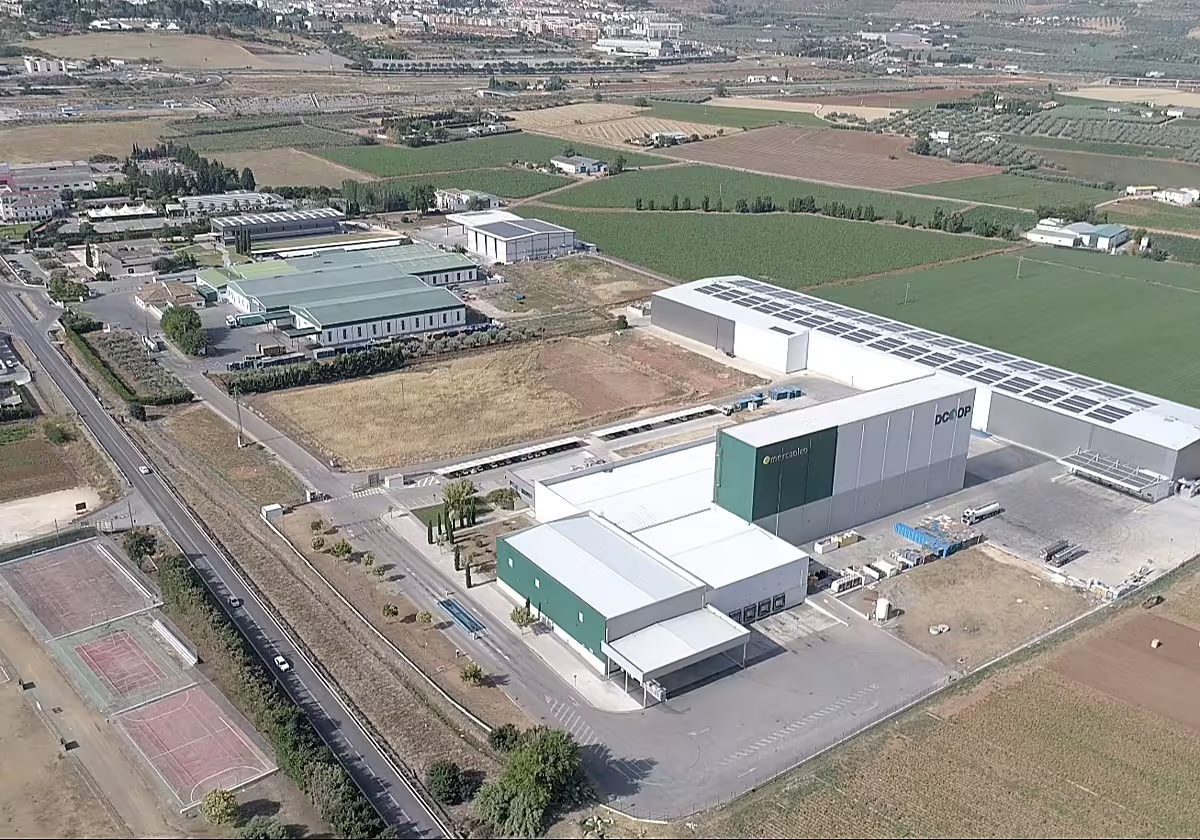

Dcoop is a giant. It is the world leader in olive oil production with an average of 200,000 tons per year and one of the … largest packagers also internationally. Last year it achieved a turnover of more than 1,420 million euros (600 million exclusively from its oil business). Its partner for the 50% acquisition of Deoleo, Acesur, owner of Coosur, recorded sales worth more than 1.1 billion euros in 2025 and declares to market one in every five bottles of olive oil consumed in Spain. The company they bought, Deoleo, in turn, had a turnover of more than 820 million euros last year.. In total, therefore, the closing of the operation that was known on the night from Wednesday to Thursday, involves, in addition to the enormous cooperative chaired by Antonio Luque and which has its headquarters in Antequera, three companies that bring together nearly 3.5 billion in sales.
This does not mean that the operation is a three-way merger or an integration of Dcoop and Acesur to buy Deoleo. In fact, in the statement sent by the Malaga conglomerate itself, it states that once the operation is completed, the project will entail the reorganization of Deoleo’s assets between Acesur and Dcoop to guarantee full compliance with the regulatory and competition requirements applicable in the different markets. What this means is that Acesur and Dcoop will divide Deoleo’s businesses in a way that favors their respective interests and, at the same time, complies with the regulations of the different markets in which they operate. And it also means that Dcoop, currently the world’s leading oil producer, will see its pre-eminence in the sector at a global level reinforced.
Injection of 400 million annually in sales to each one?
Doing some simple mathematics, if Deoleo’s turnover last year exceeded 820 million euros, dividing the figure 50% implies an injection of 410 million to the annual sales of Acesur and Dcoop, which means that the former would exceed 1,500 million euros, while the Antequerana would exceed 1,800 million. Although this is an extrapolation that may be far from reality, since each company can incorporate the businesses that best fit them or that fit the requirements established by the competition organizations that vary this additional injection in sales.
It is also an assumption that may be far from what happens due to the simple fact that the intention, the objective, of Acesur and Dcoop is to increase the consumption of olive oil in the world and, therefore, the growth of the size of the market.
Dcoop, for example, in the United States is co-owner of Pompeian, the leader in the olive oil market in that country and has great export power. In turn, Acesur has both offices and warehouses in the most strategic markets such as the United States, the United Kingdom, China, Brazil, the Middle East and the Czech Republic, although its greatest strength is its national market share, in Spain.
International structure
Deoleo’s assets must fit into these geographical structures of the two companies, which include the Bertolli brand, of Italian origin and which has the greatest weight in sales for the group, given that it is distributed throughout the world; Carapelli, also aimed at the Italian market; as well as Carbonell, number one in Spain; but also Hojiblanca, Sasso, Koipe, Friol or Maya.
We will still have to wait a few months before knowing the outcome of the operation, the distribution, how each one’s structure looks like. Because the transaction still has to be approved by the general meeting of Deoleo shareholders and has also to be assessed by the competition agencies of the countries in which all these companies operate. It will be once all these procedures have been completed that Dcoop and Acesur will have to finish agreeing on the true terms of the purchase of Deoleo and its distribution.
Source: www.diariosur.es