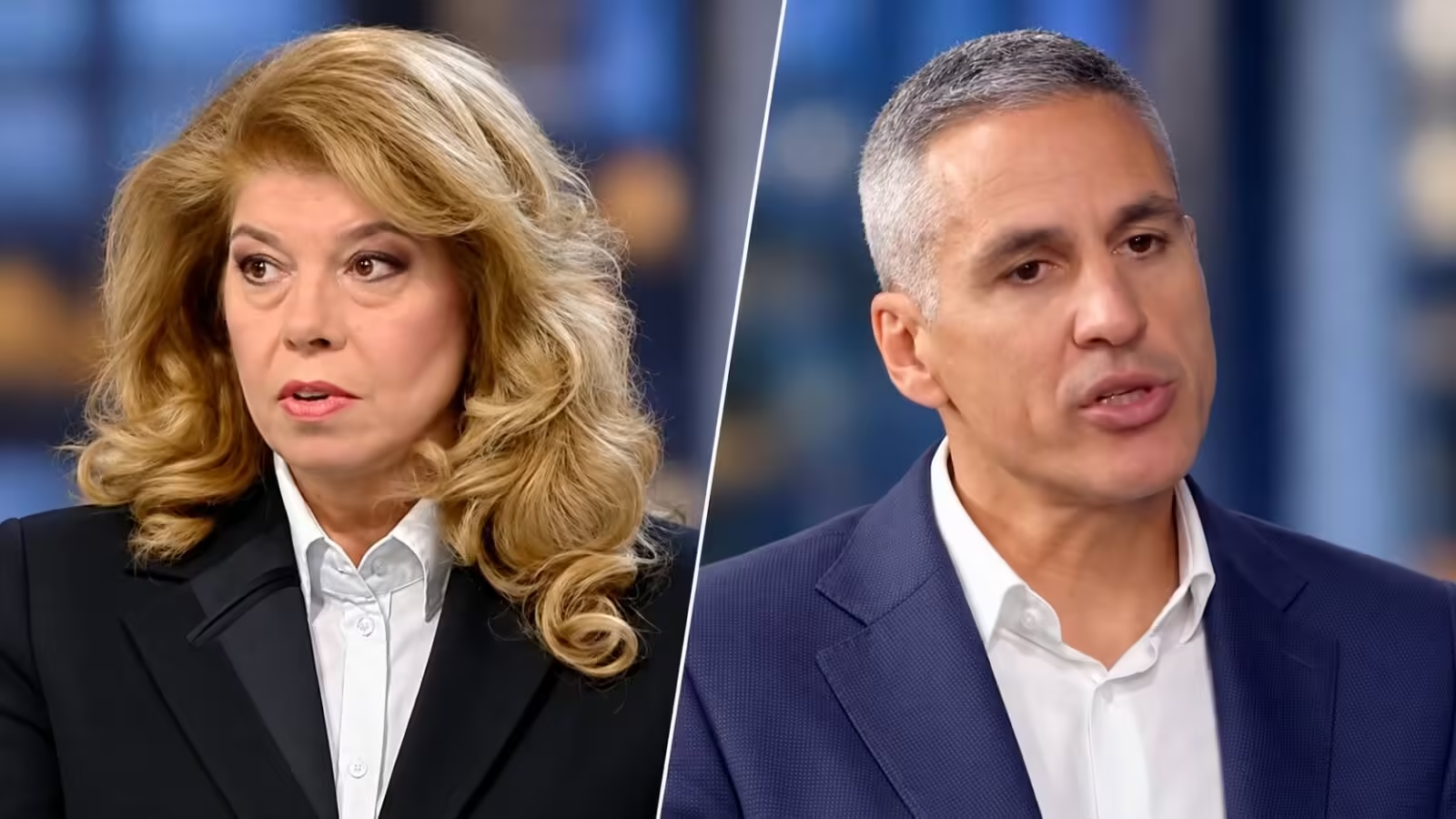

Bulgarians are voting in a presidential run-off on Sunday, 1 November, in an election that could influence the country’s approach to Russia, Ukraine and security in the Black Sea. The contest comes as attacks on commercial shipping intensify and questions grow over Bulgaria’s position within the European Union and NATO.
Acting President Iliana Yotova faces Andrey Gyurov, a former caretaker prime minister supported by pro-European reformist parties, after neither candidate secured an outright victory in the first round on 25 October.
According to the official results reported by the Bulgarian News Agency, Yotova received 34.76 per cent of the vote, against 31.95 per cent for Gyurov.
The narrow difference has left the outcome uncertain, particularly given exceptionally low participation. Approximately 23 per cent of eligible voters cast ballots in the first round, the lowest turnout recorded in Bulgaria’s post-communist presidential elections.
The second round will therefore depend not only on the preferences of voters whose candidates were eliminated, but also on whether either campaign can mobilise those who abstained.
Polling stations opened at 7am local time and are scheduled to close at 8pm. Official results are expected on Monday.
Two approaches to Russia and Ukraine
The election has become a contest between competing approaches to Bulgaria’s relationship with Moscow and its responsibilities as an EU and NATO member.
Yotova, a former Member of the European Parliament, assumed the presidency earlier this year following the resignation of Rumen Radev, who subsequently became prime minister after his Progressive Bulgaria party won April’s parliamentary election.
Although standing as an independent, Yotova has the backing of Radev’s governing party. She favours maintaining Bulgaria’s European orientation while improving relations with Russia and supporting the removal of sanctions.
During the campaign, she repeatedly emphasised negotiations as the means of ending Russia’s war against Ukraine.
Gyurov, an economist and former deputy governor of Bulgaria’s central bank, represents a different approach.
During his period as caretaker prime minister, his administration signed a security cooperation agreement with Ukraine. He has supported continued assistance to Kyiv and argued that Bulgaria should take a clearer position within NATO and EU security discussions.
As The Associated Press reported, Gyurov has criticised the government for its reluctance to identify Russia explicitly as the aggressor in the war.
The disagreement reflects a broader division in Bulgarian politics between those prioritising dialogue with Moscow and those advocating stronger alignment with European security policies.
Black Sea attacks bring security to the centre of the campaign
Recent attacks on commercial vessels in the Black Sea have given the election an immediate security dimension.
Bulgaria occupies a strategically significant position on NATO’s south-eastern flank, with its ports and maritime infrastructure exposed to developments in a region increasingly affected by the war.
Commercial shipping attacks have resulted in deaths and missing crew members, raising concerns about navigational security and the potential for further escalation.
As EU Today previously reported, NATO and European governments have been examining how to strengthen maritime protection amid growing threats to shipping.
The two presidential candidates differ over the appropriate response.
Yotova has proposed a meeting involving all six Black Sea littoral states to discuss a moratorium on hostilities. Gyurov argues that Bulgaria must identify the security threat more explicitly and work more closely with its NATO partners.
Their disagreement is particularly relevant because the Black Sea is no longer solely a regional military concern. Disruption to shipping affects commercial transport, energy infrastructure and European supply chains.
The domestic political balance
The election also carries consequences for Bulgaria’s internal political institutions.
Under the Bulgarian constitution, the president represents the country internationally, serves as commander-in-chief of the armed forces, chairs the Consultative National Security Council and can return legislation to parliament for reconsideration.
However, responsibility for conducting foreign policy rests primarily with the government.
A victory for Yotova would leave the presidency aligned politically with Radev’s administration, potentially reducing institutional disagreements over foreign and security policy.
A Gyurov victory, by contrast, would establish an opposition-backed presidency capable of challenging government decisions and presenting a different position in national security discussions.
The electoral arithmetic remains complicated. Nationalist candidate Kostadin Kostadinov secured 12.55 per cent in the first round, while Gyurov performed particularly strongly among Bulgarians voting abroad, receiving almost 46 per cent of overseas ballots.
Whether those voting patterns persist will help determine the result.
For Brussels, the significance extends beyond the identity of Bulgaria’s next president. The election will indicate whether public support is moving towards greater accommodation with Moscow or a more explicit commitment to the EU’s existing approach to Russia and Ukraine.
The outcome will not automatically change Bulgaria’s formal international commitments. It could, however, alter the political influence exercised by the presidency at a time when Europe’s Black Sea security policy faces increasing pressure.
Views: 1,405
Source: eutoday.net