
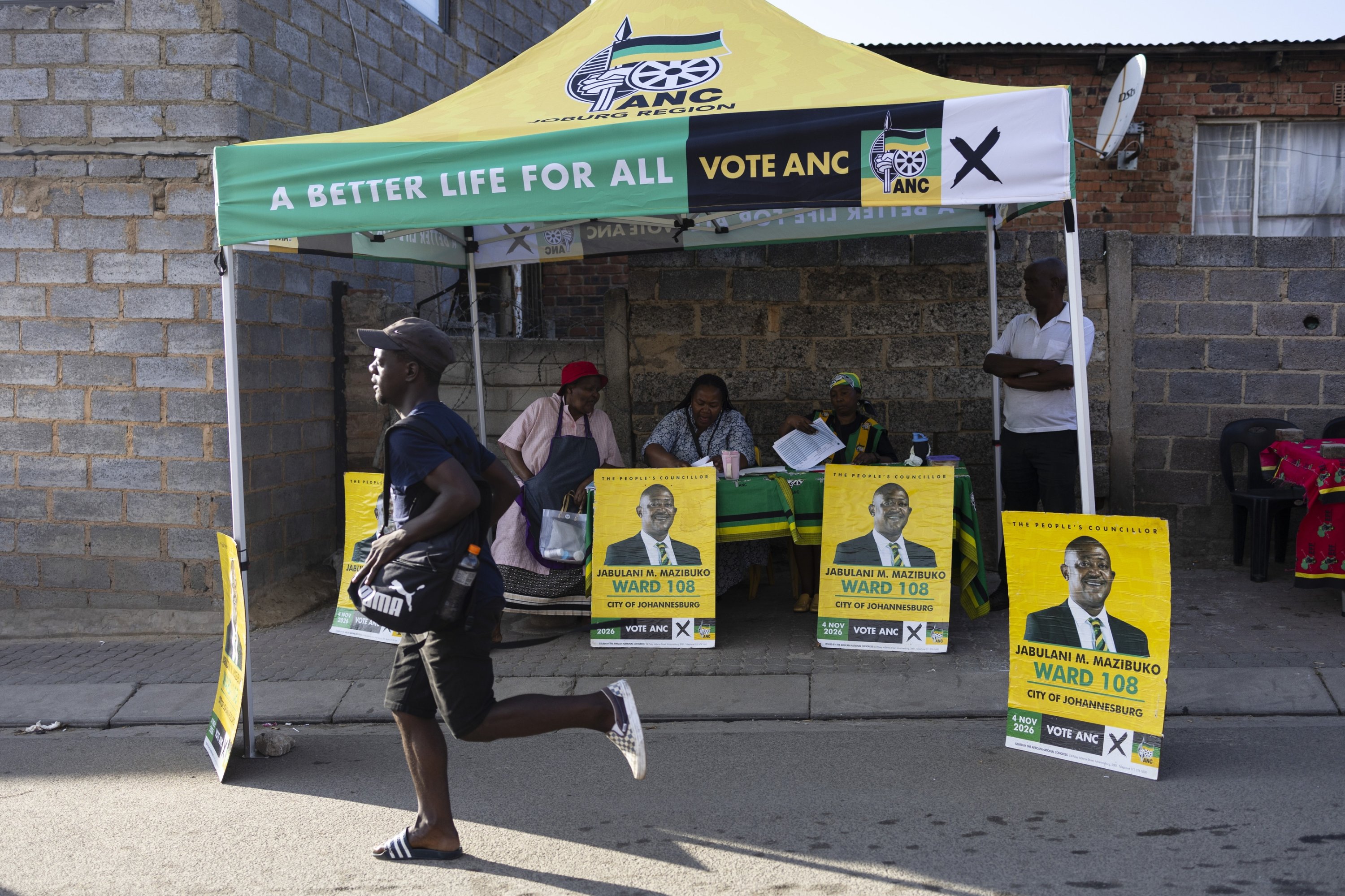
South Africa’s African National Congress (ANC), which led the struggle against apartheid under Nelson Mandela and dominated national politics for three decades, has suffered another major electoral setback, losing ground to opposition parties in local government elections.
With approximately 98% of voting districts counted on Saturday, the ANC had secured 30.95% of the national vote, according to the Electoral Commission of South Africa (IEC). The result represents a steep decline from the 45.6% it received in the 2021 local elections and reinforces the party’s declining support since losing its parliamentary majority in the 2024 general election.
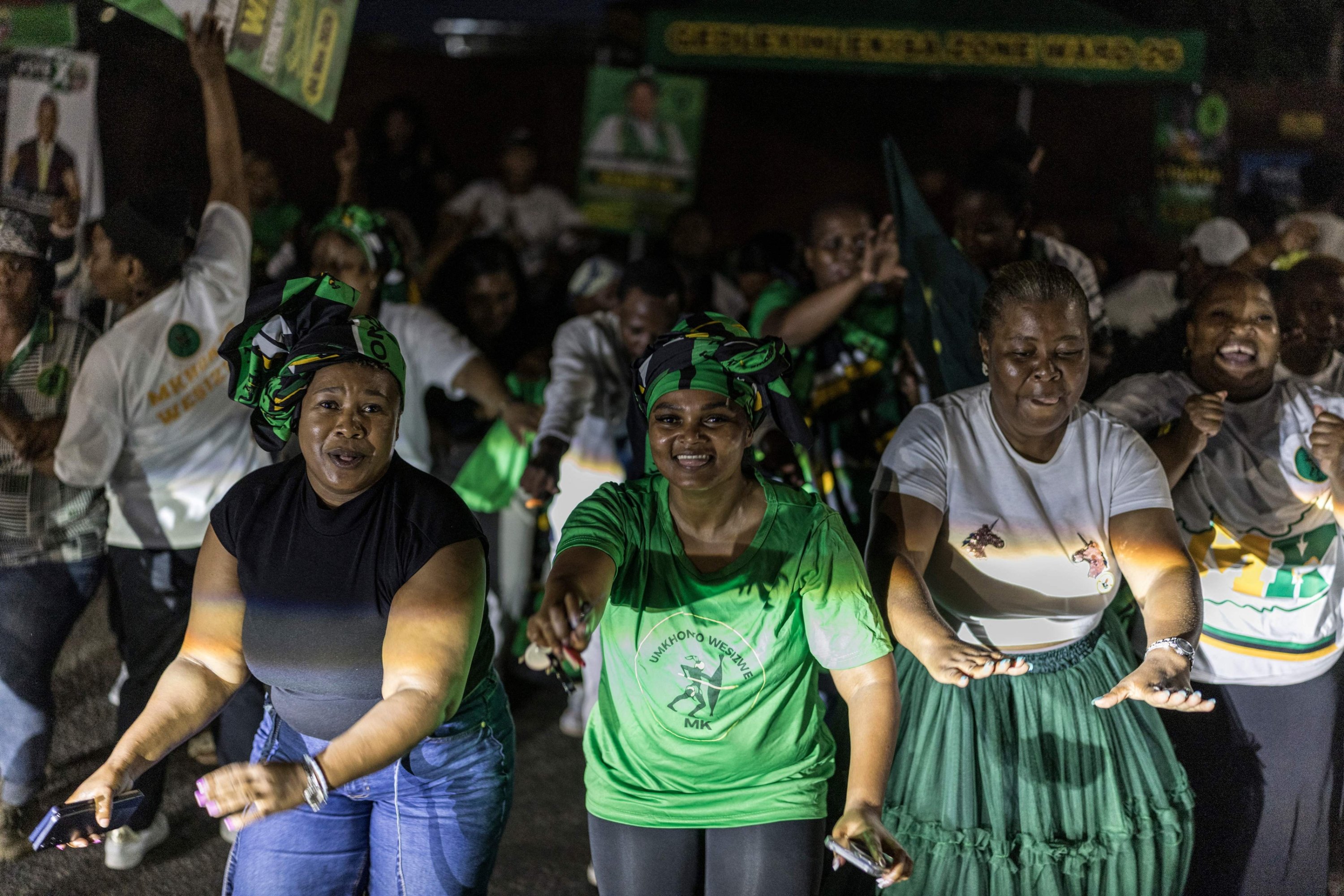
The Democratic Alliance (DA), South Africa’s main liberal opposition party, finished second with 24.56%, while former President Jacob Zuma’s uMkhonto weSizwe (MK) party came third with 9.62%, emerging as a significant force in the country’s fragmented political landscape.
The Economic Freedom Fighters (EFF), led by Julius Malema, received approximately 6.3%, followed by ActionSA with 5.6% and the Inkatha Freedom Party (IFP) with 4.7%.
The ANC remains the country’s largest party nationally but has struggled to translate its historical dominance into electoral support, particularly in major urban centres. It also failed to secure an outright majority in any of the eight metropolitan municipalities, highlighting the extent of the shift in voter loyalties.
ANC loses ground in major cities
The results mark a significant setback for the ANC in metropolitan areas, where opposition parties have made substantial gains.
In Johannesburg, the country’s economic centre, and Tshwane, which includes the capital Pretoria, the DA emerged as the leading party and is positioned to play a central role in forming the next municipal governments.
Neither party is expected to secure an outright majority in the two cities, leaving smaller parties, particularly ActionSA, with considerable influence over coalition negotiations.
The DA retained its stronghold in Cape Town, securing an outright majority and consolidating its control of the metropolitan municipality.
In eThekwini, which includes the coastal city of Durban, the MK party emerged as the leading political force, securing approximately 40% of the vote. However, it is also expected to fall short of an outright majority, making coalition arrangements necessary.
Other metropolitan municipalities, including Ekurhuleni, Nelson Mandela Bay, Buffalo City and Mangaung, also produced fragmented results, with no party securing a clear majority.
The wider municipal picture reflects the same trend. Of the 191 councils with results fully counted in one Saturday morning snapshot, 122 were hung councils, meaning no party had secured more than half the seats.
Corruption and unemployment fuel ANC decline
The ANC’s declining support reflects growing public frustration with its performance in government more than three decades after the end of apartheid.
High unemployment, persistent crime, corruption scandals and deteriorating public services have weakened the party’s traditional support base, particularly among younger voters and residents of major urban centres.
Unemployment remains above 34%, with young people particularly affected. Many voters have also expressed frustration over unreliable electricity supplies, water shortages, deteriorating infrastructure and poorly managed municipal services.
Political analysts say the ANC’s historical role in ending apartheid has become less influential in determining voting behaviour as citizens increasingly judge the party on its record in government.
“The gross mismanagement of some of the municipalities it controls has superseded the emotional attachment that the liberation struggle afforded the ANC for so many decades,” political analyst Daniel Silke told AFP.
Amanda Gouws, a political scientist at Stellenbosch University, said voters had grown increasingly sceptical of the party’s promises.
“People don’t believe the promises the ANC make anymore. People are really fed up,” she said.
The emergence of the MK party has further weakened the ANC by drawing support from former members and voters dissatisfied with its current leadership.
DA gains ground but faces coalition challenges
The DA’s performance represents an improvement on its 21.7% share in the 2021 local elections, although the party remains short of the support it attracted at its 2016 peak.
Led by Geordin Hill-Lewis, the party has sought to broaden its appeal beyond its traditional support base and challenge perceptions that it primarily represents wealthy white voters.
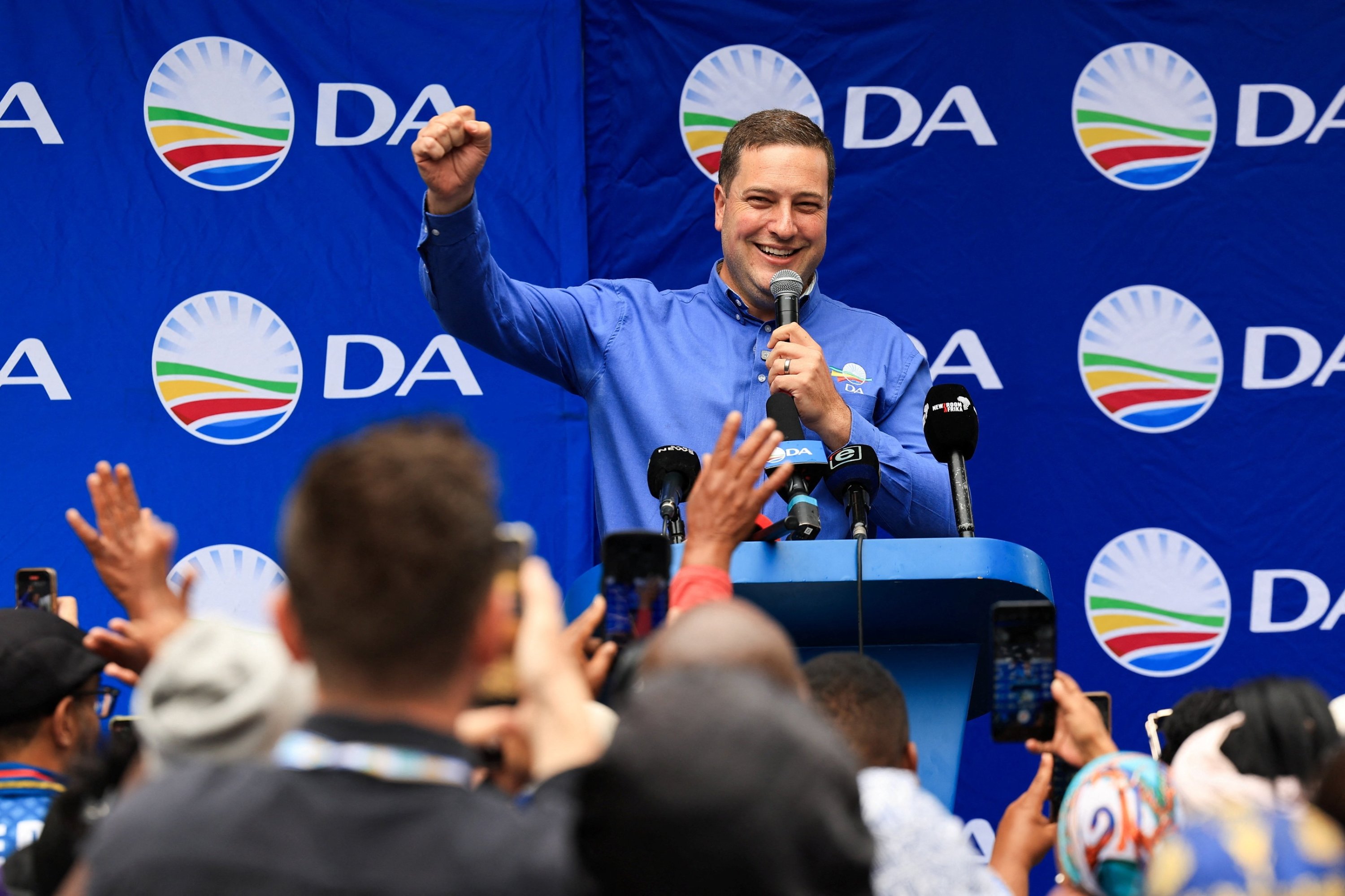
Hill-Lewis said the DA had gained one million Black voters, describing the result as evidence that the party had become a mainstream political force across South Africa.
However, analysts cautioned that the DA’s gains did not necessarily represent a wholesale transfer of ANC voters.
Gouws suggested the party could be approaching a ceiling in its electoral growth, while political analyst Dirk Kotze described its performance as significant but not transformative.
“The DA is not stagnant, but it is also not rising dramatically. In this election, they have grown by five percent and for them that is significant,” Kotze said.
The party’s ability to translate its improved vote share into control of municipalities will depend heavily on negotiations with smaller political groups.
Zuma’s MK party becomes a new political force
The MK party, founded by Zuma in 2023, has emerged as one of the biggest beneficiaries of the ANC’s declining popularity.
Contesting its first local government elections, the party finished third nationally, overtaking the EFF, which had previously established itself as a major challenger to the ANC.
MK’s strongest performance came in KwaZulu-Natal, Zuma’s political stronghold, where it made substantial gains, particularly in eThekwini.
Despite its strong showing, the party is expected to need coalition partners to govern Durban, falling short of the majority required to control the municipality independently.
Zuma’s continued popularity has helped the party attract voters who feel alienated from the ANC, according to political analysts.
Political analyst Sethulego Matebesi said the former president’s appeal had played a significant role in the party’s performance, even without an extensive campaign presence.
Voter participation remains a concern
Turnout was estimated at approximately 54.5% of South Africa’s 29.2 million registered voters, improving on the 45.9% recorded in the 2021 local elections.
However, participation among younger voters remains a concern, with analysts pointing to widespread disillusionment with established political parties.
Matebesi said many young South Africans had registered to vote but ultimately stayed away from polling stations because they saw little prospect of meaningful change.
The continued disengagement of younger voters presents a challenge for political parties seeking to build lasting support beyond traditional constituencies.
Coalition negotiations set to shape local government
The fragmented results are expected to trigger complicated coalition negotiations across the country, particularly in Gauteng, where Johannesburg and Tshwane are among the most closely watched contests.
With neither the ANC nor the DA commanding outright majorities in several major cities, smaller parties will have considerable influence over the formation of municipal governments.
ActionSA is expected to be particularly influential in Gauteng, although longstanding political tensions between it and the DA could complicate efforts to establish stable governing arrangements.
Silke said voters in the province would probably prefer a DA-led administration involving ActionSA but warned that hostility between the two parties could make such an arrangement difficult.
Coalition governments have already become increasingly common in South African municipalities since the 2021 elections. However, disagreements between political partners have frequently resulted in unstable administrations, leadership changes and disruptions to service delivery.
The negotiations will also take place against the backdrop of the national Government of National Unity (GNU), established after the ANC lost its parliamentary majority in 2024.
Rather than governing alone, President Cyril Ramaphosa’s ANC entered an agreement with the DA, the IFP and several smaller parties, creating a multiparty administration that has experienced tensions over policy and governance.
The latest local election results underline the extent to which South Africa’s political landscape has changed since the ANC came to power in 1994.
Although it remains the country’s largest political party, its declining support and growing dependence on coalition partners signal the end of an era in which it could rely on its historic dominance to govern without significant opposition.
Final results are expected to be confirmed by the IEC after counting is completed, with coalition negotiations set to determine who controls municipalities over the next five years.
Source: www.dailysabah.com