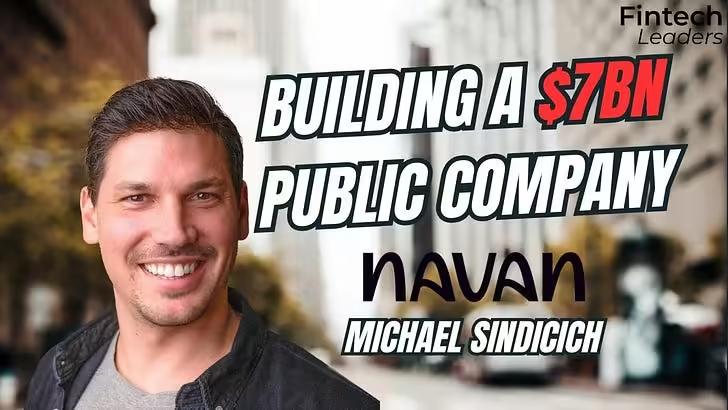

This article is part of Fintech Leaders, a newsletter with 90,000+ builders, entrepreneurs, investors, and students of financial services. I invite you to share and sign up. If you enjoy this conversation, please consider leaving a review on Apple, Spotify, or Youtube.
I sat down with Michael Sindicich, President of Navan (NASDAQ: NAVN), a travel, expense, and payments platform with a market cap of ~$7 billion, traded on the Nasdaq. Navan works with 50 of the S&P 500 and companies like Shopify, Zoom, and OpenAI, and it is projected to reach almost a billion dollars in revenue this year. Michael joined in 2016 as the company’s first salesperson, when Navan had about six people. He later ran its payments and expense business as CEO and became President in 2025, overseeing go-to-market, partnerships, and M&A.
We discussed how a reconciliation headache turned a travel company into a fintech, the board meeting Navan called as its revenue went to zero in March 2020, why AI took Navan’s gross margins from about 50% into the 70s, his partner-first approach to M&A, what it felt like to be the first company to go public during a US government shutdown and then watch the stock fall to $8, and much more.

Back in the early days of the company, large customers would put what’s called a “ghost card” on file in Navan: a single corporate card used to pay for every flight and hotel booked on the platform. It spared employees from filing expense reports but pushed the work onto accounting. Finance teams had, in Michael’s words, “a hell of a time” matching every booking to every line on the card statement at the end of the month. Without a card on file, the burden fell back on employees chasing receipts, itemizing hotel folios, and accounting for seat upgrades and flight changes themselves.
As Stripe, Adyen, and Marqeta opened up card issuing, Navan saw a way to automate travel payments entirely. It connected to a program manager and the Visa network, starting with Stripe, underwrote customers with short-term deferred debit or credit, and began generating a fresh 16-digit virtual card for every unique booking. Each card works only at that merchant and cancels after the trip. It also reconciles in real time, so a charge from “Priceline 1367” maps automatically to one employee’s hotel stay. Michael says it was the only launch he has seen where every company immediately said it wanted the product, with very large enterprises signing up on day one.
When Michael became CEO of the payments and expense business, Navan ran it as a startup within the company, (even holding its own all-hands). That meant multiple sales teams, competing resources, and “a lot of headaches,” Michael says. But had it run as a project on a product manager’s team with just a few engineers, Michael assures us it would never have grown into a business that can scale to hundreds of millions of dollars of revenue.
A week after the payments launch, the pandemic hit and the company’s revenue went to zero. This was code red. Navan sent everyone home and held an emergency board meeting the next day with two options on the table. The first was what most of the industry did: pause the company, furlough staff, and wait it out, a natural move for legacy travel agencies built on large teams of support agents. The second was to go on the offense while people-heavy, cost-heavy competitors pulled back. Having an entrepreneurial DNA, they went for it and took the risk of going on the offense.
The company raised money quickly through a convertible note and doubled down on enterprise sales, pitching travel managers on the idea that the best time to replace a travel system is when nobody is traveling. The sales were really hard, especially since many of those buyers weren’t sure about their own jobs or well being. During the same stretch, Navan acquired three or four travel agencies, picking up licenses and supplier agreements abroad.
When travel returned, the offensive work paid off. Companies that had signed up during lockdown started traveling and Navan’s volumes skyrocketed. Michael explained that the company’s pandemic bet on payments and expense was their most defining time.
Navan’s system learns a traveler’s loyalty programs, company policy, and where colleagues stay. If Michael always takes the 9pm United red-eye from SFO into Newark, that’s the flight he sees first. More than 80% of bookings now happen within the first three results, and the average trip takes about seven minutes to book (vs 45+ minutes on legacy systems).
AI has also transformed support at Navan. Not only do they offer chat, but they’ve also built an assistant that can change or cancel a flight, and after ChatGPT that work was named Ava, an agentic assistant. Ava now handles more than half of all support interactions, in any language, with satisfaction scores on par with human agents. Traditional travel management companies run gross margins in the mid-50s, Michael says AI helped move Navan’s from ~50% into the 70s.
Navan has also started building its own models, leveraging their 11+ years of travel data, which in theory should make them faster, cheaper, and more relevant than general-purpose models. Its CTO and Co-Founder, Ilan Twig, now works on AI full time. Navan Edge, its newest product, is an agentic assistant for frequent travelers that books trips, manages loyalty status, and will rebook you into a window seat when one opens up. When a flight runs late, Navan’s AI will automatically call the hotel and ask it to hold the room past midnight. But according to Michael, all of these systems still lack human empathy, so Navan monitors user sentiment to decide when to hand a traveler’s customer service requests to a person.
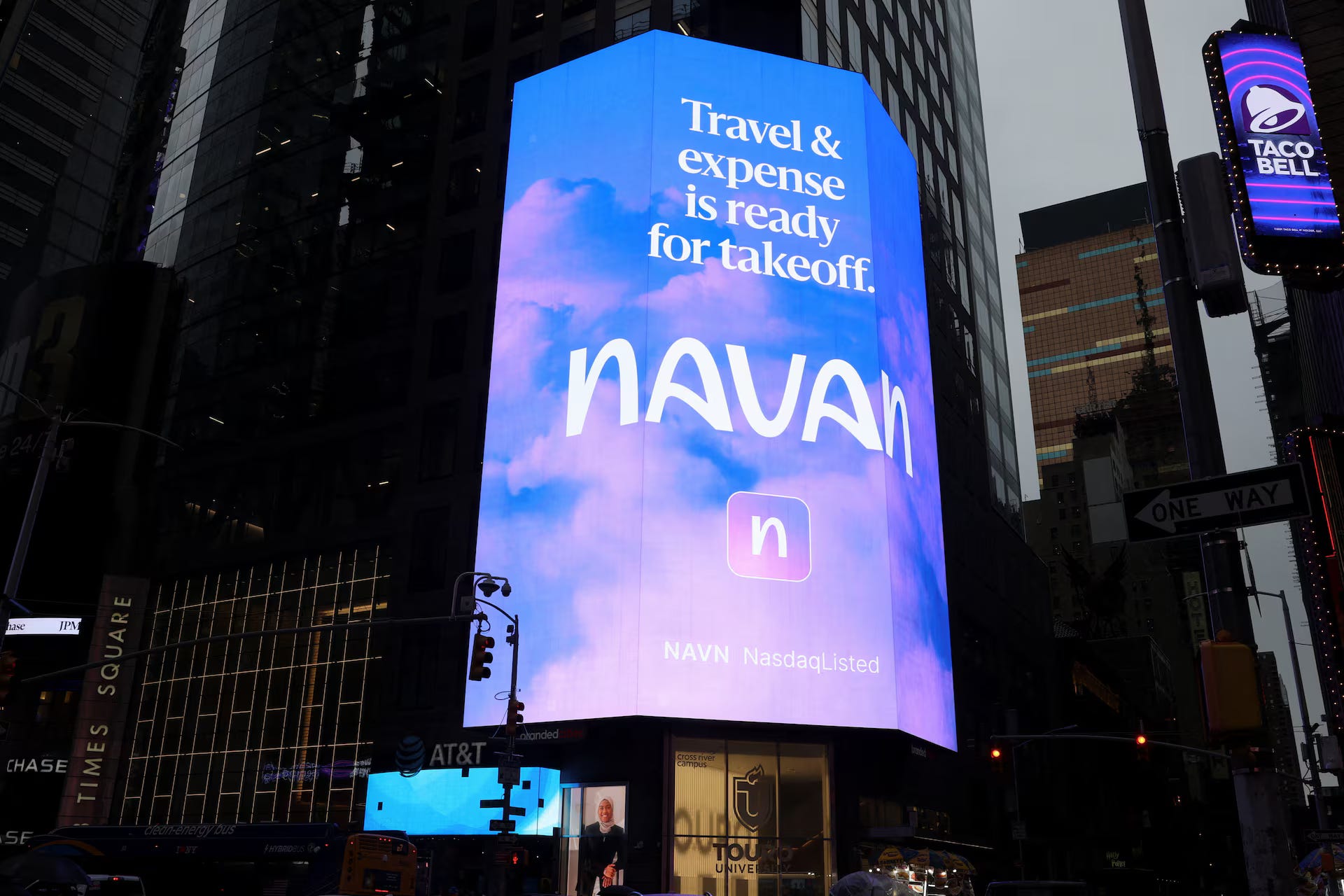
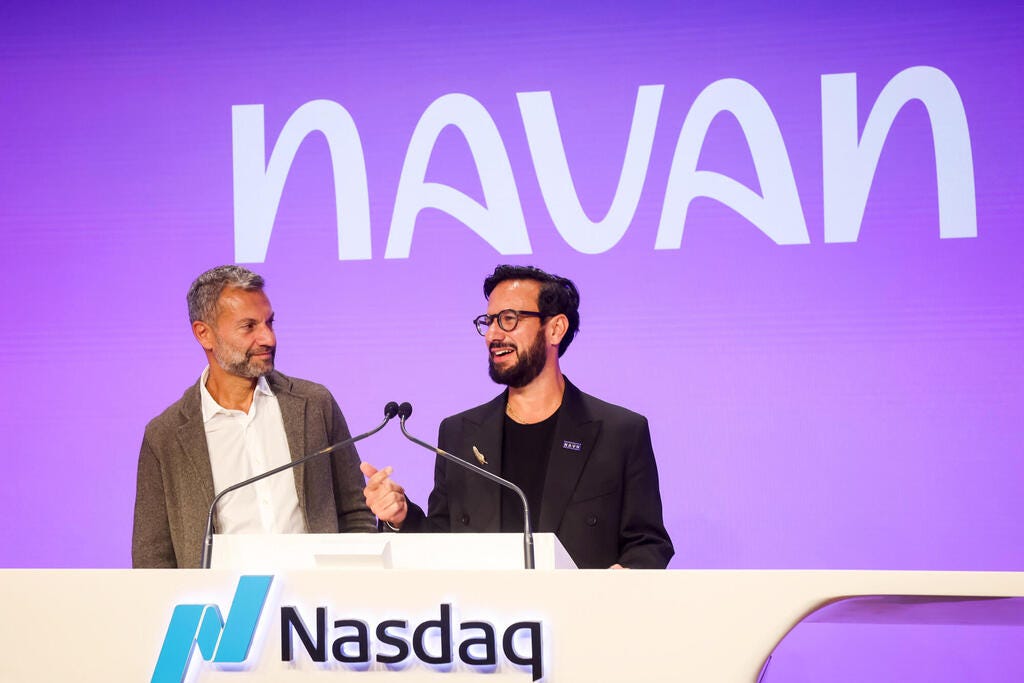
In Michael’s own words, “IPOs are so weird.” Navan went public in 2025 and had its listing day set for when the US government shut down. They decided to move forward despite the shutdown, and they became the first company to go public during a gov shutdown.
Navan priced its IPO at $25 a share, and over the following months the stock slid into the $8 range. Inside the company, the price didn’t match the numbers. They were convinced they had built a good business, they were growing fast, but employees could left to wonder and had a lot of questions as the stock descended multiple floors. As a public company, leadership couldn’t share sales guidance and color the way it once did, so board member Ben Horowitz spoke at an all-hands with one message: keep doing your thing.
The stock recovered within months, faster than Michael expected, and the company is now worth about $7 billion in market cap. Employees who joined near the lows, or received merit grants early in the year, saw their equity appreciate quickly. Michael calls the rebound validating, but adds they are not anywhere near where they think they should be.

Michael Sindicich: I thought I was going to be a doctor since junior high. One of my friends’ dads was an orthopedic surgeon, and we went and saw three live surgeries in the OR. First thing, he plugged in his iPod and started playing ABC by Michael Jackson, and the people in the room were dancing. The patient was asleep, ready to get his knee operated on, but it just looked like such a fun job. Ever since watching those surgeries, I was studying really hard and getting great grades. In high school I worked in a lab at the Keck Graduate Institute near the Claremont Colleges and ended up publishing some research on protein assays. I went to UCLA on the pre-med track, and I was also a track and cross-country athlete.
The summer of my senior year, some friends and I started an insurance brokerage to make some money. My mom was an insurance agent, and we thought it’d be cool to build one. That ended up turning into about 50 licensed agents, our friends and people from school. There were about six of us who started the company. We had an office in Beverly Hills, we were sleeping on yoga mats, we were showering at the gym next door, and at the same time I was doing my honors thesis. I would scooter back from the Beverly Hills office to school to do labs, and then I’d work in a basement doing brain surgery on rats. I was implanting cannulas into the brain, and we were testing different drugs and how they can help with PTSD and depression and build more resilience. Between doing that and building a company, I was like, wow, this is actually really fun: building a company, employing a bunch of people, and really driving toward a mission.
A lot of people take a year off before med school to study for the MCAT, and that’s what I did. A friend and I decided to move up to Silicon Valley for the year. His brother was in startups, and he connected us with a house where we could rent the shed in the backyard in Palo Alto for $600 a month, which is really expensive for a new grad college kid. We went to Target, got little twin-size air mattresses, and put them in the shed. On the drive up, I interviewed for a Craigslist job teaching chess after school, which paid $50 an hour. It was this insane hacker house. My friend’s brother started a company called Socket. The guy living in the garage sold his startup to Box and ended up being one of the founding engineers of Ramp, and then he went to help his brother start Cognition. I interviewed at Navan when we were about six people. After about a year, I decided I probably won’t go back to med school. Sometimes I think about it, but I’m having a lot of fun right now.
Michael Sindicich: First of all, I’m not that good at chess. This was more of an after-school program for little kids. But here’s a really funny story. Six months into working at Navan, I walk by Ariel’s desk. Ariel’s the CEO and founder. I look at a picture on his desk and ask if that’s his son, and he says, “How do you know my son’s name?” And I said, “I taught him chess at Juana Briones.” He was in kindergarten at the time. So imagine the students I was teaching: it’s an after-school program, parents are working, so it’s teaching chess but also a little bit of daycare. It went all the way up to sixth grade or so, and those players can actually get very competitive.
I think the most important thing about chess is, one, having a strategy for the opening, and two, understanding every single move your opponent can come back with and how that changes the game. It’s a lot of if-thens. I find that pretty helpful at the company as we think about strategy: if someone does this, then we’ll do that. If we do that, then we unlock this. If we don’t do this, then this is the ramification. To me, chess is one big if-then statement: how can you position yourself in the best way so that your opponent has fewer if-thens, and you have more?
Michael Sindicich: I started out as the first salesperson at the company. It was basically, okay, we built something; now, Michael, go sell it. That’s still how I see my role: bringing what we’re building to market, and taking what the market is asking for back to the teams to figure out how we can build it our way. In the beginning I set up the go-to-market infrastructure and did all the calling and emailing. Then I built the SDR team, then managed the sales team, and every time I’d take go-to-market to the next level. First we were selling to small companies, then I led mid-market, then enterprise.
As I was doing enterprise, we saw a huge opportunity around fintech. In the beginning we were selling a travel booking tool and a travel agency. In a legacy setup, you book on Concur and work with an agency like Amex GBT, Carlson, or BCD. We brought those two things together, because we figured we could have the best technology, but unless we owned the support experience as well, it would never be perfectly seamless. That meant getting licenses and agreements with all the airlines and points of sale around the world. Enterprises kept asking when we were going to build expense management, but the avenue into fintech was actually a different story. Big companies would put what’s called a ghost card on file in the product. When someone checked out for a flight, it was paid with that corporate card, and then the finance team had a hell of a time reconciling every single booking with every single transaction on the card. You play this game of match at the end of the month. If you don’t have a card on file, the employees are busy chasing receipts and reconciling themselves, collecting hotel folios and itemizing them. It’s a really cumbersome process.
We saw Stripe, Adyen, and Marqeta coming out and said, what if we could fully automate travel payments? We connected to a modern program manager and to a network, in our case Visa, and we started with Stripe. We could underwrite the customer, give them a short-term deferred debit or credit line, and anytime a traveler books something in our system, we generate a new 16-digit virtual card. It perfectly reconciles in real time, it only works with that merchant so there’s no fraud, and it cancels after the trip ends. So if the credit card statement says Priceline 1367, I know it matches my Marriott hotel. I’d never seen something we launched where every company said, “Oh my God, I need this.” On day one we had very big enterprises signing up. Then, a week after we launched it, the pandemic hit, and all of our revenue went to zero.
We said, now is probably the right time to go into expense management and purchase cards and become more of a spend management platform. I went from sales leader to CEO of the payments and expense business, which was my first time leading product, design, engineering, operations, legal, and HR. We really treated it as a startup within the startup. There was a time when we weren’t going to the company all-hands; we had our own. If we’d treated it as a project on a PM’s team with a few engineers, it never would have become the big business it is today. It definitely created a lot of headaches: multiple sales teams, different products, competing resources, lots of duplication. But I think it was a smart investment to build something that can scale to hundreds of millions of dollars of revenue. About a year and a half ago, Ariel asked me to be President, which essentially means leading everything go-to-market. I combined the sales teams and the rev ops teams. We have a CMO combining the messaging across travel, expense, payments, meetings and events, and VIP, and I also oversee corp dev and M&A, partnerships, and field operations.
Michael Sindicich: Honestly, yes, for sure, but it was also so busy that it was hard to think about it, because we’re the kind of team that takes action really fast. The pandemic hit, we sent everyone home, and the next day we had a board meeting. We said, okay, we can do a couple of things. We can shutter the company, wait this thing out, and furlough people, which a lot of the competition in travel management was doing, because they’re so people-heavy, with lots of support agents, and no one was traveling. The other option was: what if we use the time when we know our people-heavy, cost-heavy competition is pulling back to turn it into an advantage and go on the offense? We looked around the room and said, we’re all startup people. We take risks, we go for it.
We raised money fast; it was a convert. We doubled down on enterprise sales, because we thought, if we can convince an enterprise that believes travel will come back, the best time to change and modernize your travel solution is actually when no one’s traveling. I remember sales were really hard. Imagine selling travel to a travel manager during a pandemic, when they’re not even sure about their own job and no one’s traveling. But we pushed down that path, and we also took it as an opportunity to really invest in the payments and expense business. We sent a lot of our best engineers, hired a lot of people, built the product very fast, and started selling it into our install base and to net new companies. I think that decision was more company-defining than anything else.
Once the pandemic started ending and travel came back, we saw volumes growing like crazy, because the companies we had sold that had never traveled with us started traveling. We built R-factor dashboards, COVID dashboards, and employee tracking tools so admins could navigate the pandemic, and people loved that. We doubled down on support, because flights were getting canceled and employees were stuck in Europe or the U.S. and couldn’t get home, so we offered 24/7 hands-on support. We also acquired three or four travel agencies and companies during that time, which helped us scale internationally with licenses and better supplier agreements. We absolutely went for it, and I think it paid off big time.
Michael Sindicich: It takes the right CRO, and ours is phenomenal. But if I were to start all over again, it starts with the people. Then there are different schools of thought on sales process. We use MEDDPICC, so we have different stages throughout the sales cycle, different qualification criteria, and gates between stages that are actually measured. Consistency matters too, so everybody around the globe speaks the same language. If I’m preparing for a big meeting with a company’s CPO and I know the deal is in champion identification, everyone supporting that deal knows exactly where it is. It’s actually crazy watching sales switch from an art to a science. I never really believed it. I thought good salespeople were good because they’re likable. But good salespeople don’t necessarily need to be likable. They need to know the playbook and all the roadblocks, and they’re orchestrating the entire deal behind the scenes. It does feel like a science now.
The next thing is tooling. Do you have the right email addresses and phone numbers? The right technology for call recording, to make sure you’re following the demo process and to train and enable the reps? A system like Salesforce or HubSpot to track deals? There’s a lot of automation being built right now, too, like tools that see someone liked a LinkedIn post about operational efficiency and draft a handcrafted email tying it back to their company. And then there’s the type of people you hire. More than 50% of our closed-won opportunities are self-sourced by account executives. We hire a lot of SDRs who are cold calling and cold emailing and being strategic about breaking into accounts, but one thing we measure very aggressively is how much the account executive is doing their own pipeline generation. We hire people who are very hungry and who know they’re the CEOs of their book of business and responsible for delivering the outcomes.
Michael Sindicich: Oh, fired? All the time. But never for doing something morally wrong. When you’re building a startup, it’s important to hire people who are so mission-driven that if something feels off from the mission, they’ll be insistent until it gets fixed. Our first value, which anybody at Navan can recite, is “It’s all about the user, all the users, all the time.” We wake up and go to sleep thinking there better not be a traveler who’s stuck or an admin who can’t do something. Even if it’s not our platform, if your United flight gets canceled, we’re there to support you. Just for kicks, the second value is “seriously fun.” Those are the two people remember.
The moment that comes to mind is early days. A customer messaged me and said, “Hey Michael, your system’s cool, but I run a company. If I show up to the airport thinking I booked a flight and I don’t have a ticket, you’re impacting my revenues, my customer relationships. My entire business is at risk if your thing doesn’t work.” That was such a wake-up call. This was probably in the first six months of the company. I worked with the engineers to log every single action in the product, and one weekend I wrote on the whiteboard every single example of someone who tried to make a booking and whether it happened or failed. That Monday morning, I called our CEO and co-founders into the room and said, “What do you guys want me to do with this? This is so messed up.” People weren’t able to book. They were having errors and cancellations. It was working maybe half the time. I was really aggressive, and it was a very aggressive conversation, but in the end they both said, “You’re so right. We have to fix this for our users.” And we fixed it. One thing we monitor all the time now is booking errors, making sure that ratio stays low. To be fair, it’s not only our solution; there’s a lot of infrastructure, airline technology connected to GDS technology connected to us. But we’re very insistent that when people make a booking, the booking happens and they actually get ticketed.
Michael Sindicich: The two most important things we track ahead of revenue are NPS and CSAT, and we’re really proud to say our CSAT is 96%. That’s any time you contact our support team or our AI agent, Ava. Think about when you call your travel agency: your flight was canceled or delayed, you need to rebook, you need to collect an invoice from a hotel, you’re not sure where your credit card is. And 96% of people are saying it’s five-star service. A big part of our ethos is the orchestration between when an AI agent can handle a task and when it needs to go to a human agent. The last thing we want is for people to be on the phone screaming “representative, representative,” so that handoff has to be seamless.
The other one is Net Promoter Score. Our NPS is around 45, and traditional travel and expense management tools are typically around zero. No one likes to use their traditional travel system. Focusing on those two is the most important thing we do, and it ties back to our value of it’s all about the user. Then come revenue, gross booking volume, payment volume, and the rest.
Michael Sindicich: We make revenue in a few different ways, but the majority is usage-based. We were never really a SaaS company. Sometimes people say SaaS is dead, and maybe that was good for us. Now SaaS is kind of coming back. Maybe; I don’t know. Think of us as a marketplace with a lot of suppliers: millions of hotels, airlines, and car rental companies. These companies pay a commission back to the travel agent, partly to be in the marketplace, and partly because their own support agents don’t need to support the booking. If a traveler books a flight on our platform, our travel agents change it, cancel it, and work with the traveler throughout the journey. That’s a big part of our usage revenue, and it’s nice because the customer isn’t paying for it.
We also charge a trip fee. Traditional agencies would charge one fee for an offline booking, a different fee if it’s after hours, a different fee if you book just a hotel online. It was this big menu, and when we came to market we said, enough with that. We want to be very transparent, so we charge one trip fee per trip. If you’re doing multi-city bookings and hotels, leaving and coming back, that’s one trip, and you can call or email us as many times as you want. Then there are the SaaS licenses for the expense management software, where we charge per active user per month. And we make interchange on our credit cards. We give a portion of it back to the customer as a rebate, keep the difference, and pay for the cost of capital to fund customers’ accounts.
Michael Sindicich: First of all, partnerships in fintech or travel are endless. Every supplier is a partner: every hotel, every airline. The fintech infrastructure, like Stripe, Adyen, Airwallex, Visa, Mastercard, and Amex, are partners. VAT reclaim services and the OCR technology that reads receipts are partners. In my mind, the whole thing is one big partnership ecosystem that delivers a great experience for the end user. Then the question is who we choose to partner with, and why. First and foremost, we want to deliver the best traveling experience. Sometimes that means building everything ourselves, and sometimes it means partnering with somebody else and delivering the solution together.
One thing Brex was really good at was building infrastructure to issue globally in different currencies. We’re going to be the most global, most in-depth company in travel, with the points of sale and legal agreements to match. But we’re not going to build the world’s biggest bank. We’re not going to become a bank, we’re not going to have the most capital out there, and we’re not going to offer the best rebates and payment terms. As we kept going up-market, we built a solution called Connect, which lets our travel and expense solution be paired with any other corporate card, because we partnered with the networks. Someone can use a different corporate card than Navan’s, and when they swipe it, they immediately get feedback: was it in policy, do they need a receipt? So we don’t force larger companies to change their credit cards, which they don’t necessarily want to do. With that technology, and understanding Brex’s massive scale in currencies, global issuing, and attractive rebates and payment terms, we said: for some of our customers, the best solution is a combination of your payments and expense and our travel. Let’s partner to offer that to the market.
We probably won’t ever partner with a travel management and booking system that’s too close to home, at least in the countries where we operate. But sometimes we sell to a very large corporation with lots of employees and operations in a country we don’t operate in today, and that’s where we’ll find a partner. We just acquired a company called Smartrips in Brazil a couple of weeks ago. They were our partner in Brazil for large companies with operations there, it was working so well and customers were really happy, so we ended up acquiring them. We ran the same playbook with a company called Tripeur in India. That’s one of our inorganic growth strategies: partnering with companies in markets where it would take forever for us to get licenses and be able to operate.
Michael Sindicich: When I joined in 2016, it was the first time I’d heard the words machine learning in my life, and it was at Navan. I don’t think people appreciated that as much when we first went public: we were really focused on machine learning and AI from day one. Think about this massive marketplace with all these inventory sources. Today, more than 80% of our bookings happen in the first three results we show a user, and our average time to book a trip is seven minutes, compared with 45 minutes or more on legacy systems. We learn who you are: your loyalty clubs, your past booking behavior, your company policy, where your coworkers are staying, your office locations. If Michael always takes the United red-eye out of SFO into Newark at 9 p.m., that’s what we show in the results. We also started with chat support. We were the first to launch chat as a travel agent, so people could chat with us instead of just calling. Then we asked, what if we used natural language processing to automate answers, and even connected it so it could change or cancel a flight or push a hotel by a day? When ChatGPT came out and this whole agentic thing happened, we were like, this is massive.
If you look at some of the other public players in travel management, and there aren’t many anymore, their gross margins are in the mid-50s. We want to be really efficient and have tech margins. Ava, the evolution of that early chat assistant, now handles more than 50% of all our support interactions. And it’s not that it offsets; it resolves. It can respond in any language in seconds, 24/7, 365, and it achieves human-level CSAT scores. By doing that, our gross margins went from 50% to 70-something, and we can take that profit and invest it back into better products. But AI runs throughout everything. If I swipe my card at a Starbucks, we know I’m on a trip and it’s a meals merchant, so we can apply the meals-while-traveling policy, GL code, and approval workflow and expense that transaction automatically, without the employee doing anything. There’s an admin companion where a travel manager can ask, “What’s the average hotel booking for directors of sales versus directors of marketing in New York?” and get an answer immediately, plus ideas and benchmarks to drive savings.
The biggest one is Navan Edge, a fully agentic product for individual frequent travelers. You fill out some information about how you like to travel and connect your email, and it loads all your loyalty programs and tells you how to optimize them and how far you are from the next status tier. Then you can chat with it, and it books your flights, hotels, restaurants, car rentals, even experiences. It monitors your whole trip. If it knows I like window seats and none are available, it keeps watching the flight and moves me when one opens up. If I want a late checkout, it emails the hotel and asks on my behalf. On the models: we use a combination of different models, and we’ve started building our own. We’ve been in business for 11 years, so we know travel patterns, trends, users, and delays. If you ask a corporate travel question to one of the big models, it has to sift through trillions of data points, which makes it more expensive, slower, and less contextualized. With our own models, we get answers much faster, much more relevant, and cheaper. We’re so AI-focused that our CTO and co-founder has an entire team of AI engineers, and that’s the only thing he and his team work on.
Michael Sindicich: No, no. I think the solution we provide is so different from what they provide. If you’re being taken private into more of a PE structure, you’re probably going to focus a lot on cost reduction. You can focus on cost reduction by leveraging AI and needing fewer people, or you can keep all your people and focus on scaling and growing faster. I’m not nervous or worried about their ability to compete with us and where we’re going. And I think it’ll be interesting for customers, because if there’s going to be an emphasis on cost reduction, there’s going to be a lot of focus from customers on service levels. So I see it as an opportunity.
Michael Sindicich: First of all, IPOs are so weird. We were the first ones to IPO during a government shutdown. We had planned the IPO, the marketing, the parties, the employee travel, everything for one day, and then the government shut down. It was ambiguous. We’d already cleared comments, and in the end we had a date. Then it was a scramble to redo everything we needed to do to make the IPO successful. The roadshow is daunting. You’re meeting after meeting after meeting, repitching the same thing over and over again, really quickly.
Then the stock really went down over the next couple of weeks and months, down to the $8 range. We’re sitting there thinking, man, we built a good business. Everything’s working. We’re growing fast. And the price reflected in the stock is so low. What’s going on? Your employees are asking a lot of questions: where’s this thing going? Is the business messed up? You have to do a lot of things. We had Ben Horowitz, who’s a board member, come talk at the all-hands about his experience, and he said, guys, keep doing your thing. We were trying to be as transparent as we could, but now you’re a public company, so you can’t communicate as much about how sales went and so on. It’s a really interesting and tough balance. But we didn’t see a massive increase in attrition. People were really focused, and by the way, look at every other tech company that’s not an AI company formed in the last three years. They were also going down; it was the broader market.
Luckily, it turned around within just a couple of months, faster than we would have expected, because once you’re down as a newly public company, it usually takes quite a while to get back up. Now it’s about two things. First, how do we make sure we still have this massive chip on our shoulder, keep growing as fast as we can, and stay super resilient? Second, it’s really cool for the employees who were here, or who joined when we were low and took a bet on us, and for the people who got new shares with their merit increases at the beginning of the year. Those appreciated so quickly, within just a couple of months. So now it’s validating, but it’s also, okay, that’s not anywhere near where we think we should be as a company, and we need to keep pushing and growing from here.
This interview has been edited and condensed for clarity.
Want more podcast episodes? Join me and follow Fintech Leaders today on Apple, Spotify, Youtube or your favorite podcast app for weekly conversations with today’s global leaders that will dominate the 21st century in fintech, business, and beyond.
Don’t forget to subscribe so you don’t miss big conversations and insights with the giants of Fintech.




Miguel Armaza is Co-Founder & General Partner of Gilgamesh Ventures, a fintech seed-stage investment fund focused. He also hosts and writes the Fintech Leaders podcast and newsletter.
Source: fintechleaders.substack.com