
Transcript
SCOTT DETROW, HOST:
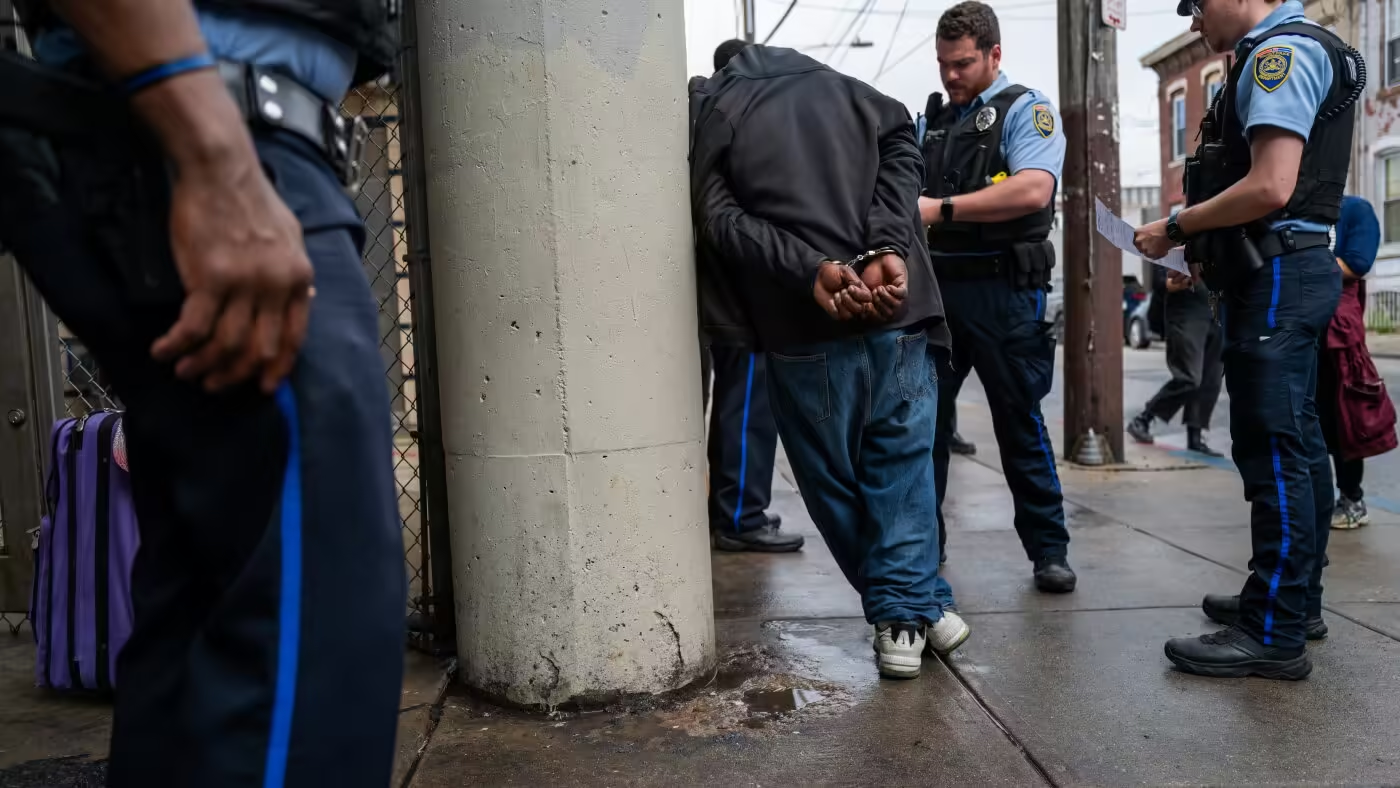
Violent crime in the U.S. has fallen to historic lows, but a new report analyzing the same FBI data that charts that drop also finds that arrests for minor offenses, things like vagrancy and marijuana possession, rose from 2024 to 2025. NPR correspondent Jaclyn Diaz has the story.
JACLYN DIAZ, BYLINE: President Trump has repeatedly pushed the idea that many American cities are overrun with crime and that his administration has to respond aggressively to restore, quote, “law and order.” That’s the message he sent in September of last year after the murder of 23-year-old Ukrainian refugee Iryna Zarutska. She was fatally stabbed while on a train in North Carolina.
(SOUNDBITE OF ARCHIVED RECORDING)
PRESIDENT DONALD TRUMP: We have to respond with force and strength. We have to be vicious, just like they are.
DIAZ: Although it’s a priority for Trump, violent crime in the U.S. had been on a downward trend before he took office a second time. FBI data shows the homicide rate in 2025 dropped to its lowest point since 1956. Zoe Towns with the criminal justice advocacy group FWD.us says the tough-on-crime message has translated into more aggressive policing for even low-level crimes. Her organization published a report showing arrests for things like vagrancy jumped 44% from 2024 to 2025. Here’s Towns.
ZOE TOWNS: And to us, this increase signals a really troubling return to some of the extreme law-and-order policies that defined the American criminal justice system during the ’80s and the ’90s.
DIAZ: Vagrancy is defined as roaming without a home or job. In practice, the charge is used against people experiencing homelessness. The report’s data covers the time period when Trump sent National Guard troops into major cities like Washington, D.C. FWD found that marijuana possession arrests in the city more than doubled after a deployment there. Nationwide, those arrests rose 6%. The racial disparity is stark. The majority of the people arrested for marijuana possession are Black. This data doesn’t reflect how many arrests end in convictions or prison time. Executive Director Towns says that even when charges are dropped…
TOWNS: An arrest has life-changing consequences for the person involved and for their family.
DIAZ: She says an arrest can mean days or months in jail, a lost job, missed rent or mortgage payments and separation from kids. Jaclyn Diaz, NPR News.
(SOUNDBITE OF KAYTRANADA’S “WEIGHT OFF (FEAT. BADBADNOTGOOD)”)
Copyright © 2026 NPR. All rights reserved. Visit our website terms of use and permissions pages at www.npr.org for further information.
Accuracy and availability of NPR transcripts may vary. Transcript text may be revised to correct errors or match updates to audio. Audio on npr.org may be edited after its original broadcast or publication. The authoritative record of NPR’s programming is the audio record.
Source: www.npr.org