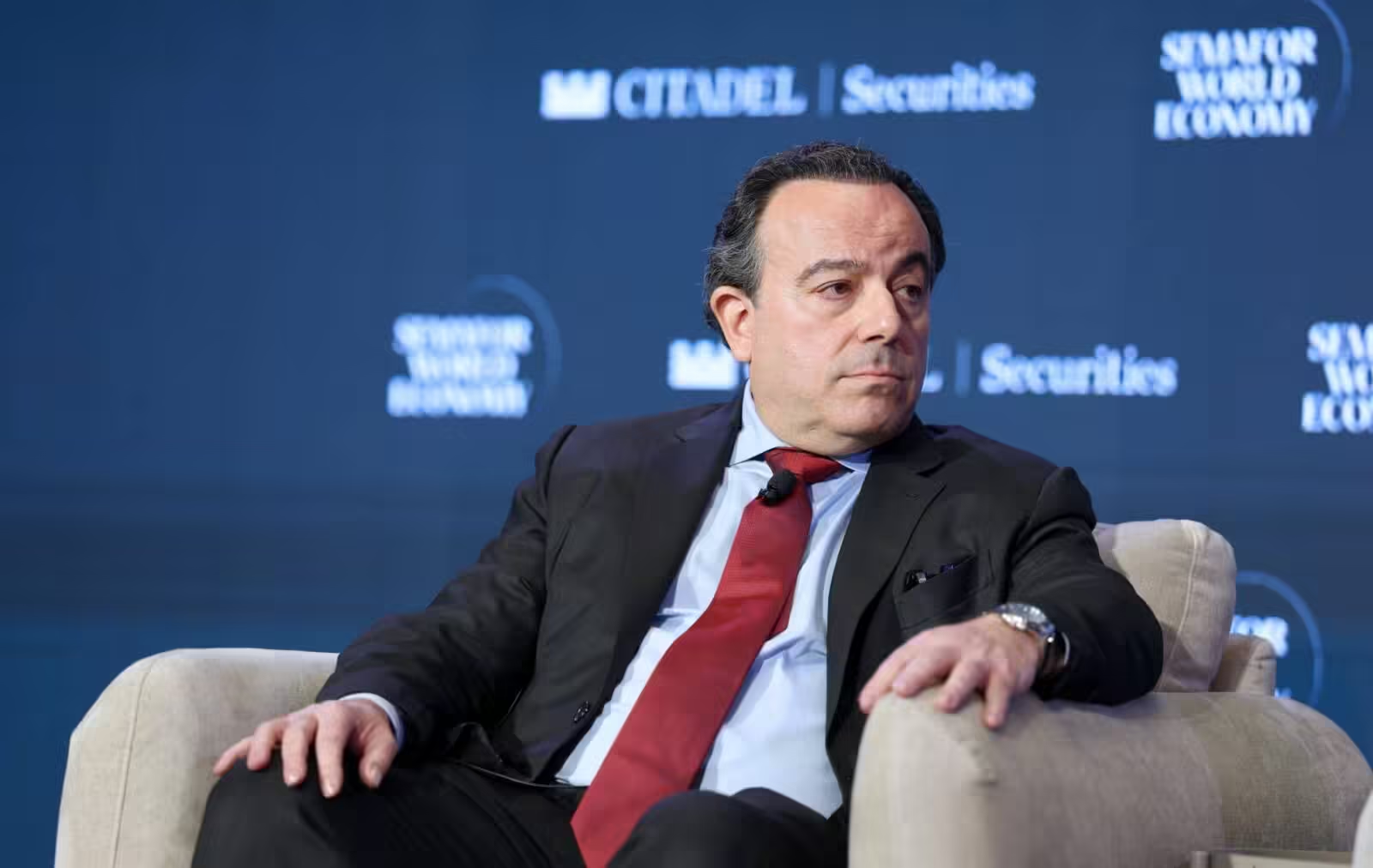

From challenging conventional perceptions of Africa to building a telecommunications business spanning four countries, Africell founder and CEO Ziad Dalloul has demonstrated what conviction, patience and long-term investment can achieve on a continent whose digital potential continues to unfold.
By Ajong Mbapndah L*
At a time when much of the international investment community viewed Africa through the narrow prism of conflict, instability and economic uncertainty, Ziad Dalloul saw something different. He saw a continent of extraordinary possibilities, a youthful population hungry for opportunity and an emerging digital revolution waiting to happen. More than two decades later, that conviction has helped transform Africell from an ambitious entrepreneurial venture into a telecommunications group with operations in The Gambia, Sierra Leone, the Democratic Republic of Congo and Angola, challenging established competitors and bringing millions of Africans into the digital economy.
For Dalloul, the journey has been about considerably more than building mobile networks or expanding market share. It has been a sustained demonstration of faith in Africa’s potential and the rewards of investing where others hesitate. Operating without the financial muscle of larger multinational competitors, Africell has built its expansion on the strength of its existing businesses, local partnerships and an entrepreneurial culture that prizes innovation, resilience and long-term commitment. Today, the company employs approximately 5,000 people, supports growing digital ecosystems and is extending its ambitions beyond traditional telecommunications into mobile financial services, enterprise solutions and cultural development.
Nowhere is that ambition more evident than in Angola, where Africell’s entry in 2022 introduced fresh competition into a market long characterized by limited consumer choice. With more than eight million customers, an expanding network and approximately $100 million in financing from the U.S. Export-Import Bank to support secure telecommunications infrastructure, the company is positioning itself at the intersection of Africa’s digital transformation and deepening U.S.–Africa commercial engagement. Its presence in Angola and the DRC also places Africell in a potentially important position as the strategic Lobito Corridor gathers momentum, linking critical minerals, infrastructure development and the demand for reliable digital connectivity.
Yet Dalloul’s vision extends well beyond technology and commercial success. Through the Africell Impact Foundation, the company is investing in African creativity, education and cultural expression, while its broader business strategy places increasing emphasis on local talent, skills development and opportunities for communities. His philosophy is rooted in a simple conviction: businesses that approach Africa with patience, respect for local realities and a willingness to build lasting relationships can achieve far more than those seeking quick returns.
In this exclusive interview with Pan African Visions, Dalloul reflects on the decisions that shaped Africell’s remarkable journey, the lessons learned from operating in some of Africa’s most challenging and promising markets, and the significance of growing American investment in the continent’s digital infrastructure. He discusses the transformation of Angola’s telecommunications landscape, the opportunities emerging from the Lobito Corridor, the expanding role of mobile technology in African economies and the leadership principles that have guided him through more than two decades of uncertainty and opportunity.
Looking ahead, Dalloul envisages Africell entering new markets, expanding its portfolio of digital services and helping inspire a new generation of international investors to recognize Africa’s possibilities. His message is one of measured optimism, grounded in experience and reinforced by a business journey that continues to challenge conventional assumptions about the continent.
For a man who invested in Africa when many others were looking elsewhere, the story of Africell is not simply one of entrepreneurial success. It is a compelling illustration of what becomes possible when vision is matched by courage, commitment and an enduring belief in Africa’s future.

Africell has spent more than two decades building telecommunications businesses in Africa. What have been the defining moments in the company’s journey?
I founded Africell in an era during which Africa was viewed with fear and suspicion by most international investors. Many bought into a narrative dominated by themes of civil war, poverty, disease and instability. I took the opposite view. I was convinced that Africa held enormous economic potential and cultural energy and that its young population would have a huge appetite for digital communications, if only it could be provided to them. It seemed like an obvious place to invest. Twenty-six years later, the decision has been vindicated.
Since first launching in The Gambia in 2012, we have entered three additional markets: Sierra Leone in 2005, DRC in 2012, and Angola in 2022. Each moment has been a source of pride for us because as a relatively small, boutique operator, with limited outside capital to draw upon and no holding company to bail us out, each new market launch has been underpinned by the sustainable and profitable operations of our existing markets. Each expansion, in other words, has vindicated our approach to our existing markets, demonstrated the wisdom of our strategy and shone a spotlight on the quality of our team.
Africell’s most recent new market launch was in Angola, four years ago. Angola’s mobile sector had for decades been a de facto monopoly, with minimal choice and little innovation. Angolan consumers were frustrated by poor service and high prices. We were invited by the Angolan government to launch there with a mandate to shake up the telecoms sector. We have decisively accomplished this, winning more than eight million customers, blazing a trail with super-fast internet, and rolling out in multiple provinces.
Last month, we announced receipt of an almost $100m loan from EXIM, which we will use to invest in secure network infrastructure in Angola. This was a signal moment because it ratified a valuable, long-standing relationship with the US government. To be the only US-owned mobile operator in Africa is a title that confers certain responsibilities and expectations: of governance, innovation, trust. We are pleased to work with the US government to extend its commercial and cultural influence on the continent in a way that benefits both Africa and the United States.

Africell operates in Angola, the Democratic Republic of Congo, Sierra Leone and The Gambia. What makes these markets strategically important, and where do you see the strongest opportunities for growth?
From Africell’s perspective, all are critical. The Gambia and Sierra Leone are our oldest and best-established territories, in which we are market leaders. These operations have generated experience, skills and capital that have been invaluable as we have expanded into DRC and Angola.
DRC and Angola are significantly bigger countries. They therefore have an additional strategic weight. Both present vast opportunities: DRC because of its awesome, 120m+ population and spectacular resource endowment; and Angola because of the discrepancy between (i) its comparatively high level of economic development, and (ii) its surprising history of mobile under-penetration.
In both, we are focusing on similar things, including Africell Business, our new enterprise platform, and Afrimoney, our mobile money platform. We are also investing in secure network equipment, including equipment from non-Chinese suppliers, to strengthen and diversify national digital infrastructure. Finally, as always, it is about brand. In DRC and Angola we are working hard to deepen our roots in local communities with brands that are friendly, fun and accessible, and which acknowledge and adapt to cultural trends, themes and tastes.
How important is Angola to Africell’s long-term strategy, and what have you learned since entering the market?
Introducing Angola to our portfolio both strengthened and diversified it. It has exposed us to a new region, created a foothold in the Lusophone world, and given us the opportunity to build a network from scratch in an era of 5G+ and AI.
Given the history of Angola’s mobile sector, which for decades was a de facto monopoly with high prices and poor service, the country has been an ideal environment for us to make an immediate, positive difference. The telecoms landscape has been transformed for the better since our arrival. More Angolans are online, prices are lower, the internet is faster, and we have created hundreds of jobs (and adjacent income opportunities) in provinces including Luanda, Benguela and Huambo.

The U.S. Export-Import Bank approved approximately $99.6 million in financing to support Africell’s technology investments in Angola. What will this financing enable Africell to do?
The EXIM financing comes with a mandate for us to invest in secure, western-made network technology. This is a continuation of our current strategy, which is centered on a state-of-the-art Nokia network. Africell Angola is proud to have the only network in Africa built without a significant Chinese-made components.
The financing from EXIM is designed to create a win-win scenario. Angola gains a bedrock of secure, trusted digital infrastructure to balance out the Chinese-made network of Africell’s main competitor. Meanwhile, US and western telecoms manufacturers will be able to compete more effectively with heavily subsidized Chinese rivals; meaning more jobs, more revenue, and a springboard for further sales in Africa.
What does the U.S. EXIM financing say about the potential for deeper U.S. investment in Africa’s digital infrastructure?
African governments and consumers warmly welcome US investment in the continent’s tech and telecoms sectors. Unfortunately, there has historically been too little such investment, for numerous reasons. Chinese equipment suppliers such as Huawei have established overwhelmingly dominant market positions, supplying most of the kit for virtually every network in Africa. Most handsets used in Africa are also Chinese-made.
The US understands that this imbalance is unsustainable and that China’s dominance of Africa’s telecoms sector gives it an advantage in related sectors such as mining. It is therefore engaging in a strategy of ‘commercial of diplomacy. Through actions such as the EXIM loan to Africell, this strategy is meant to spur more US private sector investment on the continent, showcase the superior quality of US technology, and demonstrate that there is an alternative to the status quo.
International investors often cite political, regulatory and currency risks when discussing Africa. From your experience, what do they misunderstand about investing on the continent?
Investing successfully in Africa demands qualities not possessed by every business.
First, it requires a long-term vision. Results might not be immediately obvious. But sticking around, becoming comfortable with risk, and remembering the extraordinary underlying opportunities implied by Africa’s young population and voracious appetite for digital services will pay off.
Second, it rewards businesses who are willing to roll up their sleeves and work with local stakeholders (whether that is regulators, governments, other businesses or even consumers) to build rules, norms, practices and standards collaboratively. These things aren’t always present at the outset, as they may be in maturer economies. Successful investors understand this, aren’t put off by it, and take the time to work on these things in addition to day-to-day operational priorities.
Africa isn’t right for everyone, just as Europe, North America and Asia aren’t. But I personally find it thrilling, fascinating and energizing. I would not want to be working anywhere else.
What would you say to American companies and investors that see Africa’s potential but remain hesitant to make substantial long-term commitments?
Come! But be clear about the risks and treat them with a sensible amount of caution. Expect things to be different to where you have operated before, and don’t expect to be able to change that – at least not immediately.
How do you see telecom companies evolving beyond connectivity to play a broader role in Africa’s digital economy?
Africa still has the lowest mobile and data penetration of any region, but it is catching up fast with the rest of the world.
Because it is often cheaper and easier to build cell towers in poor or rural communities than it is to build expensive, time-consuming and unwieldy things like roads, sewage – and even fiberoptic – mobiles in Africa have become remarkably demotic. They are owned and enjoyed not just by wealthy city dwellers, but also by an increasing number of folk in marginalized areas. This is amazing to witness, and no one travelling in Africa’s cannot notice it.
In this world, mobile phones – and the companies, like Africell, that provide them – have become economic and cultural hubs in people’s pockets. They are more than talking devices. They serve as gateways not just to interpersonal communications, but also to such liberating and enriching things as content creation, banking, gaming, education, and engagement in arts and culture.

The Lobito Corridor is attracting significant international investment. Where does digital connectivity fit into its development, and what role can Africell play?
The Lobito Corridor purpose is to create a secure, western-orientated pathway for exporting critical minerals from the DRC-Zambia Copper Belt. It is also meant to be a catalyst for other beneficial economic activities, including energy production and agriculture, as well as for social services including healthcare and education.
These objectives will only be achieved if the core rail and mining infrastructure is backed up by trusted digital connectivity. Africell has a central role because, first, we operate in two out of the three Lobito Corridor countries; and because, second, we are a US-owned mobile operator with a strategic policy to prioritize secure network technology. We are, in other words, naturally positioned as ‘digital partner’ to the Lobito Corridor.
How important are local talent, employment, skills transfer and African leadership to Africell’s growth strategy?
They are very important. Africell has five thousand employees. Most are locals, rather than expats. Jobs we create are always ‘incremental’, meaning that they are new roles within the economy, rather than jobs created at the expense of any others. The skills generated within Africell – including engineering and IT – contribute to the overall upskilling of the countries in which we work.
What responsibility does Africell have to the communities and countries in which it operates beyond providing telecommunications services?
Africell doesn’t focus on “CSR” as it is typically understood. Instead, we have more ambitious vision, embodied in the work Africell Impact Foundation (AIF).
The AIF is led from London by a former African art expert at Sotheby’s. It is our in-house engine of cultural and education programming, whose goal is to use Africell’s overall corporate standing and capabilities to drive the local production of art and knowledge in our operating markets in a way that benefits local communities, promotes Africa internationally, and fortifies Africell’s corporate brand.
The AIF was formally launched as recently as 2022, but already it has a hugely impressive record of producing genre-busting and critically-acclaimed content (such as Lobito Bound, an original Africell documentary streaming on Apple TV and Prime Video); establishing aspirational partnerships with celebrated global institutions (including the Guggenheim Museum, MoMA, Harvard, Oxford and NBA Africa); and leveraging our status as an American firm to work with the US State Department and US embassies on pioneering English-language training initiatives in Africa.
What leadership principles have helped you build Africell through periods of economic, political and geopolitical uncertainty?
First, one must maintain a long-term perspective. If you imagine yourself doing business somewhere for fifty years, you will set deeper roots, establish better relationships, and build a stronger brand than if you restrict yourself to a horizon of only five years.
Second, investment in Africa rewards a degree of political neutrality. Africell has worked hard to avoid partisanship, because partisanship in business inevitably alienates potential future stakeholders. Our principal interest, rather, is in supplying world-class telecoms services for good prices. We watch political developments, and manage our response, but we try to avoid getting involved as much as we can.
Finally, I have always prized a spirit of courage and enterprise. I am an entrepreneur first and an engineer second. Africell has thrived because we have had the courage to pursue big ideas, even when people doubted us or when conditions were daunting. Africell team members have license to be creative and ambitious, wherever they work and whatever their position.
Ten years from now, what kind of company do you want Africell to be, and what legacy would you like it to leave in Africa?
In a decade from now, I would expect Africell to be present in a handful of new jurisdictions carefully selected for our ability to make a positive difference there. We will have a growing portfolio of curated sub-branded and value-added services, in keeping with our conception of ourselves as being a ‘platform business. Finally, we hope to see many more American private sector investors in Africa. We will be proud and gratified if they are there partly because our story has set an inspiring example.
Source: panafricanvisions.com