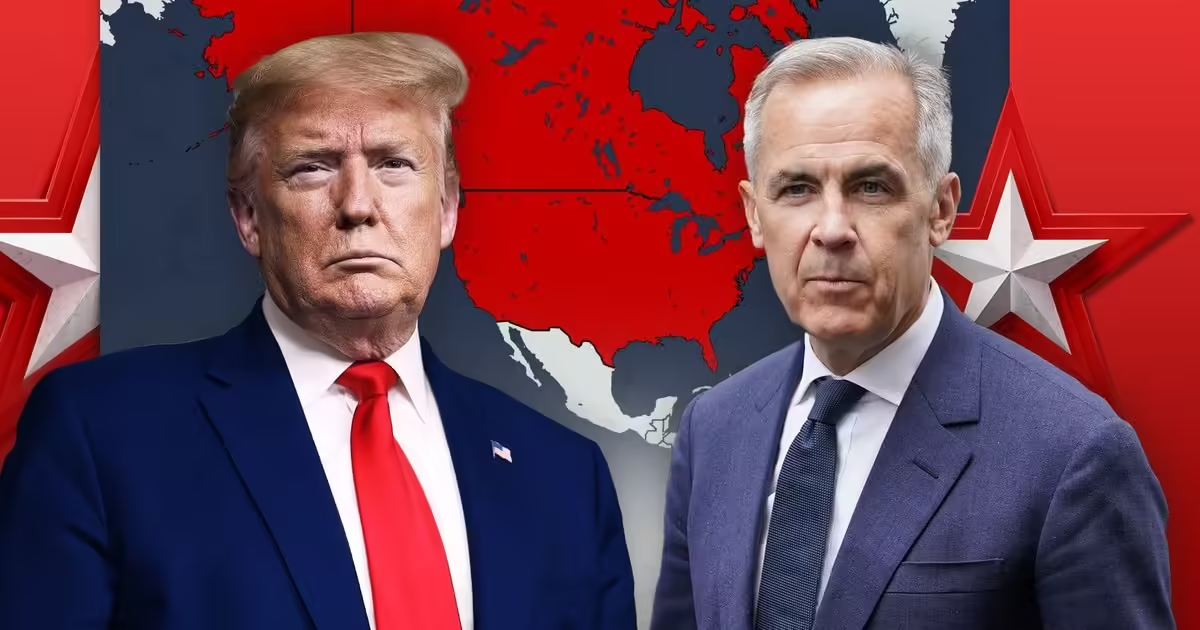

In response to prolonged trade pressure from Washington, Canada has presented a major budget plan to lessen its economic dependence on the U.S., while South Africa is rapidly expanding its commercial export channels with China.
Canada launches new budget plan to cut economic reliance on the U.S.
Canadian Prime Minister Mark Carney’s administration introduced a national financial budget titled “Masters of our Destiny” to shift the country away from long-held trade reliance on Washington.
Officials contend that commercial relations with the U.S. have undergone permanent changes that render pre-tariff conditions unlikely to return.
Supported by a windfall in domestic oil revenue, Ottawa’s C$142.1 billion spending package allocates targeted funding toward tax incentives, social housing, and critical national infrastructure, including energy production facilities and critical mineral mining.
The program also delivers direct economic assistance to workers in the steel and automotive sectors affected by American trade levies.
Canadian leaders emphasized that economic diversification must take precedence over relying on potential political shifts in Washington.
Finance Minister François-Philippe Champagne stated, “At its core, our plan is about changing Canada’s growth model”.
He further reinforced Canada’s resolve for economic self-reliance, noting, “No matter what happens south of the border, no matter what happens in the world, we will be more resilient, we will be stronger, we will be more independent”.
Even as American lawmakers express interest in restoring bilateral trade ties, Canadian Minister Dominic LeBlanc affirmed that official tariff negotiations rest with the White House, making Canada’s chief priority “diversifying our trading relationships”.
South Africa expands export trade with China amid shifting relations with the U.S.
In the Southern Hemisphere, political friction and trade uncertainty with Washington have led South Africa to deepen its economic integration across Asian markets.
Between May and August 2026, South African exports to China surged by nearly 25% year on year, while imports from China grew by 23%.
This trade acceleration was fueled by a zero-tariff policy implemented by Beijing in May for qualifying African exports, expanding market reach for South African agricultural goods, minerals, and manufactured products.
Announcing the recent trade metrics in Pretoria, Chinese Ambassador Wu Peng addressed South Africa’s trade deficit concerns, stating he was confident that “more high-value-added South African products would enter the Chinese market in the future”.
Source: africa.businessinsider.com