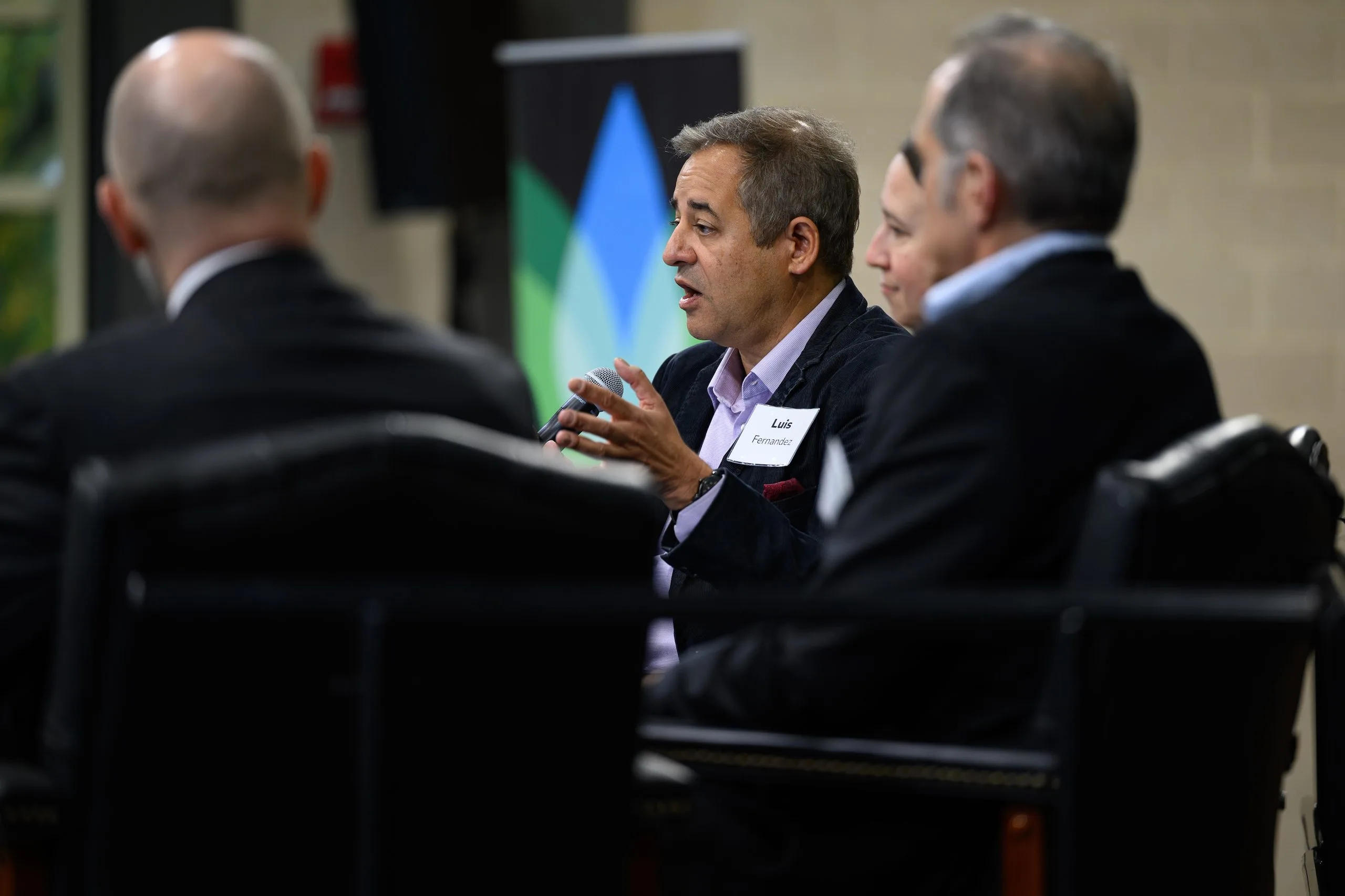

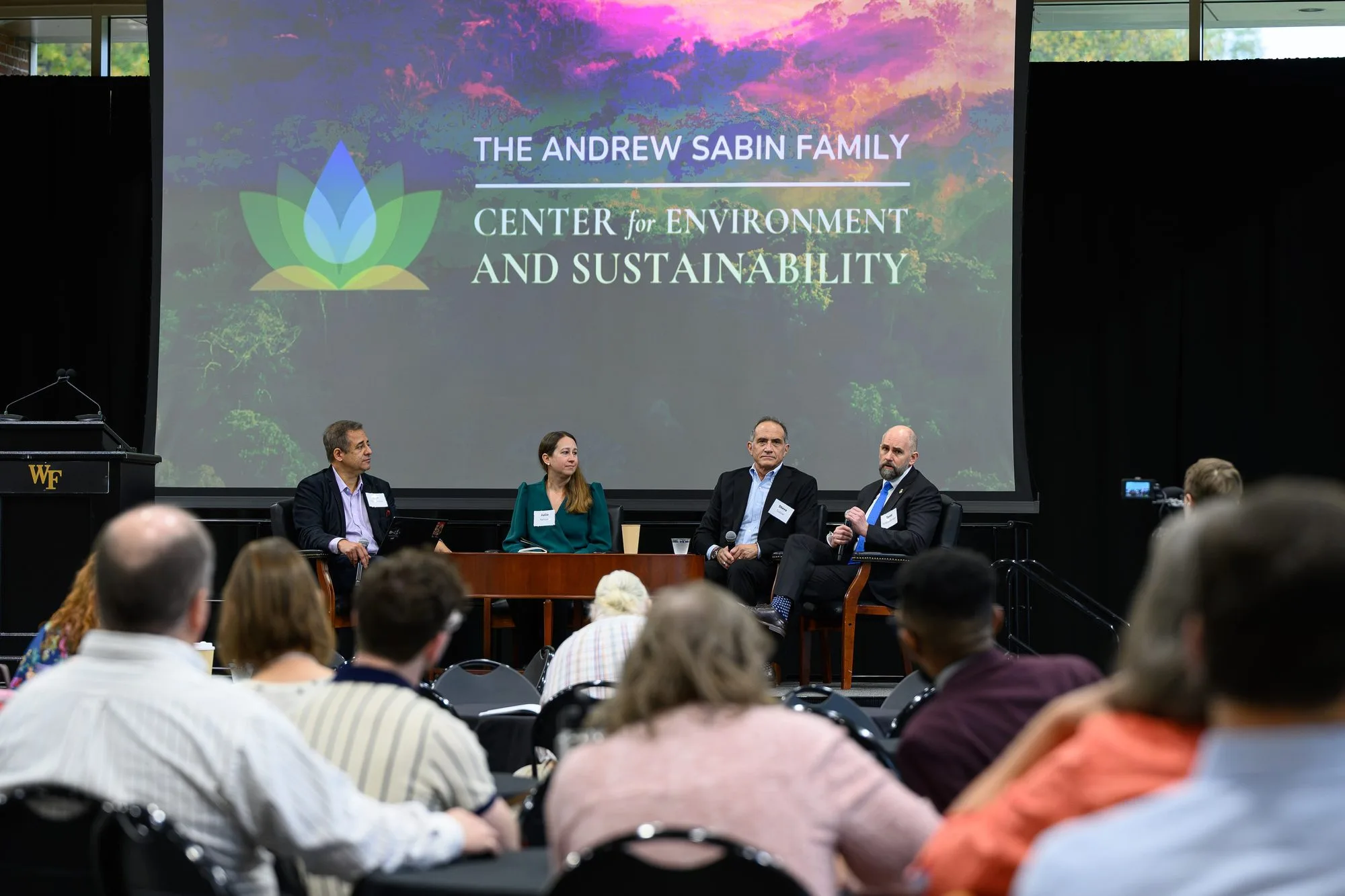
With organized criminal networks increasingly tapping into environmental crime as a very lucrative income source, Wake Forest University’s Sabin Center for Environment and Sustainability highlighted the issue and potential solutions during its annual conference on Thursday.
“We estimate that environmental crime is the third-largest criminal economy in the world in terms of proceeds generated,” said conference panelist Julia Yansura, program director for environmental crime and illicit finance at the FACT Coalition. “Criminal organizations … are highly opportunistic. They’re going to go where money is to be made and where risks are low.”
Luis Fernandezresearch professor of biology and senior fellow at the Sabin Center, sees the damage made by those illicit networks every day. As executive director of Wake Forest’s Center for Amazonian Scientific Innovation (SCIENCE), a research initiative in Peru, he studies the mercury pollution caused by artisanal and small-scale gold mining in the forest.
Small-scale miners use mercury to coax tiny flakes of gold out of the rainforest’s soils, which in turn poisons the water, air, soil, animals and, ultimately, humans.
But with the price of gold skyrocketing to more than $5,000 per ounce this year, small-scale mining operations have proliferated across the Amazon region to meet increased pressure from criminal organizations looking to make an easy profit.
‘Changing the systems that make environmental crime profitable’
What’s standing in the way of stopping the illegal mining and subsequent pollution?
The Sabin Center conference panelists—led by Fernandez and including Yansura, Todd Schoenberger of the U.S. Homeland Security Investigations Natural Resources and Extractive Commodities section, and Steven Solow of the Institute for Environmental Enforcement at the Elisabeth Haub School of Law at Pace University—say it’s a lack of enforcement, complicated by an array of contributing problems.
- The supply chain is hard to trace. Once the gold is refined, you can’t pinpoint its origin and legality.
- Shell companies and all-cash real estate deals help hide the proceeds. Organized criminals consider illegal gold mining a good way to launder money.
- Regulatory gaps. In the U.S., illegal mining isn’t listed as an underlying offense for federal money-laundering crimes, making them harder to charge and therefore a lower priority.
- Limited enforcement staff. The ranks of both U.S. enforcers and partners in other countries have shrunk.
The challenge lies in making environmental crimes like illegal gold mining riskier to undertake, according to Fernandez.
“Protecting forests, rivers, air, water, and communities means changing the systems that make environmental crime profitable,” he said.
It takes people working together ‘across all kinds of lines’
This year’s Sabin Center conference, “Sustainable, Just & Abundantly Wild: Resilient Leadership for our Era,” also included sessions on developing AI tools to help detect illegal gold mining in Peru, using storytelling to lead change, and building brands that support the planet.
One of the aims, said Sabin Center Executive Director Alan Townsendis to show that leadership comes from many places and across many disciplines—not just environmental science.
“Solving our environment and sustainability challenges takes, among other things, people stepping up to do something hard, people willing to give their time for causes beyond themselves, and people willing to work together across, well, all kinds of lines,” he said.
Kimberley McAllister, vice provost for research, scholarly inquiry and creative activity, said the moment demands that kind of leadership: people who care deeply about our future, and the future of the generations that follow us.
“That is, honestly, why I think the Sabin Center’s vision of a sustainable, just, and abundantly wild world matters so much right now, and why it sits at the heart of today’s conference,” McAllister said in her opening remarks. “The center uses the full power of the university to catalyze a global community of innovators, educators, and advocates, people working together to solve the essential environmental challenges of our time. And as those challenges grow in scope and complexity, the need for effective collective action from across campus to across the world only accelerates.”
About The Sabin Center for Environment and Sustainability
The Sabin Center at Wake Forest University brings together a team of over 130 faculty and fellows to work toward a shared vision of a sustainable, just and abundantly wild world. Collaborating across disciplines, cultures and perspectives to tackle the essential environmental challenges of our time, the Sabin Center’s work embodies Wake Forest’s Pro Humanitate spirit here in North Carolina and around the world.
Categories: Environment & Sustainability
Source: news.wfu.edu