
Key Insights
Grip strength is a strong predictor of overall health, cardiovascular risk and all-cause mortality.
As with any exercise, it is important for everyone to slowly build up the weight and the reps they are lifting to avoid injury; but the key to building grip strength is to be consistent. Parrish recommends incorporating grip-strength exercises into everyday activities such as walking or watching TV. Grip strength focuses on a person’s ability to use their hands. It is necessary for everyday activities such as opening jars, getting dressed and writing a note, among other daily tasks. Grip strength is also a strong predictor of overall health, cardiovascular risk and all-cause mortality. Experts at UAB St. Vincent’s are sharing some of their recommendations for how everyone can build up their grip strength.
“Hands are a huge part of everyday life and play a large role in your ability to interact with the world around you,” said Blair Parrish, director of Rehab Services at UAB St. Vincent’s Birmingham Bruno Rehabilitation Center. “There is a significant correlation between grip strength and your overall health. Those who have good grip strength tend to have less complications such as falls or injuries, which in turn can lead to longer, healthier lives.”
How is grip strength measured?
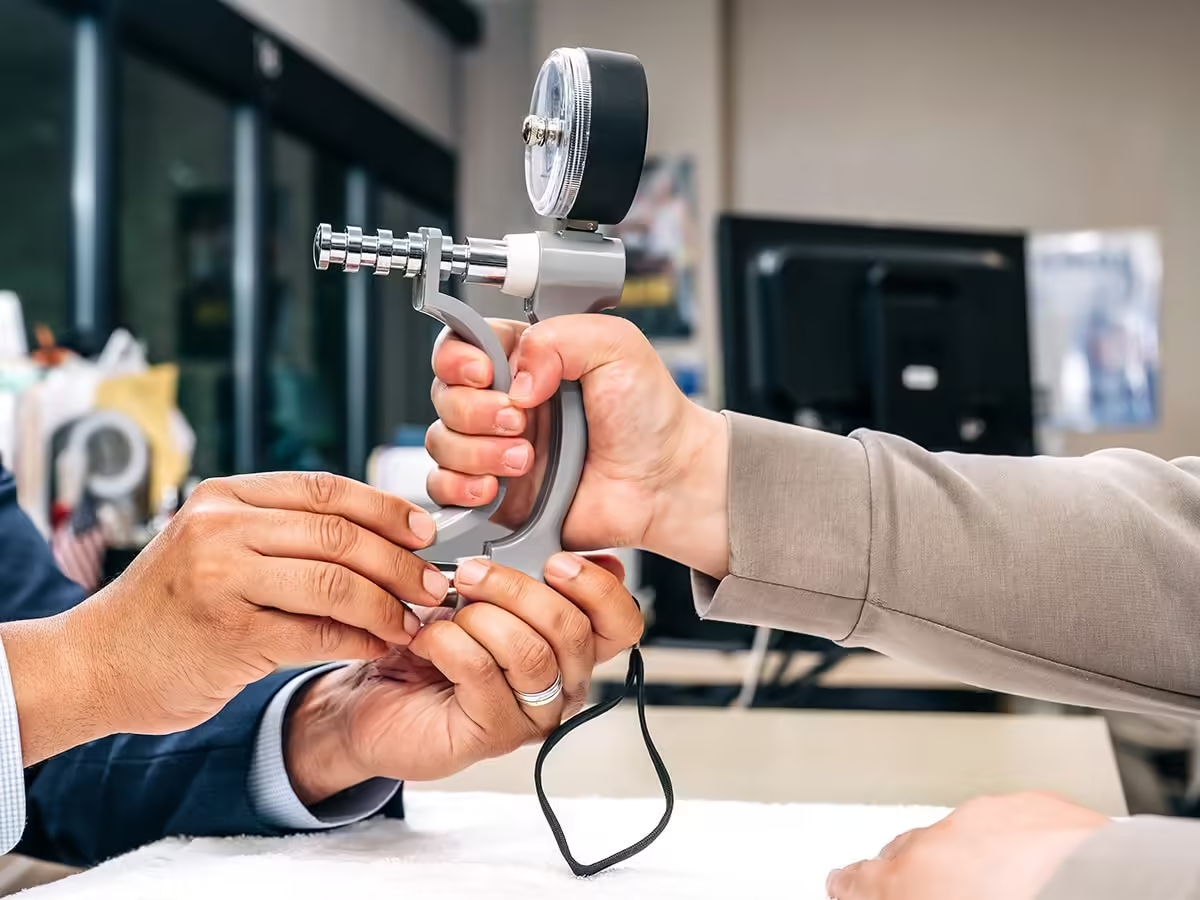
Healthcare professionals measure grip strength with a handheld tool called a hand dynamometer. During the test, patients will sit with their elbows bent at 90 degrees, squeeze the device as hard as they can for 90 seconds, and repeat this process a few times, so providers can get an overall average measurement of grip strength. If someone has low grip strength, providers will assess any other symptoms that accompany low grip strength, including asymmetrical strength and tingling or numbness in the hands. If providers believe the low grip strength is associated with potential neurological conditions, they may send patients to a specialist for further evaluation. If the low grip strength is determined to be caused by a muscular problem, physical and occupational therapists will work with the patient to increase their grip strength.
How can I increase grip strength?
As with any exercise, it is important for everyone to slowly build up the weight and the reps they are lifting to avoid injury; but the key to building grip strength is to be consistent. Parrish recommends incorporating grip-strength exercises into everyday activities such as walking or watching TV. Parrish encourages people to use typical household objects to improve grip strength, such as squeezing a squishy toy or stress ball; carrying equally weighted objects in both hands such as a small weight or water bottle while walking; carrying a light load of groceries instead of putting them into a shopping cart; or squeezing something like a rolled-up towel or washcloth during commercial breaks while watching TV.
“With any exercise, pay attention to your ability to complete the exercise,” Parrish said. “If you can squeeze or hold an object with your hands easily without any fatigue or slight soreness, increase the load or reps you are doing.”
Individuals should see improvements in their grip strength within a few weeks of consistent exercise. If they are not seeing improvement or are noticing numbness or tingling, it is time to reach out to a healthcare provider for assistance. Make an appointment with UAB St. Vincent’s.
Source: www.uab.edu