
“Picture a mother,” said Leyla Jeyte, a researcher and civic leader from Somalia. “Armed men are fighting for control of her city. Once before, she ran from violence – and she wonders if she needs to run again. Her children are hungry.”
“And she is not the only one. She is one of thousands like her.”
Ordinary people in Somalia are beset by challenges, Jeyte explained, with constant violence between government troops and various militant groups and a growing hunger crisis affecting over 5 million people.
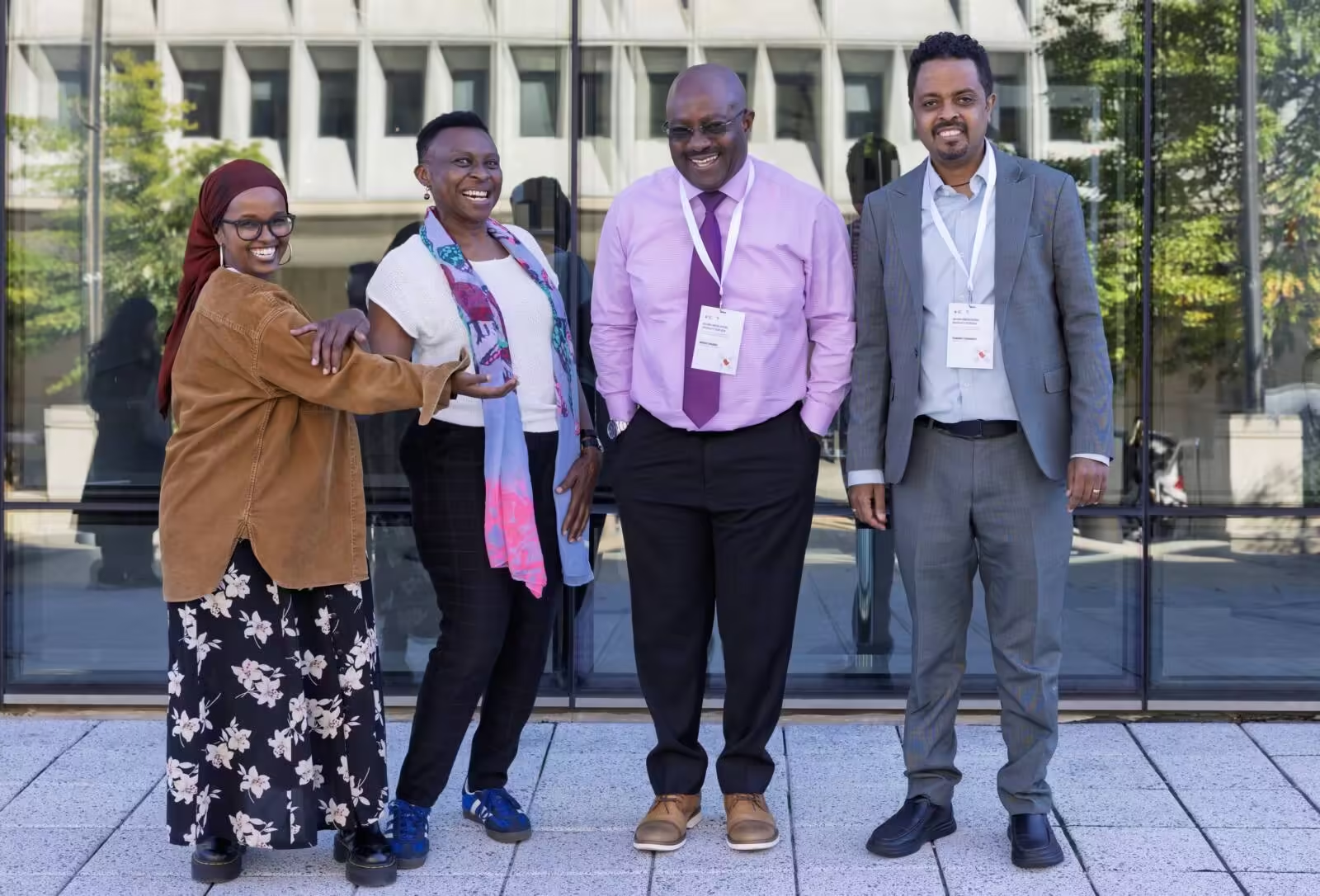
Jeyte was speaking to a room of policymakers in Washington DC last week. The American Friends Service Committee (AFSC), brought her, along with 20 other civic leaders from the Horn of Africa, to the United States to meet with policymakers, diplomats and faith leaders – and to talk about how people can help.
“It gives us hope that we have allies,” said Kennedy Akolo, AFSC’s regional director for Africa. “A lot of people think about the Horn of Africa and think about fragility. But there is also great hope there”. The Horn is the eastern part of the African continent, including the nations of Somalia, Djibouti, Ethiopia, Eritrea, Sudan, South Sudan, Uganda, and Kenya. AFSC’s work in Africa is mostly concentrated in eastern and southern Africa.
“The Horn of Africa is not failing,” Akolo explained. “It is being failed.”
We know that most people in the United States aren’t paying close attention to conflicts in East Africa. But the delegates who visited last week believe that policymakers in the U.S. government, as well as members of civic and religious communities here, would want to do more if they understood what was needed.
“People want to help,” Jeyte said. “But they often don’t know what they can do.”
Here’s what AFSC – and our friends across the Horn of Africa – would like to see from policymakers in the United States.
Kenya
“I want the international community to know that Kenya is facing a very, very difficult moment,” said Violet Muthiga, a Kenyan women’s rights advocate. “Women and children and civil society advocates live in fear. They are being abducted. They are being killed.”
In recent years, Kenya has seen a flourishing youth political movement, as young Kenyans demand greater accountability and transparency. Unfortunately, the rise in activism provoked increased repression from the government.
Moses Chasieh, the director of AFSC’s institute for research and advocacy in the Horn of Africa, says that there is likely to be violence in next year’s national elections in Kenya – violence that the international community can help to prevent.
What we’re asking the United States to do. Publicly support 1) peaceful elections and the right to protest in Kenya (rights guaranteed under the Kenyan constitution); 2) independent investigations into policy intimidation, abductions and extrajudicial killings; and 3) youth-led civic engagement.
Somalia
There is great political instability in Somalia, as competing factions clash over control of the state, alongside terrible violence, as government military forces battle the Islamist group Al-Shabaab, as well as local armed militias across the country.
This instability and violence has led to widespread hunger, made worse by severe drought. AFSC estimates that over 5 million people are facing significant hunger, including 2 million children. To make matters worse, the famine and violence have led millions of Somalis to flee their homes in search of food and safety, creating a refugee crisis.
Currently there is an African Union peacekeeping force in Somalia trying to protect civilians. But the force relies on financial and logistical support from the United States – and the U.S. has decided to cease all support by the end of the year, leaving Somalians to fend for themselves.
“This is very serious,” Chasieh explained. “An abrupt exit by the U.S. will put a stop to the political dialogue and undermine all peacebuilding efforts.”
What we’re asking the United States to do. Reconsider the withdrawal of support for the African Union peacekeeping efforts and continue monitoring the violence. Increase funding for humanitarian aid.
Sudan
“Sexual violence against women is continuing; it is happening right now in Sudan,” said Salwa Elsadik, a Sudanese humanitarian leader and women’s rights advocate. “We want to protect women. We must try and prevent this kind of atrocity. It should be a global issue.”
In the wake of a brutal civil war, the Sudanese people are facing famine and widespread violence from warring factions – the Sudanese Armed Forces (SAF) and the Rapid Support Forces (RSF) – much of it targeted against women and children.
What we’re asking the United States to do. Demand an immediate truce between combatants – and sanction the gold, weapons and mercenary networks financing the two sides. Demand unrestricted access for humanitarian aid and a fair political process
South Sudan
“South Sudan is on the precipice of a full-scale civil war,” said Moses Chasieh, AFSC”s director of research and advocacy in the Horn of Africa, describing escalating clashes between the government and various political factions. “A majority of South Sudanese people are traumatized, displaced, and rising humanitarian need.”
Making matters worse, the United Nations, led by the United States, has decided to withdraw resources and support from the country. AFSC’s Africa experts fear that without this international support for local peace efforts, South Sudan risks sliding into a catastrophic conflict.
South Sudan became a separate nation, independent from Sudan, in 2011.
What we’re asking the United States to do. Insist that the United Nations reverse the decision to withdraw support and protection for civilians. Demand the release of political prisoners. Increase funding for humanitarian aid and local peacebuilding efforts.
Source: afsc.org