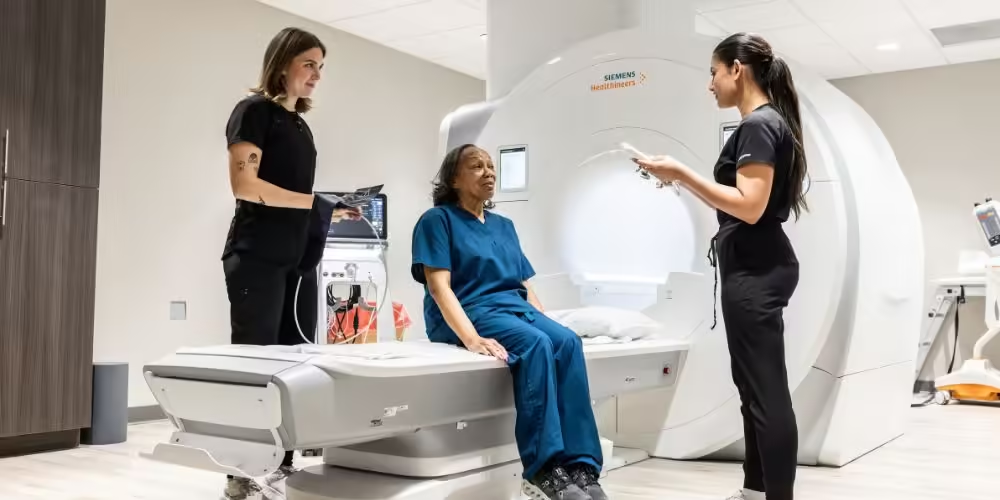

Two years ago, The University of Texas at Arlington launched the Arlington Study of Healthy Aging (ASHA) to better understand how adults age and why some remain healthier than others. Now, with more than 300 participants enrolled, the study has reached the halfway point toward its goal of 600, establishing it as a valuable resource for aging-related research across campus.
“The study’s gone exceedingly well. We’re on track, on target, halfway enrolled two years in, which is exactly where we ought to be,” said Michael Nelson, lead investigator and director of UT Arlington’s Center for Healthy Living and Longevity. “ASHA is doing exactly what it was supposed to do—it’s serving as a valuable resource to advance our knowledge and research in gerontology, health science and physiology. It’s generating data that helps us better understand how we can all age successfully.
“More than that, the project is helping to train the next generation of health professionals and biomedical scientists. ASHA is also propelling other research on campus forward, providing a solid foundation for future innovation and discovery.”
Beyond advancing scientific discovery, ASHA also benefits the community members who participate. Volunteers receive extensive health screenings and assessments that provide valuable insights into their overall health. In some cases, those screenings have uncovered serious health conditions participants didn’t know they had.
Dr. Nelson said researchers have identified several previously undiagnosed conditions, including cancerous brain tumors and an aortic aneurysm, giving participants an opportunity to seek medical care for them.
“Not only are participants giving back to science and helping future generations age more successfully, but the study has also proven to be a valuable screening tool,” Nelson said.
Call for volunteers
As the study moves toward its goal of enrolling 600 participants, researchers are seeking additional volunteers.
“We’re halfway to our goal, and now we need the community’s help to get us across the finish line,” Nelson said. “We’re especially seeking more male participants and volunteers from our Black and Hispanic communities as we work toward building one of the most comprehensive healthy aging datasets of its kind.”
Related: Aging well: A behind-the-scenes look at the Arlington Study of Healthy Aging
To participate in ASHA, participants must meet the following criteria:
- Ages 50-85
- Tarrant County resident
- Must not be undergoing active treatment for cancer or have been diagnosed with a chronic disease such as heart failure, renal failure on dialysis, Parkinson’s disease or dementia
- Not have vision or hearing impairments that prevent them from completing study activities
- Have an estimated life expectancy of less than four years

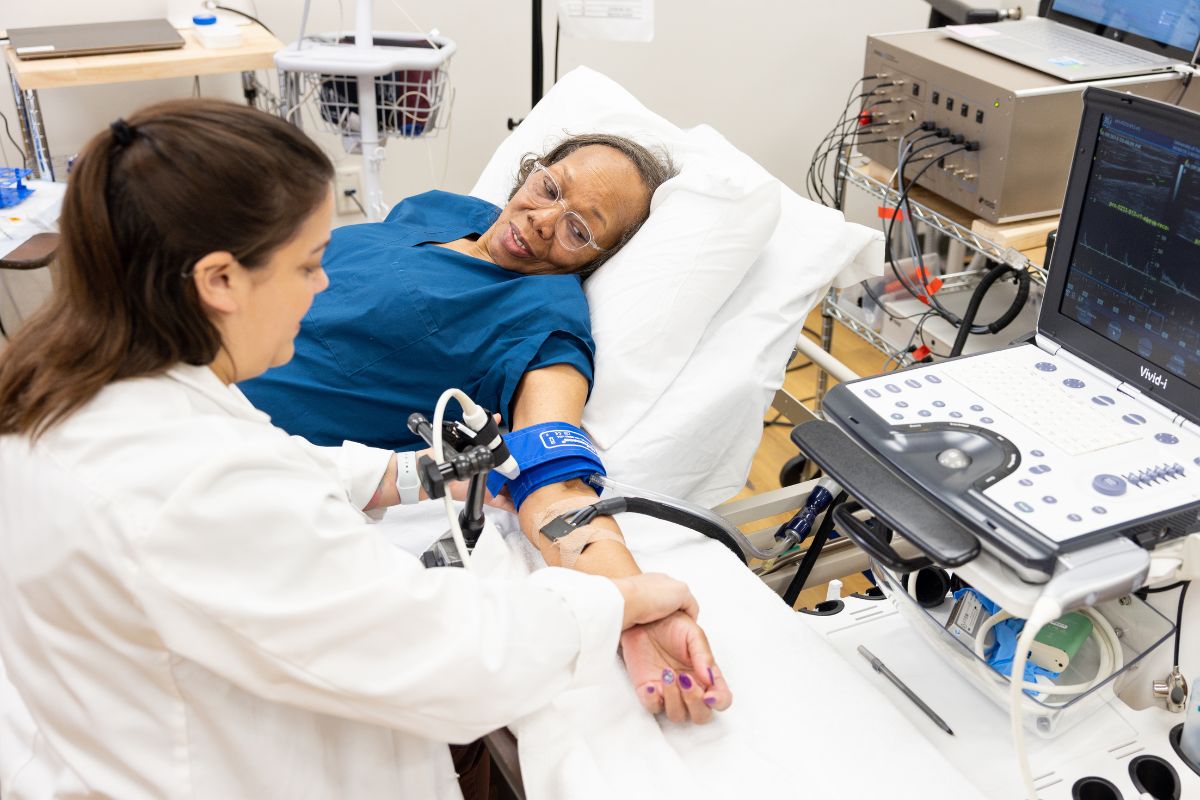
Participants undergo two days of testing at UTA. On the first day, they receive a full-body MRI, including images of the brain, heart and skeletal muscle. On the second day, researchers assess blood vessel function, memory and physical performance, and collect a small blood sample.
Science benefits
There are layers of benefits from a study of ASHA’s magnitude, Nelson said.
In addition to generating valuable scientific data, ASHA has become an important resource for researchers across campus. The study’s growing dataset has already helped UTA secure major external funding, including an $8 million National Institutes of Health grant in collaboration with Cedars-Sinai Medical Center in Los Angeles.
ASHA is also supporting new research projects led by UTA faculty.
For instance, Kamal Awad, assistant professor of research in the Bone-Muscle Research Center and faculty member in the Department of Kinesiology, received the American Heart Association Career Development Award, a $231,000 grant over three years that will help researchers better understand how changes in heart and skeletal muscles are connected as people age. Dr. Awad is using data collected through ASHA for his research.
Related: UTA researcher earns AHA award for aging research
“This project goes beyond the status quo by using detailed human data from the ASHA study to identify specific molecular pathways and biomarkers that link heart dysfunction to skeletal muscle decline,” Awad said. “The long term goal is to enable earlier detection and more targeted, personalized therapies for older adults at risk. Ultimately, we want to find cause and effect.”
ASHA has also strengthened collaboration across campus, supporting UTA’s growth as a health sciences research institution. The study brings together researchers from the College of Nursing and Health Innovation, College of Science, College of Engineering and School of Social Work, creating a shared resource for a wide range of aging-related research initiatives.
The benefits extend to students, too.
Over the past two years, ASHA has helped train the next generation of healthcare professionals, engaging approximately a dozen undergraduate students in data collection, analysis and other hands-on research activities.
Ledia Kamel, a senior biology major who plans to attend medical school after graduation, said working with ASHA has been “one of the most valuable parts of my experience at UTA.”
She described her experience in the lab, from pipetting and centrifuging blood samples to analyzing MRI scans using advanced medical imaging software.
“There’s a big difference between learning about scientific concepts in a lecture and seeing how they’re applied in a research setting,” Kamel said. “Being part of ASHA has allowed me to learn things that I wouldn’t necessarily have the chance to experience in a traditional classroom, and I think that’s what has made my time at UTA so meaningful.
“It’s also given me a better understanding of the research process and has made me even more excited to pursue a career in medicine.”
The same is true for Emily Hernandez, a senior exercise science major who also plans to attend medical school. Through ASHA, Hernandez has gained experience interacting with participants and administering diagnostic assessments such as the Ankle-Brachial Index and the Short Physical Performance Battery.
“Given the interdisciplinary nature of the project, this experience has enhanced my analytical skills and critical thinking capabilities,” Hernandez said. “Overall, my involvement with ASHA has deepened my appreciation for clinical research and has further reinforced my commitment to entering the field of medicine.”
ASHA is generating thousands of anonymized data points that researchers can use to unlock new insights into the aging process for years to come.
“To me, this is the trifecta,” Nelson said. “It’s advancing medicine, training the next generation, and serving as a valuable resource that stimulates and supports other research on this campus.”
For more information on ASHA or to become a volunteer, visit https://asha-study.uta.edu/.
About The University of Texas at Arlington (UTA)
The University of Texas at Arlington is a growing public research university in the heart of Dallas-Fort Worth. With a student body of over 42,700, UTA is the second-largest institution in the University of Texas System, offering more than 190 undergraduate and graduate degree programs. Recognized as a Carnegie R-1 university, UTA stands among the nation’s top 5% of institutions for research activity. UTA and its 300,000 alumni generate an annual economic impact of $28.8 billion for the state. The University has received the Innovation and Economic Prosperity designation from the Association of Public and Land Grant Universities and has earned recognition for its focus on student access and success, considered key drivers to economic growth and social progress for North Texas and beyond.
Source: www.uta.edu