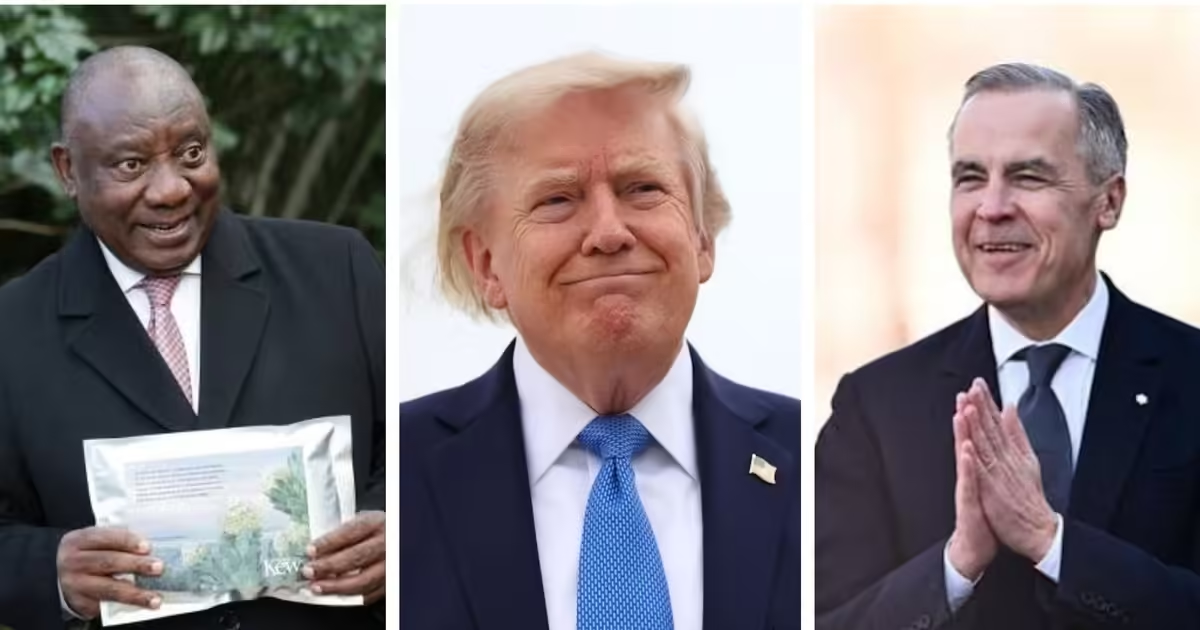

The November 3 midterm elections saw Republicans lose their majorities in the Senate and House of Representatives, with Democrats securing victories in Republican strongholds, including Texas, Kansas and South Carolina.
Republicans suffered the setback amid rising living costs, Trump’s tariffs and the eight-month Iran war, which disrupted energy supplies and pushed Brent crude to $138.21 per barrel in April, its highest level since 2008, fuelling US inflation.
From what Business Insider Africa has gathered, the results could encourage America’s trade rivals and dissatisfied partners to resist Washington’s demands, delay investments and seek better trade deals as Trump will now have to answer to a Democrat-controlled Congress.
China seeks tariff relief as Trump loses control of Congress
China is among the countries that could use Trump’s weakened political position to push for more favourable trade terms, particularly as Beijing seeks to recover exports lost to American tariffs.
The impact of those restrictions is reflected in US trade figures, which show that America’s goods trade deficit with China narrowed from $295.5 billion in 2024 to $202.1 billion in 2025.
With a temporary trade truce approaching expiration in January 2027, Beijing could seek lower tariffs and fewer technology restrictions, calculating that Trump faces greater political resistance to another trade war.
Saul Eslake, an economist at Corinna Economic Advisory in Australia, believes China could take advantage of the changing political balance in Washington.
“Xi Jinping will recognize that Trump’s authority has been greatly weakened by these results, and will no doubt be thinking about ways of exploiting that,” Eslake told Reuters.
Although Beijing has not publicly indicated plans to exploit Trump’s political setback, China’s Foreign Ministry spokesperson Mao Ning described the elections as an internal US matter, saying the country would continue managing differences and expanding cooperation with Washington.
Canada signals willingness to wait out Trump
Canada could also find greater support in Washington after months of difficult trade negotiations between Prime Minister Mark Carney and Trump’s administration over tariffs and market access.
Talks stalled in August after Ottawa rejected American demands, while tariffs on Canadian steel, aluminium and other products continued to strain relations between the neighbouring economies.
In an October 30 interview with POLITICO, Carney indicated that Canada would rather wait for another American president than accept an unfavourable agreement.
Asked whether Canada could hold out until Trump’s successor took office, he replied: “Well, if that’s what it takes, yeah.”
His position could receive support from Democrats, particularly Senator Ron Wyden, a senior member of the Senate Finance Committee, who has called for removing tariffs on Canadian goods because of their impact on businesses and consumers.
India could delay concessions to Washington
India could gain negotiating flexibility as New Delhi seeks better trade terms while American consumers face higher prices on imported goods.
Washington imposed tariffs of up to 50% on Indian products in 2025 amid trade disputes and disagreements over India’s purchases of Russian oil. The restrictions affected textiles, jewellery and footwear, increasing costs for American importers.
The countries agreed in February 2026 to a framework reducing tariffs on most Indian goods to 18%, but negotiations remain unfinished.
Indian Commerce Minister Piyush Goyal said the agreement had reached the final drafting stage, although New Delhi would proceed only if it secured an advantage over competing exporters.
Finance Minister Nirmala Sitharaman also acknowledged in October that further concessions would be “very, very difficult” for both sides.
The Democratic victory could encourage India to resist additional demands as Trump faces greater scrutiny of his trade policies from the Democrat-controlled Congress.
South Africa seeks relief amid AGOA crisis
South Africa faces a trade setback after Washington announced on November 2 that it would remove the country from the African Growth and Opportunity Act (AGOA) on January 1, 2027, following months of diplomatic tensions over Pretoria’s domestic and foreign policies.
The decision threatens preferential access for South African exports, including vehicles, citrus fruits and wine, adding to existing trade pressures after the country’s agricultural exports to the US fell by 28% in the second quarter of 2026.
President Cyril Ramaphosa previously urged South Africans to prepare for possible exclusion, saying: “We should not go out and jump off tall buildings and think that this is the end of the world.”
However, in a sharp reversal of his earlier cautious stance, Ramaphosa welcomed the Democratic victory on November 4, saying: “We have seen that the Democrats have taken control of the Senate and of the House, and the people of America have spoken.”
He added that the results could introduce “a new era in world relations”, raising hopes of improved ties with Washington.
“We’re hoping that, on a bilateral basis, there will be a coming together of minds, where we will find a proper path forward on geopolitics as well as on trade matters and investment matters,” Ramaphosa said.
Source: africa.businessinsider.com