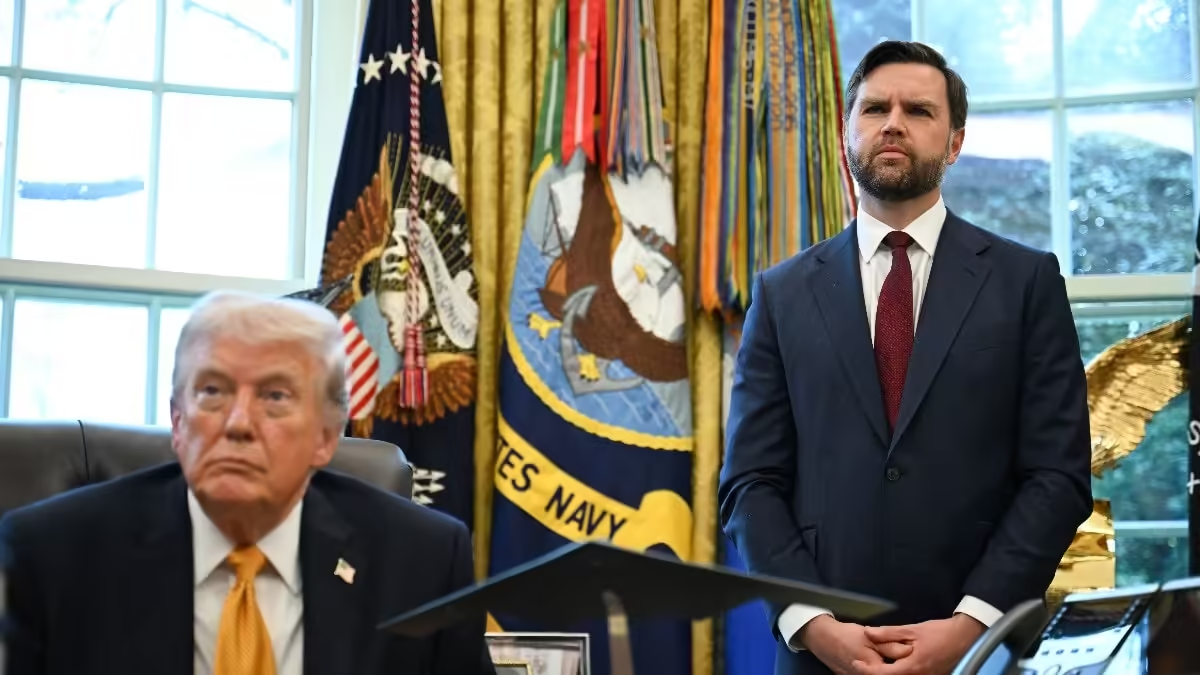

The nationwide drubbing of the Republican Party in the 2026 midterm polls in the United States has exposed a sharp divide right at the top: between the President and the Vice-President. In their reactions to the Republicans’ stunning defeats in the US House, Senate, and several state Governor’s Houses and legislatures, both seemed to distance themselves from the other, with Vance going as far as to question the policies of the very administration of which he is a part.
Both Trump and Vance identified the Iran war as a factor in the results. However, while the Vice-President seemed to question the wisdom of launching the military offensive, the President defended the war, saying he’d do it all over again.
In a lengthy, sobering post on X, JD Vance reflected on what he said were the primary causes of the Republicans’ poor show: the war against Iran, rising cost of living, a missing American First policy, and the US’s relationship with Israel.
While Vance didn’t shy away from being part of the administration responsible for these factors, he called out the war on Iran in a stark public admission that the overseas offensive had boomeranged domestically.
Trump, on the other hand, admitted that the Iran war had played a role in the results, but said that he did not regret it and that he would do it all over again.
Crucially, when asked specifically about Vance’s analysis of the midterm results, Trump offered a vague answer. “Well, that’s it. I knew he was I know how he feels about it. I think it was fine, yeah. I thought it was good. We knew that. I knew that when I went in. And we stopped them from having a nuclear weapon, and they will never have a nuclear weapon,” he reportedly said, before going on to add that “maybe” Vance won’t run for President in 2028.
Trump’s comments, while characteristic in nature, were telling since they came just as people began interpreting Vance’s X post as the US Vice-President’s attempt at launching a potential 2028 presidential bid.
VANCE DISTANCES SELF FROM TRUMP
Vance’s assessment of the Republican defeat could be read as an attempt to acknowledge the issues that hurt the party without directly disowning the administration he serves. His criticism of the Iran war was particularly significant, given that Trump has repeatedly defended the military campaign and presented it as necessary to prevent Tehran from developing nuclear weapons.
The Vice-President also pointed to the rising cost of living and the administration’s failure to deliver on its America First promises. These issues have remained central to voters’ concerns, and the election results suggest that the Republican message failed to convince a significant section of the electorate.
By identifying these factors, Vance appeared to recognise that the party could not simply dismiss the defeat as a temporary setback. His remarks also raised questions about whether he would seek to distinguish his political positions from Trump’s as the Republican Party begins looking towards its next presidential candidate.
However, Vance cannot entirely separate himself from the administration’s record. He has been one of Trump’s closest political allies and has defended several of the President’s major decisions. Any attempt to present himself as a candidate for change will therefore have to contend with his own role in shaping the policies now facing criticism.
TRUMP QUESTIONS OPEN OVER VANCE’S FUTURE
Trump’s reaction offered a different reading of the Republican defeat. While acknowledging that the Iran war had affected the results, he maintained that the military campaign was justified and that he would make the same decision again.
His response to Vance’s assessment was more revealing. Rather than openly endorsing or rejecting the Vice-President’s remarks, Trump gave an ambiguous answer before suggesting that Vance might not contest the 2028 presidential election.
“Maybe he won’t run, I don’t know who’s gonna run. But I can tell you that as far as that war is concerned, I would have done nothing different,” he said to the reporters.
The comment came at a time when speculation over Trump’s potential successor within the Republican Party is already gaining momentum. Vance has long been viewed as one of the leading figures who could carry the party’s political project forward after Trump’s second term.
Trump’s remarks, however, offered no clear indication that he was ready to back Vance as his successor. The suggestion that the Vice-President might not run in 2028 could also be interpreted as a reminder that the final decision on the party’s future leadership remains uncertain.
DESANTIS, CRUZ AND ROMNEY ADD TO THE LEADERSHIP DEBATE
The divide between Trump and Vance is unfolding alongside a wider debate within the Republican Party over its electoral strategy and leadership. Florida Governor Ron DeSantis and other Republican figures have also weighed in on the party’s future following the losses.
DeSantis has warned that Republicans could face prolonged electoral setbacks if they fail to reassess their approach.
His remarks indicate that the defeat has opened the door to competing views on how the GOP should rebuild its political standing.
Texas Senator Ted Cruz has also called for the party to address voters’ economic concerns. Speaking on his podcast, Cruz said Republicans needed to respond to the issues affecting working Americans.
“We need to listen and respond. We need to champion economic policies that make a real difference in working people’s lives and we need to deal with the consequences,” Cruz said.
His comments came amid growing criticism of the administration’s tariffs, the war in the Middle East and the construction of data centres. Cruz also raised concerns about the changing political landscape in Texas, warning that “Texas is blue”.
Former Republican Senator Mitt Romney also criticised the direction of the party in a post on X, pointing to Trump’s tariffs, what he described as an “impulsive” war and apparent corruption.
“Bad policy, bad character make bad politics. Hoping for a course correction, for the country and for my party,” Romney wrote.
The remarks from Cruz and Romney reflect concerns among Republican figures over the party’s economic messaging, foreign policy decisions and political direction.
With Democrats securing control of both chambers of Congress, the Republican leadership faces pressure to explain the scale of the losses and identify the changes needed before the next election cycle.
The defeat has therefore become more than a dispute over individual policies. It has raised questions about whether the party should continue to follow Trump’s political approach or begin preparing for a transition to a new generation of leadership.
THE ROAD TO 2028 BEGINS AMID REPUBLICAN UNCERTAINTY
For Vance, the political calculation is complicated. He must maintain his relationship with Trump and the President’s supporters while establishing himself as a leader capable of addressing the concerns that contributed to the Republican defeat.
A sharp break with Trump could damage his standing among the party’s core voters. At the same time, remaining closely aligned with every administration decision could make it difficult for Vance to present himself as a candidate with a distinct political vision.
Trump, meanwhile, continues to command considerable influence over the Republican Party. His comments about Vance’s possible presidential bid suggest that he has not yet settled the question of succession, even as other Republican leaders begin positioning themselves for the next electoral contest.
The midterm results have exposed the political risks of the administration’s approach, but they have also accelerated the debate over who will lead the Republican Party after Trump. For now, the President and Vice-President remain part of the same administration. Their contrasting responses to the defeat, however, suggest that the contest over the party’s future may already have begun.
– Ends
Source: www.indiatoday.in