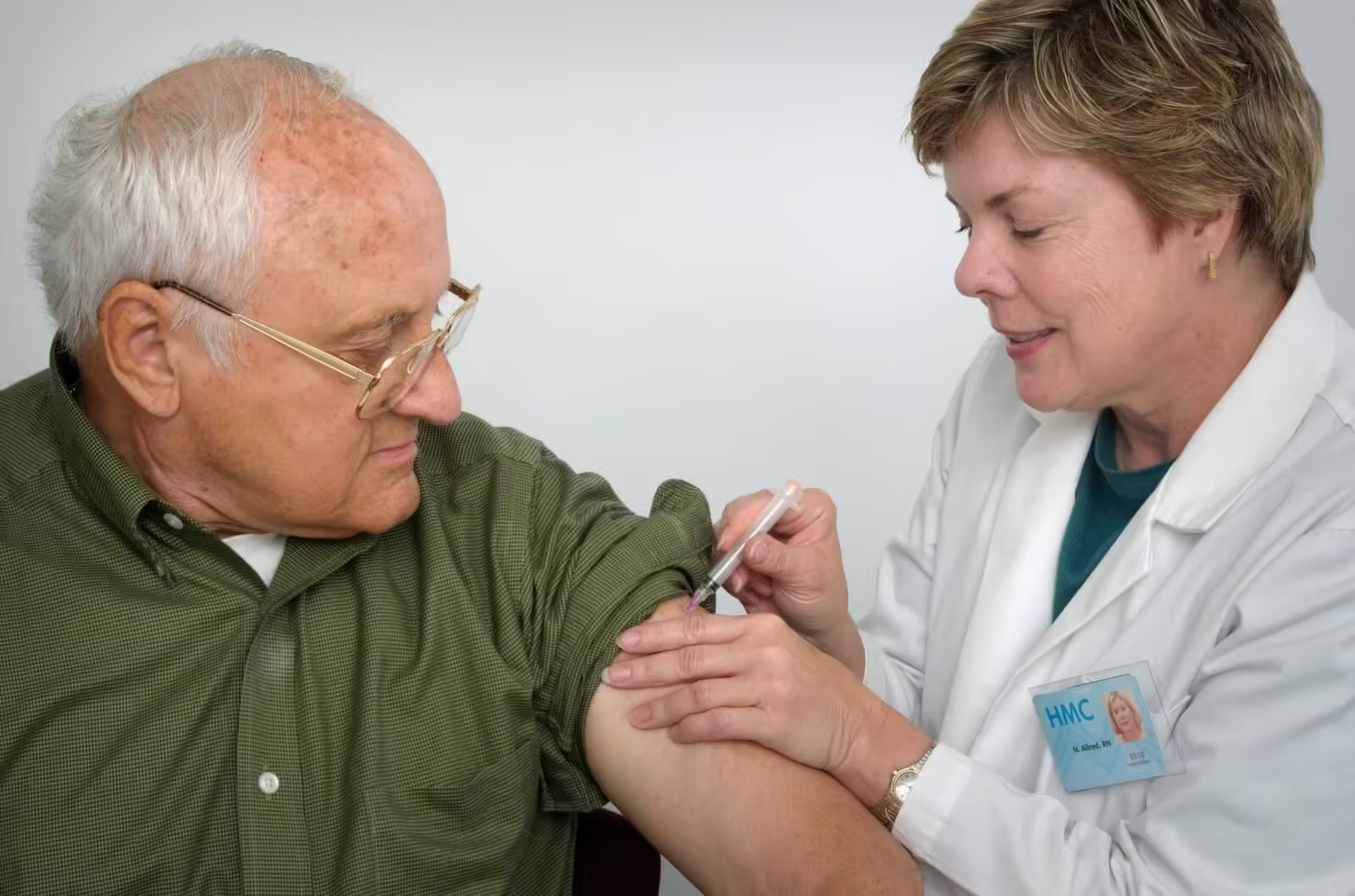

Photo by CDC via Immunize.org.
Flu can be a serious, even deadly illness for older adults. People over 60 make up less than 20% of the population but account for more than 80% of serious flu complications, and the CDC estimates that 70% to 85% of seasonal flu deaths are in people 65 and older. With flu activity already rising in the West and older adults’ vaccination rates slipping, this fall is a good time to remind readers why the shot matters, report on who is missing it, and what is changing this year.
Last season’s data
Nationally, CDC rated 2025–26 a moderate season but estimates at least 390,000 hospitalizations and 24,000 deaths overall from an H3N2 variant, subclade K. Northeast states like New York had a rough winter: more than 4,500 people were hospitalized with flu statewide in a single week in late December—the highest weekly count the state has recorded. These are preliminary, modeled, or state-reported figures, so reporters covering their own state trends should stress that these are estimates, unless your state health department notes otherwise.
Who isn’t getting vaccinated?
- Older adults: 64.4% were vaccinated in 2025–26, below the 70% Healthy People 2030 goal and down from 75.2% in 2020–21.
- Federal survey data show older adults’ vaccination rate fell to 67.1% in 2024 from 70.5% in 2019. A University of Michigan Healthy Aging poll attributed much of the drop to vaccine hesitancy and confusion.
- Provider recommendations: During the 2025–26 flu season, only 57.7% of U.S. adults age 65 and older reported that their health care provider recommended flu vaccination, according to CDC. This interactive map from America’s Health Rankings shows flu vaccination rates in each state over the last 12 months.
- Nursing homes: In 2024–25, 61.3% of residents and 42.1% of staff were vaccinated.
- Race and location: Across all ages, coverage was 45.6% for White people and 38.0% for Black people.
What’s new this year
- An early start in some states: Health authorities say the season may be starting early in some western regions, but it’s too soon to say nationally. All three vaccine strains were updated for 2026–27. The Pan American Health Organization’s preliminary Southern Hemisphere data show 27% effectiveness against H3N2 hospitalization, but there’s no guarantee of similar efficacy in the Northern Hemisphere.
- Which shot to get: The American Academy of Family Physicians recommends high-dose, recombinant or adjuvanted shots for adults 65 and older, in line with CDC. Other medical groups are banding together to issue similar recommendations amid confusing and potentially misleading information from the Trump administration, NPR reported. If no high-dose vaccine is available, any age-appropriate shot is advised.
- How strong is the evidence? A pooled analysis of eight trials found high-dose vaccines linked to 38.5% fewer flu hospitalizations than standard-dose, but only 11.5% fewer flu or pneumonia cases and 3.3% fewer all-cause hospitalizations. Although this was a Sanofi-funded study, independent experts told CIDRAP they saw no sign of bias.
- Timing: September and October are generally the ideal months for a flu shot, but it’s not too late. The CDC recommends getting vaccinated throughout the flu season as long as flu viruses are circulating and the vaccine is available.
- ACIP confusion: In March, a federal judge blocked HHS changes and said the reconstitution of the vaccine advisory committee, ACIP, likely violated federal law; HHS has appealed. Four medical societies published their own fall recommendations. A Commonwealth Fund analysis warned this ambiguity could lead to confusion and create roadblocks to getting vaccinated.
- A new mRNA option: FDA approved mFlusiva on Aug. 5 for adults 50 and older. For adults 65 and older, approval is accelerated, based on immune response, and a confirmatory study is required. Four vaccines, including mFlusiva, beat standard-dose shots, but The Medical Letter says there is insufficient evidence that any one is superior.
- Treatment: CDC recommends prompt antiviral treatment for older adults with flu or suspected flu, and all tested H3N2 viruses last season were susceptible.
Story ideas
- Ask county health departments and hospitals for age-based counts, including 75 and older. Outlets reported different weekly case totals, so go straight to the state.
- Ask for nursing home and assisted living resident and staff vaccination rates, outbreak plans, and how quickly residents are tested and given antivirals. Nursing home reporting to CDC doesn’t cover assisted living.
- Ask about access. Do local pharmacies and clinics stock high-dose, adjuvanted or recombinant shots? How are they billed?
- Fewer than six in 10 older adults got a provider recommendation. Ask primary care practices and older adults what’s getting in the way.
- Coverage and pharmacist rules: How is the ACIP fight playing out locally? See AHCJ’s explainer on the August executive order on vaccine policy.
Resources
Source: healthjournalism.org