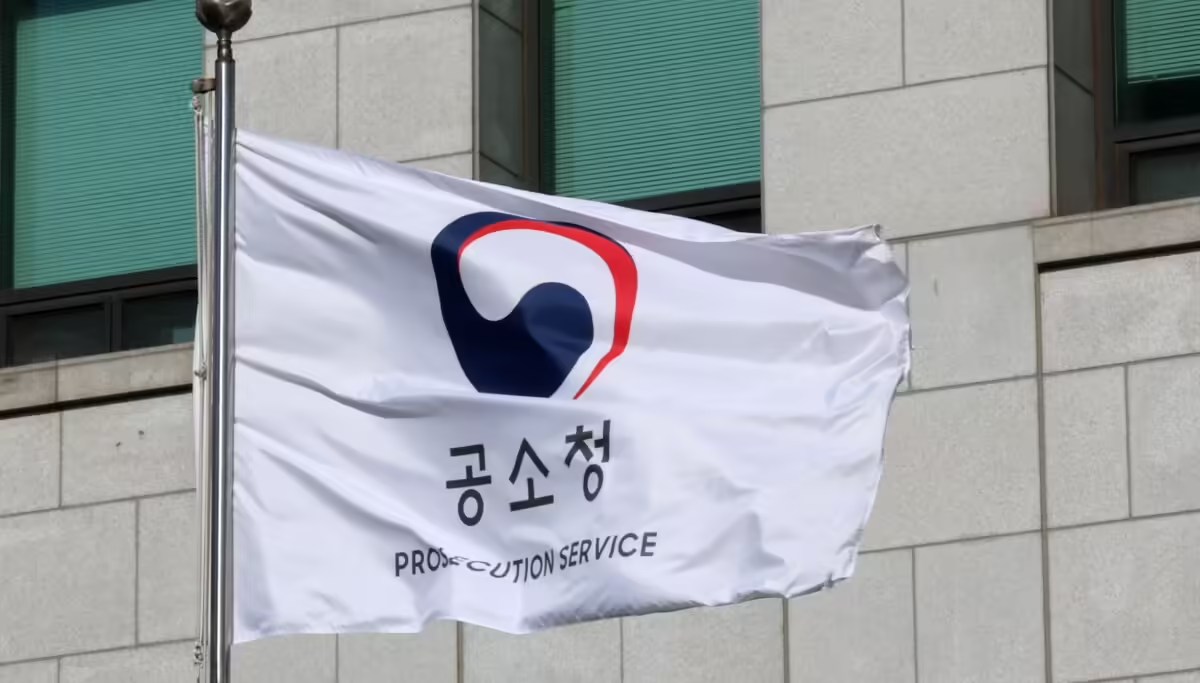

A rushed justice-system overhaul requires prosecutors to notify fugitives when phone records are accessed, raising concerns that suspects could evade arrest.
A tool that once allowed prosecutors to secretly track fugitives through their telecommunications records could now do the opposite — effectively telling those on the run that they are being tracked.
Under new amendments to the Protection of Communications Secrets Act, in effect since Oct. 2, convicted fugitives who have evaded imprisonment must be notified in writing within 30 days if the Prosecution Service accesses their telecommunications records to track them down.
Telecommunications records include details of who a person called, when the calls took place and which cell towers their phone connected to.
Such information can provide crucial leads in tracking down fugitives who have yet to serve their prison sentences. However, under the revised Protection of Communications Secrets Act, prosecutors can defer notification only in cases under investigation, not when seeking records to enforce a sentence.
“Determining whether a fugitive is actually using a cell phone can take a substantial amount of time,” a Prosecution Service official said Tuesday. “Even after identifying the user, investigators often need to conduct surveillance near cell towers to pinpoint their location. That is why notification is typically deferred until the fugitive is apprehended.”
Such notifications could tip off fugitives before their arrest and give them time to change phone numbers or relocate, according to the official. This could render earlier investigative efforts futile.
Tracking down fugitives who have yet to serve their prison sentences has become increasingly difficult as more turn to encrypted messaging apps such as Telegram to avoid detection through cell tower records. The number of people with outstanding custodial sentences has steadily risen from 5,340 in 2021 to 6,429 last year.
The legal gap stems from a sweeping overhaul of the criminal justice system, built on the principle that separate bodies should handle investigation and prosecution.
An amendment to the Protection of Communications Secrets Act, introduced by Democratic Party Rep. Park Jie-won, removed a provision that allowed prosecutors to request telecommunications records for investigative purposes and instead established separate authority to obtain them to enforce sentences. The revised law requires prosecutors to notify individuals within 30 days, with no allowance for postponement. Notification can still be deferred in ongoing investigations.
“There were concerns about minimizing intrusions into privacy, and we determined that delaying notification would offer little practical benefit when telecommunications records were accessed to enforce sentences,” an official from Park’s office said. “With a new criminal justice system in place for the first time in 78 years, it is important to address any shortcomings promptly.” The official added that the office would assess the situation through the Ministry of Justice and consider further amendments if necessary.
The amendment was introduced on Sept. 8, passed the National Assembly on Sept. 17 and took effect on Oct. 2, less than a month after its introduction. At the time, roughly 140 laws, including the Protection of Communications Secrets Act, required revisions as prosecutors lost their investigative powers and the Supreme Prosecutors’ Office, which had overseen both investigations and indictments for more than 70 years, was replaced by the Prosecution Service, a new agency under the Justice Ministry that only handles indictments and trials.
The fallout from the reforms could extend well beyond the Protection of Communications Secrets Act, with critics warning of unexpected challenges to the admissibility of evidence in court.
Under the revised Monopoly Regulation and Fair Trade Act, the Fair Trade Commission (FTC) must consult the prosecutor general, the head of the Serious Crime Investigation Agency or the head of the National Office of Investigation on consent decrees, which allow businesses to voluntarily address alleged violations without a formal determination of wrongdoing. Previously, the law required consultation only with the prosecutor general.
The amendment leaves unclear which official the FTC must consult, and consultations solely with the head of the Serious Crime Investigation Agency could put the commission at odds with the prosecutor general, who holds the authority to prosecute.
The Justice Ministry and the Prosecution Service have identified the missing provision for deferred notification in sentence enforcement cases under the Protection of Communications Secrets Act. Authorities are weighing amendments to close the gap and auditing other laws revised alongside the Criminal Procedure Act for similar flaws. They plan to compile their findings and pursue further legislation to reduce confusion.
BY Jeong Jin-ho, Kim Seung-jin [[email protected]]
This article was originally written in Korean and translated by a bilingual reporter with the help of generative AI tools. It was then edited by a native English-speaking editor. All AI-assisted translations are reviewed and refined by our newsroom.
Source: www.koreajoongangdaily.com