
While football fields and game boards aren’t traditional venues for sharing university research, both are helping University of Arizona researchers bring their work to audiences who might never encounter it otherwise. As part of the Sandstorm celebration, the Nov. 6 Wildcats football game against TCU and a board game about saving saguaros will put the university’s groundbreaking research surrounding the Sonoran Desert in the spotlight.
Sandstorm is a weeklong showcase of the Sonoran Desert and how it shapes the university and its research. Like February’s Galaxy Slamwhich paired the university’s space science strength with Arizona men’s basketball, Sandstorm spotlights six U of A researchers.
Saving saguaros and sharing science
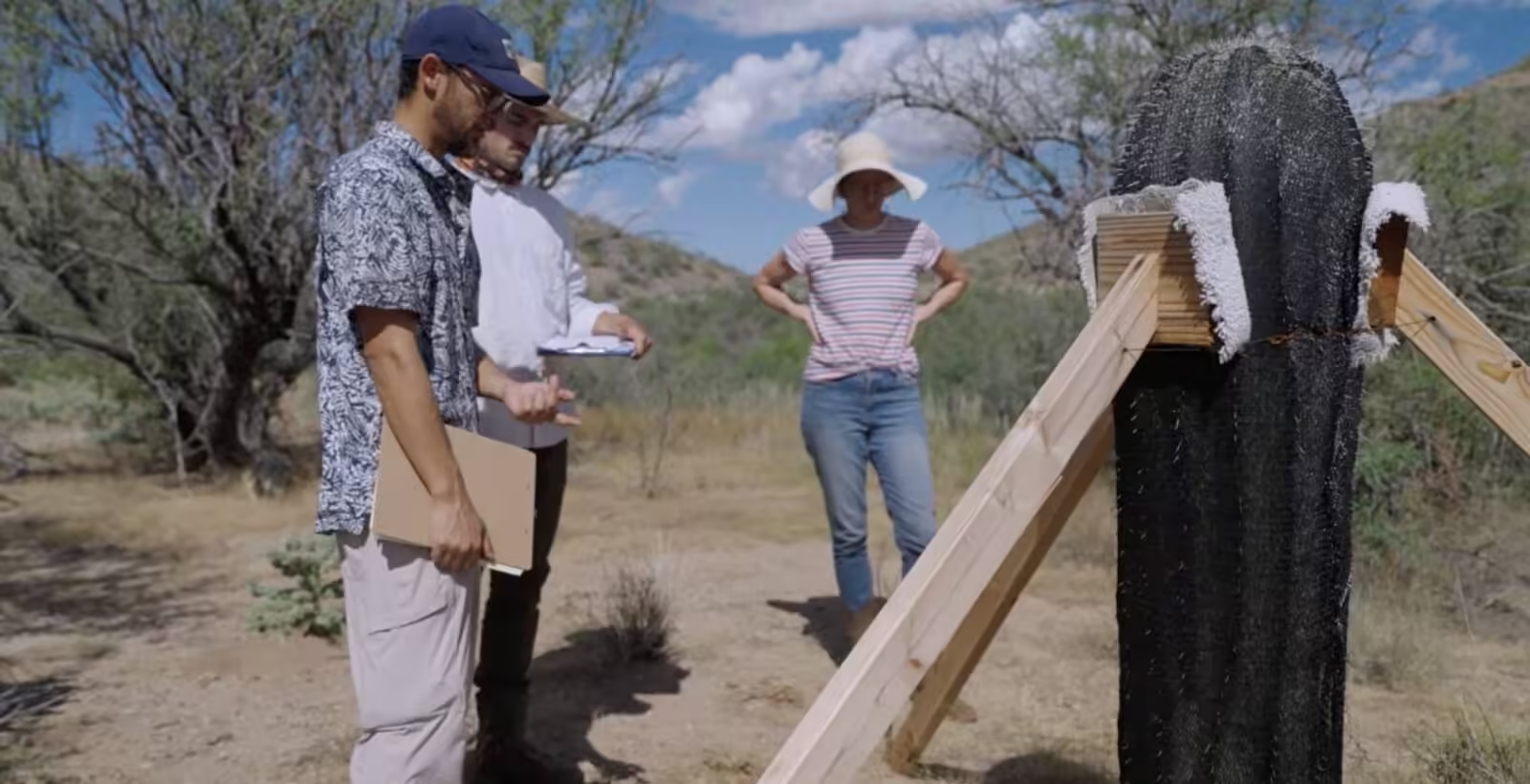
Among the featured researchers is Elise Gornisha Cooperative Extension specialist in ecological restoration and director of the Desert Laboratory on Tumamoc Hill. Her work focuses on helping desert ecosystems withstand challenges such as drought and wildfire – research she is happy to share with a new audience.
“I love the idea of trying to mesh research into our athletics events,” Gornish said. “I think it’s important for people who might not know about this stuff going on, or might think they’re not interested, to be exposed to it in an unexpected venue.”
Learn how Gornish and her team are working to protect saguaros for generations to come in the mini-documentary below, produced as part of Sandstorm.
Gornish says Sandstorm is an opportunity to show that understanding the desert matters to everyone. She is a co-principal investigator on a large-scale watershed restoration project funded by the National Fish and Wildlife Foundation. The project includes an effort to transplant saguaros that have been removed from areas undergoing land development.
As a keystone species in the Sonoran Desert ecosystem, saguaros provide benefits to soil, other plants and wildlife. But Gornish said there are essentially no long-term studies tracking the success of transplantation efforts. Her team is monitoring the transplanted saguaros over time to better understand how to improve their chances of survival.
“This is our backyard, and whether you research it or not, you depend on it, and it affects you,” Gornish said.
Gornish is one of six researchers being featured during Sandstorm. The others are:
- Greg Barron-GaffordProfessor, School of Geography, Development and Environment
- Laura CondonProfessor, Department of Hydrology and Atmospheric Sciences
- Zach GuidoDirector, Arizona Institute for Resilience International Resilience Lab
- Ladd KeithAssociate Professor, School of Landscape, Architecture and Planning
- Sharon B. MegdalDirector, Water Resources Research Center
Battling the ‘Grassvasion’
Another U of A researcher is taking a different approach to helping people understand the challenges facing the Sonoran Desert: a board game.
In “Gassvasion,” players take on the role of a rancher, park ranger, scientist or activist and work to complete their own objectives while trying to prevent invasive grasses and wildfire from destroying the desert ecosystem.
Elizabeth Baldwin, associate professor in the School of Government and Public Policy, was discussing her research on the threat posed by invasive grasses in the Sonoran Desert with Tucson game designer Ryan Rowitt when he suggested turning it into a game. The result was “Grassvasion: Save the Saguaros,” a semi-cooperative game for four players.
In the game, invasive grasses fill spaces between native desert plants, creating fuel that allows wildfires to spread. Players take on the role of a rancher, park ranger, scientist or activist. Each has different objectives and resources but must work together to prevent invasive grasses and wildfire from destroying the desert ecosystem.
“My favorite thing about the game is that you can win individually by gaining 10 influence points, but you can lose collectively if you fail to manage grass and wildfire on the ecosystem,” Baldwin said. “If fire reaches the saguaro cactus, everybody loses.”
With support from the National Science Foundation and the Arizona Institute for Resilience, Baldwin has printed 175 prototype copies of the game. She has given most of them away through events such as game nights, including one earlier this week as part of Sandstorm. She has also submitted the game to Central Michigan Press, an academic publisher of scholarly games. Baldwin said she is working to address reviewers’ feedback in hopes of ultimately making the game available for purchase.
After years of approaching her research in a traditional academic way – collecting data, analyzing it and publishing academic articles – devastating wildfires in Lahaina, Hawaii, in 2023 made her realize she was studying a similar threat in her own community.
“One of the things that came out of that changed thinking was, what if I started trying to communicate my research not only to other academics, but also to people in my own community?” she said.
For Baldwin, “Grassvasion” is about more than sharing research. It’s an opportunity to help people understand how their actions affect the desert they share. Gornish says she hopes Sandstorm, including Saturday’s game, has the same effect.
“We all can play a role, and we all should play a role,” Gornish said. “It’s our backyard. We should love it and care for it.”
Source: news.arizona.edu