
Rivian Automotive Inc.’s automotive division is on pace to begin 2027 with positive gross margins, the company’s incoming finance chief told investors last week.
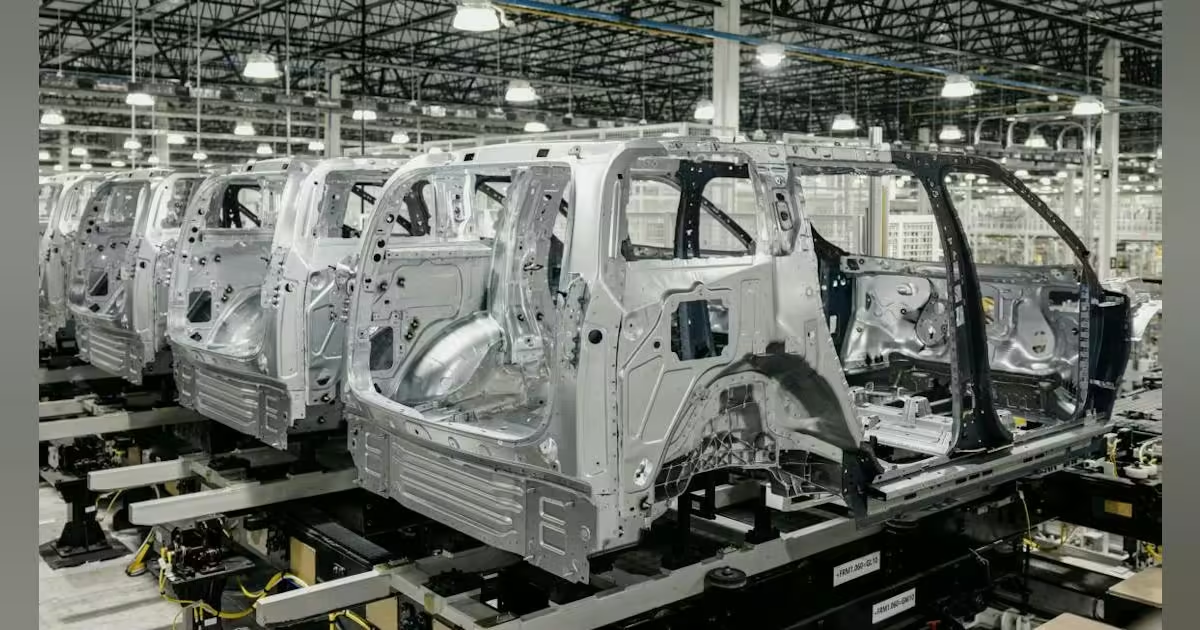
Driving progress toward that profitability landmark—Rivian as a whole has been generating gross profits for more than a year thanks to a software-and-services segment that boasts margins around 40%—is the mid-sized R2, which customers began receiving nearly six months ago. The vehicle has quickly become the company’s top seller and powered a 46% increase in third-quarter deliveries (to 19,248) for California-based Rivian.
That production jump has brought with it efficiencies that are helping offset some of the costs to ramp up work on the R2 at Rivian’s plant in Normal, Illinois. Interim CFO Derek Mulvey, who will take over from Claire McDonough (who’s headed to GE Vernova) on Jan. 1, told analysts and investors on Rivian’s third-quarter earnings conference call Oct. 29 that the company’s cost per car is falling significantly.
“We’re already seeing the benefit of introducing R2 into our Normal production facility,” Mulvey said. “While new vehicle launch complexities in addition to rising costs of core components have—and we anticipate will continue to— impact our profitability, we expect that R2 will help us achieve a positive automotive gross margin exit rate for the year. This would establish a strong foundation for continued margin expansion as R2 ramps through 2027.”
Through the first nine months of third year, Rivian’s adjusted earnings before interest, taxes, depreciation and amortization have totaled nearly $1.29 billion, an improvement from $1.60 billion in the same period of last year. Chairman and CEO R.J. Scaringe, McDonough and Mulvey expected full-year EBITDA losses to be between $1.85 billion and $1.75 billion, which is at the low end of the forecast McDonough outlined in February.
Alongside their third-quarter report, the executives also raised the floor of their forecast for 2026 deliveries to 67,000 from 65,000. They haven’t yet outlined 2027 numbers and Scaringe told analysts that a big priority for his team is continuing to nurture Rivian’s supply base as production increases further.
“In the case of R2, we have a number of new suppliers. We took an aggressive approach of reducing our supply chain complexity to have a smaller set of Tier 1 suppliers,” Scaringe said. “So we can only ramp as fast as our slowest-ramping supplier. And that’s not to say there’s like an acute challenge with a single supplier. But rather, the ramp-up requires each of the suppliers to ramp and they need to be highly coordinated.”
So far, so good and Jefferies and UBS analysts have upgraded Rivian shares since the earnings report, saying they think the company can build on its momentum, which includes those software earnings (that are supported by a growing joint venture with Volkswagen). Rivian shares (Ticker: RIVN) closed Nov. 3 at $13.29, up 12% from a week earlier. Over the past six months, however, they are still down about 10%, a move that has trimmed the company’s market capitalization to $19.4 billion.
LiveWire’s Electric Motorcycle Struggles Prompt Going-Concern Warning
Not on an upward trajectory like Rivian is LiveWire Group Inc., the electric bike and motorcycle venture the leaders of Harley-Davidson spun off four years ago. The company’s third-quarter earnings report Oct. 29 featured a net loss of more than $18 million on sales of just $7.2 million and was accompanied by a warning that “conditions and events raise substantial doubt about the company’s ability to continue as a going concern.”
Source: www.industryweek.com