
Nuvoton Gerda support shows how display suppliers are designing memory out of the bill as prices squeeze vehicle budgets
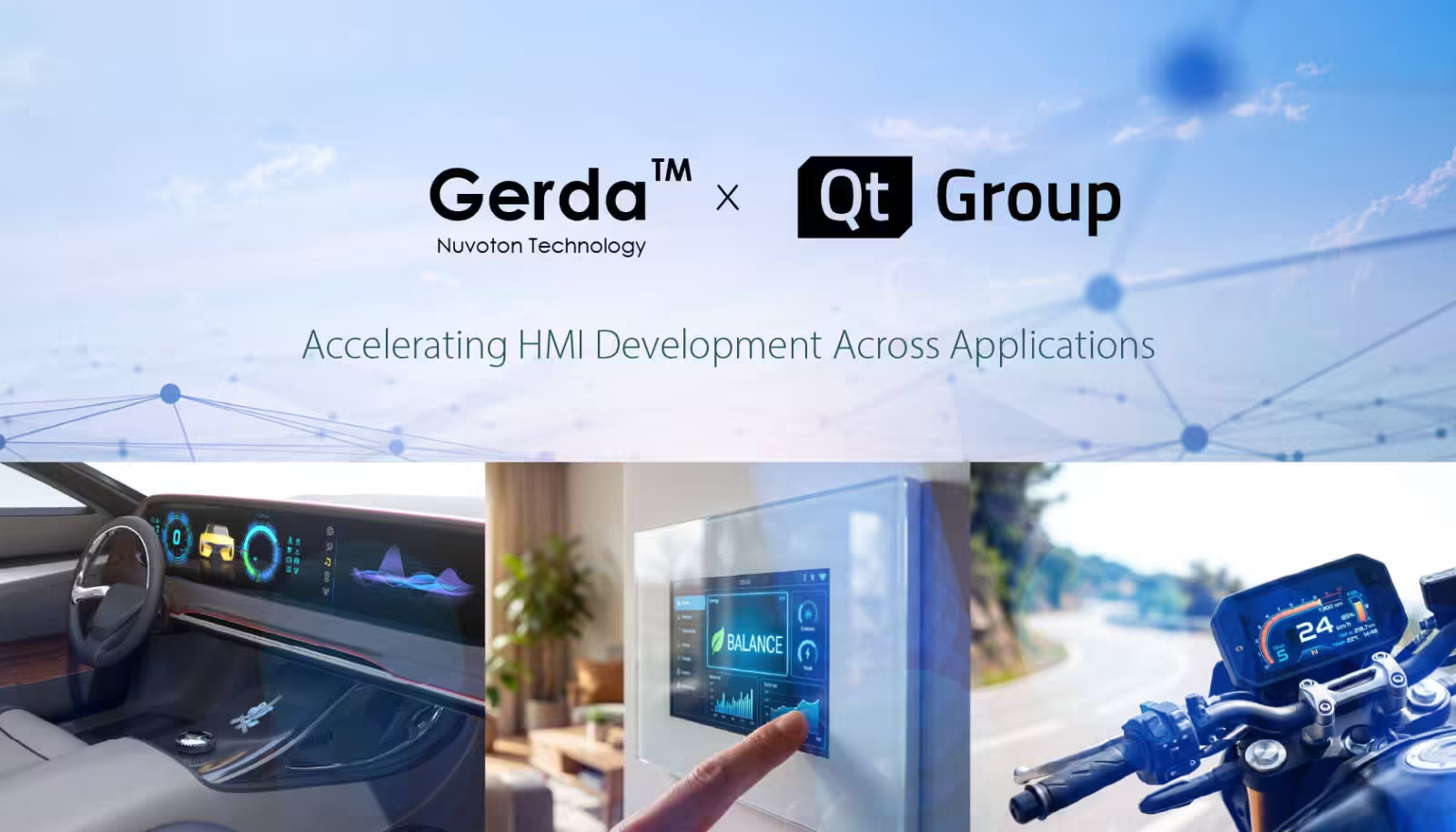
Qt Group’s Qt for MCUs software now supports the Nuvoton Gerda controller, letting developers build graphics-rich car and motorcycle instrument clusters, head-up displays and appliance panels with no external memory chip. Dropping that part cuts component count and cost in high-volume products, as memory prices strain system budgets.
Gerda’s large on-chip RAM and its display, connectivity and control interfaces support standalone human-machine interface systems. Qt’s graphics tuning and Gerda’s texture compression shrink the interface’s memory footprint.
Both firms pitch the pairing at software-defined vehicles, where screens are expected to improve after sale. Gerda’s security features and Qt’s tooling support over-the-air changes to graphics and functions once a product ships, a capability spreading from cars to two-wheelers and connected appliances.
Qt for MCUs adds ready-made interface components, simulation and agentic AI tools meant to ease handover between designers and software engineers. The companies say the combination cuts development time and cost as well as hardware spend.
“For years, the choice of a microcontroller was between an interface people enjoy using and a system cost the product could carry,” Michele Rossi, Director of Qt MCUs Product Management at Qt Group, said. “That trade-off is what we set out to remove. Working with Nuvoton, teams can now build the kind of interface users already expect, on hardware priced for high-volume production.”
Source: Qt Group
Source: www.automotiveworld.com