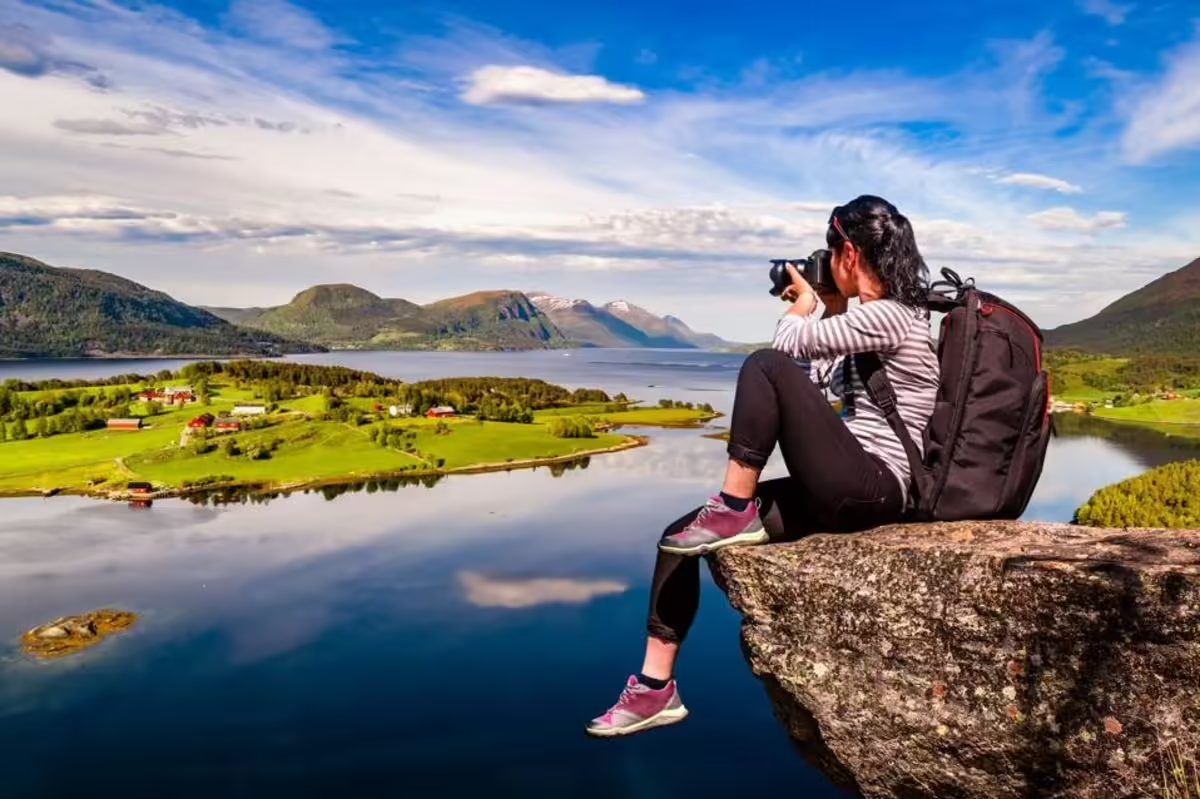

Norway’s dramatic mountains, colorful fishing villages and remote beaches have become familiar sights on Instagram and TikTok. Such images inspire millions of people to visit, but they can also direct large numbers of travelers toward places with limited infrastructure and fragile natural environments.
Now, Norway is asking some of its most influential content creators to reconsider how they showcase the country.
On October 29, Innovation Norway, the Norwegian Environment Agency and Norwegian Travel Cluster brought together leading travel influencers for a workshop outside Oslo.
Advertisement
Advertisement
The aim is to develop Norway’s first guidelines specifically addressing how natural attractions should be promoted on social media.
The initiative comes as Norway experiences unprecedented tourism growth. According to Statistics Norwayinternational visitors accounted for a record 14.2 million overnight stays at commercial accommodations in 2025, a 14% increase from the previous year.
From A Beautiful View To A Tourism Problem
For workshop attendee Silvia Lawrence, who runs the blog Heart My Backpackthe consequences of Norway’s growing popularity are particularly visible.
Lawrence now lives in the Lofoten Islands and previously lived in Tromsø, two destinations that have experienced rapid tourism growth, often linked to trending social media posts.
Advertisement
Advertisement
“Regardless of how many followers we have, a single social media post can go viral and reach thousands or even millions of people,” said Lawrence. “I might have hiked through a particular area without disturbing the nature, but what would happen if thousands of people followed in my exact footsteps?”
That concern helped motivate her participation in the workshop.
Although Lawrence initially wondered how any guidelines could persuade content creators to change their behavior, she came away encouraged by the collaborative approach, which drew on participants’ own experiences of creating successful travel content.
Could Influencers Share Less And Achieve More?
One potential change discussed at the workshop is surprisingly simple: stop sharing the precise location of every photograph.
Advertisement
Advertisement
“If I simply tag my hiking photo as Lofoten rather than sharing the exact location, I’m confident visitors will find many equally beautiful views here,” Lawrence said.
The workshop also explored how influencers could direct attention toward destinations and local businesses that would welcome additional visitors, while avoiding unnecessary exposure for vulnerable places.
Tourism supports jobs and businesses in remote Norwegian communities, and the objective is not to discourage travel altogether.
Lawrence doesn’t believe responsible promotion necessarily means sacrificing long-term success: “I’ve been blogging full-time for ten years now, and my content that has had the most lasting success has rarely been tied to social media trends.”
A New Approach To Promoting Norway
The initiative builds on The communication promisea responsible tourism marketing commitment launched in 2025 and now signed by 70 Norwegian tourism organizations and destinations.
Advertisement
Advertisement
Its principles encourage realistic representations of destinations, responsible outdoor recreation, longer stays and year-round tourism, rather than relying on idealized images of Norway.
The proposed influencer guidelines would extend that approach to individual content creators. The influencers themselves are developing the guidelines, and no publication date has yet been announced.
This is not a government crackdown on Instagram. The initiative encourages responsible practices rather than imposing restrictions on what visitors can share.
There are limitations, of course. Norway can encourage participating influencers to change their approach, but many international creators and independent visitors will continue promoting destinations without following the same guidance.
Can Travel Inspiration Become More Responsible?
The initiative raises a question extending well beyond Norway: What responsibility should travel influencers have for the places they encourage people to visit?
Advertisement
Advertisement
Simply withholding locations is not necessarily the answer. Lesser-known destinations may actively welcome greater exposure, while tourism authorities and businesses also have responsibilities when it comes to managing visitor numbers.
But travel content could offer more than the perfect photograph. Showing the conditions of a difficult mountain hike, explaining how to visit without creating parking problems, or highlighting locally operated experiences could all help people make better decisions.
Lawrence believes Norway has an advantage when it comes to encouraging visitors to look beyond social media’s most popular destinations: “There are beautiful places everywhere here. I think most visitors here would agree that their best memories of Norway extend far beyond any one particular spot they first saw on Instagram.”
MORE FROM FORBES
Tourism Booms In Northern Norway, But The Benefits Aren’t Universal
Norway’s New Tourist Tax Is Running Into Problems Before It Starts
Why Norway Cruises Could Get More Expensive From 2027
Advertisement
Advertisement
This article was originally published on Forbes.com
Source: travel.yahoo.com