
In January 2026, Alipay+, the cross-border payments network run by Ant International, proposed linking up with India’s Unified Payments Interface (UPI) so that Indian travellers could pay merchants in China, Hong Kong, and elsewhere in Asia. In form, it resembled the links UPI already has with payment systems abroad, and it would have opened up more than 150 million merchants across Asia to Indian travellers. It was the first such proposal from a China-linked financial services firm.
Ten months on, the proposal has stalled on national security grounds. Law enforcement agencies reportedly flagged money-laundering risks and the threat of data breaches that could expose customers to cyberfraud. India examines how every cross-border payment scheme stores and handles data, but scrutiny is significantly higher for China-linked entities. The hesitation is telling because it came only months after New Delhi eased certain restrictions on Chinese investment.
It also came as political ties were recovering faster than at any point since the deadly 2020 Galwan Valley clash. Leaders were meeting, boundary talks had produced new agreements, and Xi Jinping travelled to New Delhi in September. Yet the Alipay+ decision shows where that recovery stops.
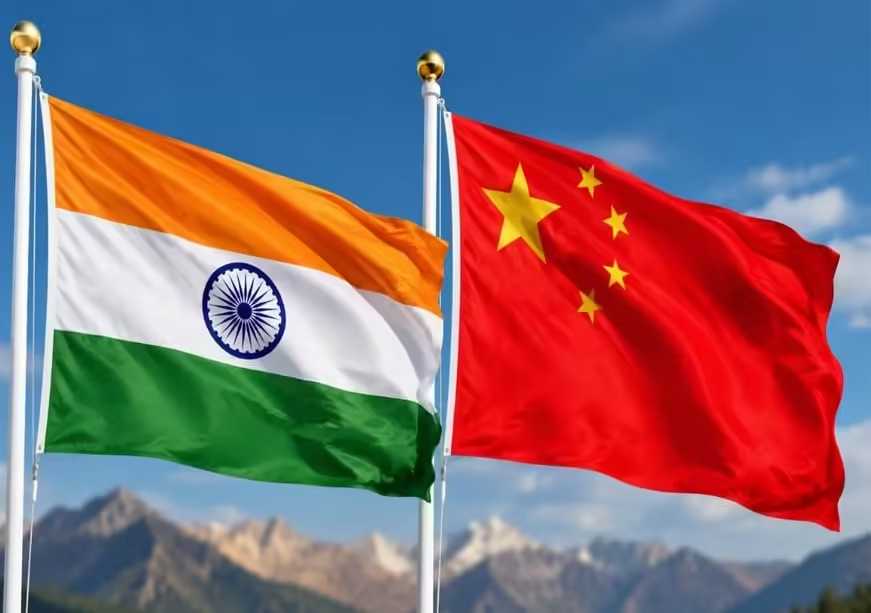
This article argues that India is restoring contact with China across a widening range of areas, but withholding trust where a security compromise would be hard to reverse: payments data, telecom networks, apps, and the boundary itself. What is emerging is selective normalisation, not strategic rapprochement.
Back on the Table, but the Line Holds
Disengagement at Depsang and Demchok was completed in October 2024. Prime Minister Narendra Modi and President Xi Jinping met at Kazan that month and again at Tianjin in August 2025, on the sidelines of the Shanghai Cooperation Organisation (SCO) summit. The 24th round of Special Representatives talks was held in India in August 2025, and the 25th followed in Beijing on August 25, 2026. According to China’s official summary, the two sides agreed that an Expert Group on delimitation and a Working Group on border management would advance discussions in their respective areas towards an “Early and Substantial Harvest.” They also agreed on two additional military hotline channels in the Eastern and Middle Sectors, and welcomed the reopening of three designated border trading points. The first task for both groups is to agree on their Terms of Reference. On September 6-7, India and China held Corps Commander-level talks in the Eastern Sector amid continuing tensions around Taksing, where patrols had faced off in July and August. The boundary is the one security area where India has agreed to more engagement, which is encouraging because the aim is to prevent new clashes. Yet while there are hotlines and working groups, no area has been chosen for delimitation, and patrols still occasionally face off.
The thaw has restored practical connectivity. Tourist visas for Chinese nationals resumed in July 2025, direct passenger flights followed in October 2025 after a five-year suspension, and the Kailash Mansarovar Yatra was revived. The high point came on 12-13 September 2026, when Xi travelled to New Delhi for the BRICS Leaders’ Summithis first visit to India since 2019.
The picture in security-adjacent sectors is very different. Some restrictions date from 2020 and have simply not been lifted. The stronger evidence lies in the new decisions taken during the thaw.
Financial Infrastructure
The stalled Alipay+-UPI link-up is a new decision taken during the thaw, not a 2020 holdover. This is not general caution about linking UPI abroad: the system already operates in several international marketsand India has promoted its further expansion. The counterparty’s identity changed India’s assessment of a familiar kind of financial link.
Investment
The same caution extends to investments, though in a more calibrated form. Since 2020, any investment from a land-border country has needed government approval. Press Note 2 (March 2026) narrowed what counts as land-border ownership: beneficial ownership is treated as vested in a land-border country where its citizens or entities hold rights “in excess of the applicable thresholds” under India’s money-laundering rules, or can “exercise control.” The Union Cabinet decision behind it allows automatic-route investment where land-border shareholders hold up to 10 percent without control, and sets a 60-day timeline for specified manufacturing sectors, such as capital goods, electronic components, and polysilicon. Entities incorporated in China or Hong Kong remain excludedand the press note itself says an entity or citizen of a land-border country “can invest only under the Government route.”
Yet questions persist over how the framework applies to China-linked entities and strategically sensitive sectors. In September 2026, the Serious Fraud Investigation Office, under the Ministry of Corporate Affairs, reportedly recommended a probe into Xiaomi over alleged foreign-investment irregularities, a reminder that selective reopening is not a broader restoration of trust in Chinese capital.
Telecommunications
Chinese telecom companies Huawei and ZTE were left out of India’s 5G trials in 2021. That exclusion has not been reversedand India’s 5G build-out has proceeded with other foreign and domestic vendors such as Ericsson, Nokia, and Samsung.
Apps and Consumer Data
In June 2020, two weeks after the Galwan clash, India banned TikTok and 58 other Chinese-owned apps, citing national security. By September 2020, the IT Ministry had told Parliament it had blocked 224 apps under Section 69A of the IT Act. In August 2025, the government dismissed reports that the ban was being lifted, after the websites of TikTok, AliExpress, and Shein briefly became partially accessible, though the apps and shopping platforms remained blocked.
Reading the Pattern
Taken together, these cases show two tracks moving at very different speeds. Although this has been described as “managed interdependence” and a “doctrine of selective derisking,” the pattern points to something much narrower. India withholds trust in payments data, network infrastructure, consumer platforms, and territory, areas where a security compromise would be hard to reverse.
These decisions came from different parts of government. The Alipay+ objections were reportedly raised by law-enforcement agenciesthe app bans were ordered by the IT Ministryand the Department of Telecommunications excluded Huawei and ZTE from 5G trials in 2021. Is this, then, standard policy, or merely separate agencies each exercising their own caution?
If these were simply 2020-era decisions never revisited, the case for selective normalisation would be weaker. But the Alipay+ proposal was new, considered well into the thaw, and met the same concerns over data, security, and Chinese linkages. When different agencies keep reaching the same answer on new questions, the security logic behind the 2020 decisions is still shaping policy.
India appears to treat engagement and trust as distinct currencies. Diplomatic contact, travel, and some investment can resume because the risks are manageable or reversible. Infrastructure, data, and territory carry higher and less reversible costs, and India has not extended the same benefit of the doubt there.
The September 2026 summit reflected these asymmetries. India’s official account stressed the need to address the structural trade imbalance and to secure meaningful and predictable market access, concerns that remained unresolved.
India appears to treat engagement and trust as distinct currencies. Diplomatic contact, travel, and some investment can resume because the risks are manageable or reversible. Infrastructure, data, and territory carry higher and less reversible costs, and India has not extended the same benefit of the doubt there.
A month later, Finance Minister Nirmala Sitharaman called China’s non-tariff barriers “the biggest hurdle in the trade between India and China”. China’s Foreign Ministry spokesperson replied that China “never aims for trade surplus” and was ready to address both sides’ concerns. With India’s deficit with China at US$105.93 billion for January-September 2026, the barriers run in both directions: India limits Chinese access on security grounds, while Indian exporters run into Chinese regulation.
A Working Relationship, Not a Trusting One
Xi’s visit reinforced, rather than overturned, this pattern. PM Modi and President Xi welcomed the steady progress and expressed commitment to a “fair, reasonable, and mutually acceptable resolution” of the boundary question, but named no sector in which delimitation would begin. India’s account repeated that peace on the border was the basis for wider ties; China’s highlighted Modi’s statement that India’s relations with China are not affected by any third party. Neither readout mentioned Alipay+.
Three things are worth noting about the present phase of re-engagement. First, what has been restored can also be reversed: visas, flights, pilgrim travel, and some investment are allowed for now, but each can be withdrawn if the political climate worsens. Second, any new proposals involving payments data, telecommunications, mobile applications, or territory are likely to be viewed through the same security lens applied since 2020. Third, boundary talks mainly manage the dispute rather than resolve it.
The real test is what happens if there is another serious escalation on the boundary. If engagement survives that, the reset is durable; if engagement freezes, as it did after Galwan, the limits will be plain. For now, what is being normalised is not trust, but the ability to keep a working relationship going without it.
The real test is what happens if there is another serious escalation on the boundary. If engagement survives that, the reset is durable; if engagement freezes, as it did after Galwan, the limits will be plain. For now, what is being normalised is not trust, but the ability to keep a working relationship going without it.
Hritika Sharma is a Research Intern at the Observer Research Foundation.
The views expressed above belong to the author(s). ORF research and analyses now available on Telegram! Click here to access our curated content — blogs, longforms and interviews.
Source: www.orfonline.org