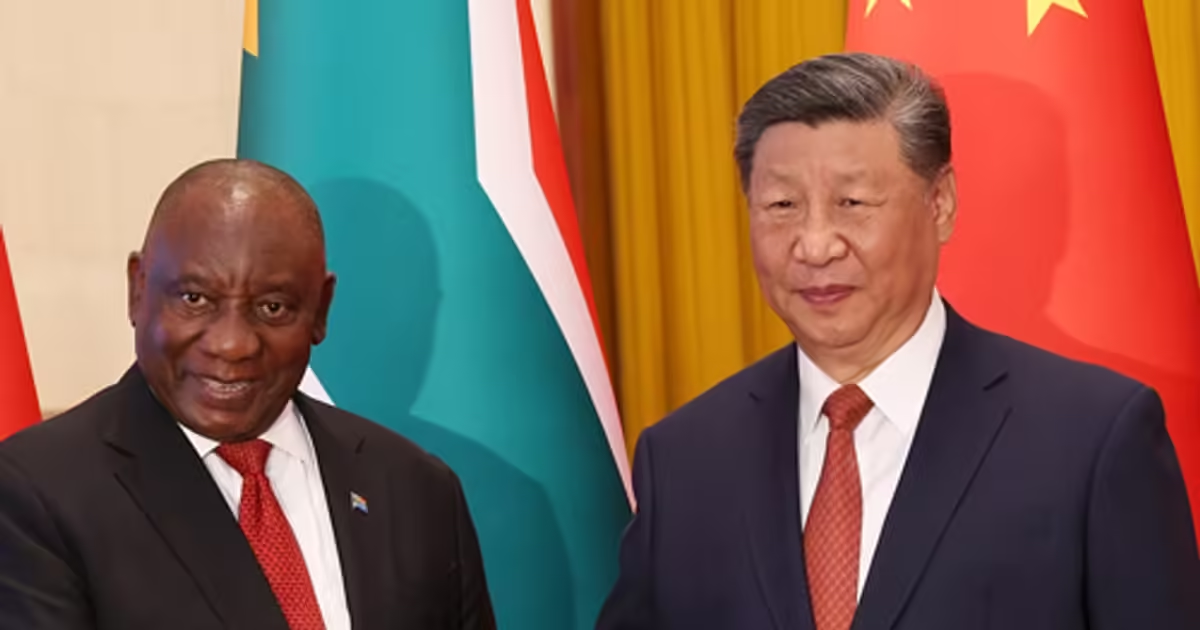

Chinese ambassador Wu Peng announced the increase at an event in Pretoria on October 22, adding that South African imports from China also rose 23% over the same period.
The growth followed Beijing’s introduction of a zero-tariff scheme for qualifying African exports in May, opening up opportunities for South African producers to expand their presence in the Chinese market.
The figures come as President Cyril Ramaphosa’s government prepares for the possibility of losing preferential access to the US market under the African Growth and Opportunity Act (AGOA).
The Trump administration has taken issue with several of South Africa’s domestic and foreign policies, while Pretoria has rejected US allegations that its government persecutes white people.
South Africa is seeking alternative markets as uncertainty grows over its trade relationship with Washington. However, the latest figures do not yet establish that China can replace the American market if South Africa loses its AGOA benefits.
China’s growing role in South Africa’s trade strategy
China is already South Africa’s largest trading partner, making the increase in exports significant for Pretoria’s efforts to diversify its trade. South Africa exported goods worth about 222 billion rand ($13.5 billion) to China in 2025, while imports from China were nearly twice that amount, Trade Minister Parks Tau said.
South African exports to China include agricultural products, minerals and manufactured goods. The zero-tariff arrangement could make qualifying products more competitive, although the scheme’s benefits depend on which goods qualify and how much demand they attract.
Wu said Beijing had heard South Africa’s concerns about the trade imbalance and expressed confidence that more high-value-added South African products would enter the Chinese market in the future according to Reuters.
The rising trade figures offer Pretoria a potential cushion as it seeks to reduce its dependence on established markets. But the growing value of imports from China also highlights the challenge of narrowing the bilateral trade gap.
The United States has extended AGOA until 2028, but South Africa’s continued eligibility remains uncertain. Tau said he expected an announcement in early November on whether the country would be excluded, while remaining cautiously optimistic.
For South Africa, expanding trade with China could help open new export opportunities, but the immediate priority remains securing clarity on its access to the US market.
Source: africa.businessinsider.com