
The boat pushes off from Kanpur’s riverfront promenade in the early hours, slipping onto the Ganges as the northern Indian city slowly gives way to a quieter, more industrial edge. The four-hour journey along the riverbank ends in Jajmau by early afternoon. The boatman, practiced and unhurried, steers through the current with ease. He has seen this before: The steady stream of officials, inspectors, and researchers who come to test the river, measure it, and leave.
As they move downstream, the river tells its own story. Small drains appear one after another, trickling straight into the Ganges, most carrying household sewage. Then, near the tannery belt of Gajju Purwa, the water darkens. A larger outflow carrying waste cuts into the river, turning the surface a murky black-blue streaked with acrid-smelling froth. The air thickens with a sharp, chemical stench. The water churns sluggishly, alive with insects.
Conditions have improved over the years, the boatman says, but he insists some of the biggest drains are still opened after dark. At one beside a cremation ghat, the channel lay dry during the day. By dusk, black water was coursing into the river.
A drain in Kanpur lies unused during the day. The same drain carries wastewater at night.
Waste-laden water flows near the banks of a cremation ground in Kanpur.
For more than a decade, cleaning the Ganges — known in India as Ganga — has been a crucial priority for Prime Minister Narendra Modi’s government, which has allocated more than $4.5 billion for programs including the construction of hundreds of sewage treatment plants and other infrastructure. Yet much of the river remains dangerously polluted, carrying levels of sewage and industrial waste that threaten the health and livelihoods of communities in a basin that supports hundreds of millions of people and generates about 40% of the nation’s economic output.
The reason, reporting suggests, lies not in any single failure but in a combination of patchy enforcement, explosive population growth, sprawling urbanization, a reliance on state governments to turn national ambition into action, and a challenge far larger than policymakers appreciated when the program was launched.
To understand what the billions have delivered, Bloomberg News used satellite imagery to build an independent, decade-long record of the river’s health across nearly 2,000 kilometers. The analysis tracked turbidity, a measure of how muddy the water is; algae, which thrive on nutrients from sewage and fertilizer runoff; and shifts in surface temperature to look at where the water is heating or cooling.
WATCH: Modi’s Battle to Clean the Ganges
Together, the data reveals that, across much of the Ganges, the water is no clearer than it was a decade ago. In the months after the monsoon, nearly 80% of the river is becoming muddier. The investigation also went beyond what satellites could see, testing water collected from the river’s industrial heartlands to its sacred cities and finding contaminants at levels far beyond permissible limits.
India’s government says it has made significant progress in cleaning the Ganges, though acknowledges much remains to be done. “We want results,” India’s Water Minister CR Patil, who oversees the project, said at his government bungalow in New Delhi. “I am hopeful that before the 2029 national election, the Ganga water would be fit for bathing for all,” he said, putting the goal squarely against the next general vote, when Modi could seek a fourth term.
Sea
Bengal

Ganges water clarity
Pre & post-monsoon trends
Toggle season👆
Bloomberg analyzed nearly 2,000 kilometers (1,243 miles) of the Ganges using satellite imagery spanning about a decade to 2026. Only about 10% shows sustained improvement.
The river crosses five Indian states, while its wider basin underpins the livelihoods of almost half the country’s population.
Another 20% of the river length analyzed grows clearer during the dry season, deteriorating after the monsoon rains.
And roughly a quarter is becoming muddier even in the dry months, when the river runs lowest and pollution is most concentrated.
Because water clarity naturally rises after the monsoon and falls during the dry season, the analysis compares each season with the same period in previous years, revealing long-term trends rather than conditions at any single point in time.
Clearer doesn’t necessarily mean cleaner. In roughly half the stretches that have become clearer, satellite measurements point to more algae during the dry season. Algal growth can drain oxygen from the water, threatening the aquatic ecosystem and communities that depend on it.
The Ganges is India’s holiest river and one of its most vital economic arteries, sustaining more than 650 million people, irrigating one of the world’s most productive agricultural regions and binding together faith, commerce and daily life across northern and eastern India. A decade ago, Modi made restoring the river a defining promise of his first election campaign. Since then, roughly 430.6 billion Indian rupees ($4.5 billion) had been allocated to the task by the end of September, though only a little over half has been spent, partly due to bureaucratic delays, a hybrid financing model and slow local execution.
The scale of Modi’s effort dwarfs what came before. His administration has authorized more than ten times as much for cleaning the Ganges as successive governments deployed on earlier programs spanning nearly three decades from 1985 to 2014.
Cleaning the Ganges is not only an environmental or religious project: It is a test of whether India can protect public health and economic opportunity in a region that supports a population larger than most countries.
Some aspects of state capacity have strengthened under Modi, particularly digital programs and social safety nets, while efforts requiring sustained coordination across different levels of government have proven more difficult, said Arvind Subramanian, a senior fellow at the Washington-based Peterson Institute for International Economics who served as chief economic adviser to the Modi government from 2014 to 2018. Programs that receive concentrated political attention tend to produce better results than those requiring sustained bureaucratic follow-through, he said.
Improving the river is especially challenging because it requires political leaders, bureaucrats, and state and local governments to work in tandem despite differing incentives and priorities, Subramanian said. “That’s kind of India in a nutshell,” he said. “More and more, the prominent and visible stuff gets done somewhat well, but the ongoing stuff always is lagging behind in terms of implementation, governance and accountability.”
That may also leave the Ganges at a disadvantage against more conspicuous infrastructure projects, he said. “That’s why probably it’s inherently a more difficult task, and maybe less visible and less of a priority than building roads and airports.”
Project Execution Varies Between States
Source: India’s Central Pollution Control Board
Note: Data as of September 2026
Read the methodology behind the story: Inside Our Satellite Analysis of the Ganges
Satellites can track trends in sediment, algae and heat across thousands of kilometers, but they cannot detect the chemicals, heavy metals and pathogens dissolved in the water. To see what the satellites could not, scientists from the Indian Institute of Technology Kharagpur independently tested river water, irrigation channels and groundwater along key stretches of the basin for Bloomberg News. Sampling spanned 12 locations across the major population centers of Kanpur and Varanasi, tracing the river at five points in each: Upstream, through the cities and downstream.
What they found was more pervasive: Water that failed government benchmarks in the Ganges, contamination drawn from beneath the ground, and signs of heavy organic pollution in a channel used to irrigate farmland.
The scale itself may have been part of the problem, said Ambika Vishwanath, director of the Kubernein Initiative, an India-based consultancy that has provided data-collection training for the Ganges cleanup program. Namami Gange was the first effort to treat the entire, extraordinarily diverse river basin as a single unit, but it began without comprehensive data on everything from groundwater to its vast network of tributaries. “We’re trying to solve a problem without the correct information,” she said, arguing that those gaps contributed to delays, even as she defended the decision to think big. “In India, you have to have ambitious projects. There’s no other way.”
During his first campaign to become prime minister, in the holy city of Varanasi in 2014 — the constituency he has represented in parliament ever since — Modi promised to restore a river considered sacred by nearly 1.2 billion Hindus. The Namami Gange mission that followed became one of his government’s flagship projects, and was billed as a transformative effort to restore the river from its Himalayan source to the Bay of Bengal. Its wide-ranging promises included modernizing crumbling sewage networks in ancient riverbank cities, building out effluent treatment plants for polluting industries, and fostering sustainable farming practices across the basin.
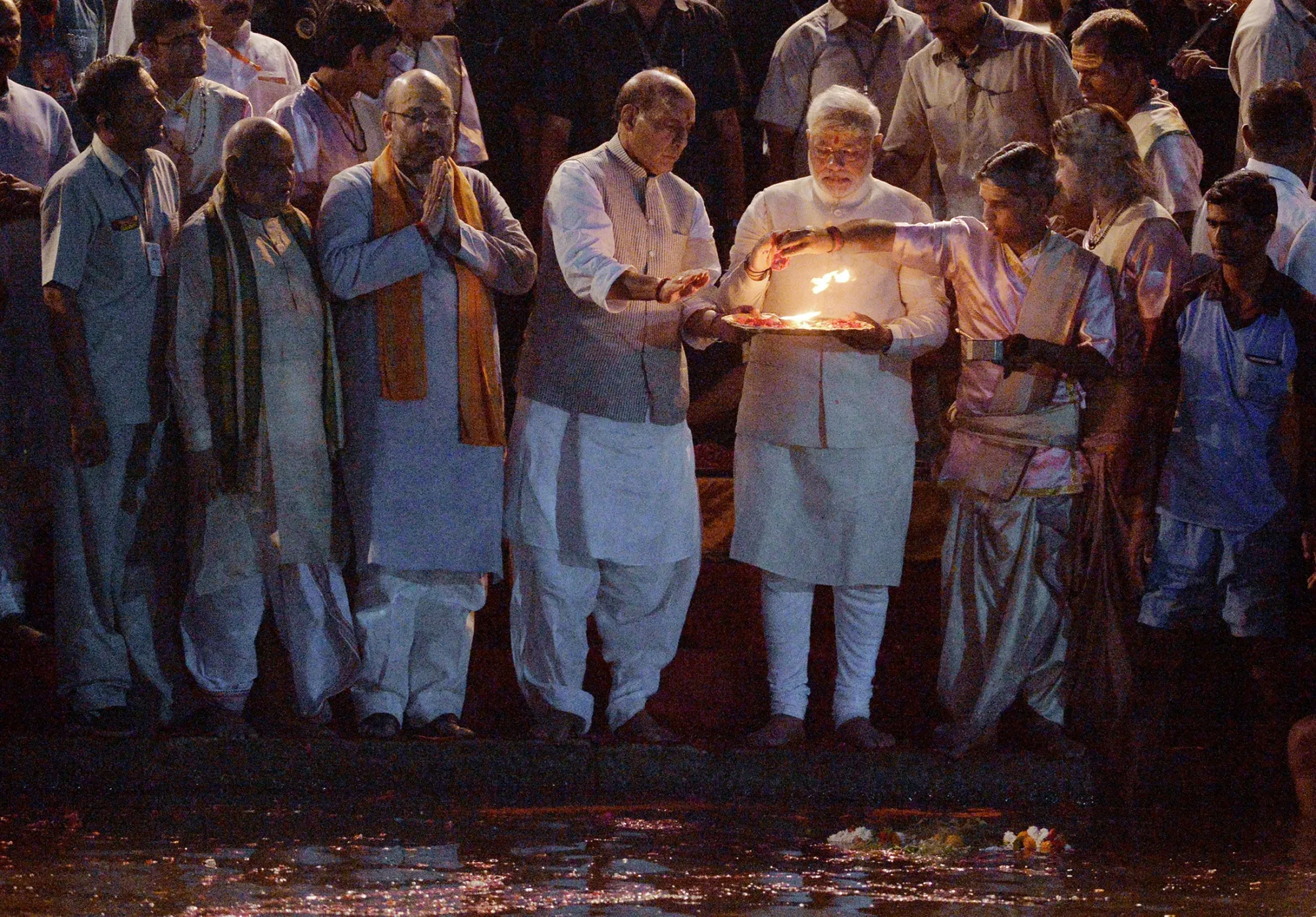
Modi at the banks of the River Ganges after winning the election in May 2014. Photographer: Roberto Schmidt/AFP/Getty Images
Addressing more than 18,000 people from the Indian diaspora in New York’s Madison Square Garden later that year, Modi cast cleaning the Ganges as a test of his leadership, reminding the crowd that the river underpinned the livelihoods of roughly 40% of India’s population. “When I raised such issues people told me, ‘Modi ji, you are digging your own grave. Don’t touch such issues’,” he recalled before a loudly cheering crowd waving Indian flags. “But if I was to deal with easy issues, then why would people choose me as prime minister?”
Namami Gange joined a slate of programs that came to define Modi’s first decade in office, alongside the Jan Dhan financial inclusion drive, the Swachh Bharat sanitation campaign, and Make in India. Each sought to demonstrate that the Indian state could deliver change at unprecedented scale.
Some delivered visible progress, though often with caveats. Jan Dhan brought hundreds of millions into the formal banking system, but subsequent analyses found many accounts remained inactive, raising questions about how far enrollment translated into meaningful financial inclusion. Swachh Bharat oversaw the construction of millions of household toilets, though independent surveys have questioned the government’s claim that the country became entirely free of open defecation and pointed to uneven infrastructure. Make in India attracted global manufacturers including Apple Inc. and Samsung Electronics Co. to expand production in the country, but manufacturing’s share of the economy has remained stuck at around 17%, well below the government’s target.
After 12 years in office, Modi retains popularity ahead of state elections next year, according to a survey that polled 25,184 people, even as his government’s ability to deliver on some of its biggest promises is coming under greater scrutiny. Widespread student protests over examination paper leaks this summer mobilized a new generation of first-time voters. More recently, demonstrations have erupted over a controversial revision of electoral rolls that has removed millions of names. Opposition parties allege that legitimate voters are being disenfranchised and that the deletions helped the BJP in recent state election victories, claims the ruling party and Election Commission reject.
Water Minister Patil said the government had in September decided to revamp Namami Gange, using drone surveys to map drains from the river’s origins to West Bengal, and funnel smaller ones into larger channels feeding treatment plants. Newer sewage-treatment technology, he said, would allow those plants to be built more cheaply and on smaller sites. Patil said cleaning the river will also require changing human behavior.
That presents a challenge few of the world’s major rivers face on this scale. At dawn, worshippers wade into the Ganges to bathe and pray, while garlands and offerings are set afloat. After religious festivals, brightly painted idols of Hindu deities are immersed, still draped in clothes and adorned with jewelry, synthetic hair and other decorations. Along the banks, funeral pyres burn as ashes, often with some remains, are scattered into the current.
The original blueprint envisioned intercepting most of the untreated waste flowing from millions of homes into the river, modernizing ancient riverfronts with renovated ghats — the stepped embankments that lead down to the river — and electric crematoria, and restoring the Ganges as a cleaner ecological and cultural lifeline. More than a decade later, significant sewage infrastructure has been built and many of the river’s most important pilgrimage sites have been transformed. But the broader vision remains unfinished. Rapid urbanization continues to outpace sanitation networks, while industrial expansion, agricultural runoff and sprawling development across the basin have proved far harder to contain than planners first imagined.
The Ganga basin is the most densely populated and rapidly urbanizing river basin in the country.
Construction of India’s first urban cable-car transit system at Godowlia Chowk in Varanasi, part of the new infrastructure reshaping the city.
Along the banks, funeral pyres burn and ashes, often with some remains, are scattered into the current.
Ancient riverfronts are in the process of being modernized with ghats being renovated.
Funding has flowed not only from New Delhi, but from international backers including the World Bank, Japan and Germany. Hundreds of millions of dollars in contracts have been awarded for projects, including to major international firms like Suez SA and Toshiba Water Solutions Ltd., along with domestic companies including Adani Enterprises Ltd. — led by India’s richest billionaire Gautam Adani.
The Ganges offers more than a report card on one of Modi’s flagship promises. It is a test of whether India can deliver on its biggest ambitions, or whether billions of dollars and years of investment are any match for the pressures of a nation growing faster than its infrastructure. “The Ganga basin is the most densely populated and rapidly urbanizing river basin in the country,” said Srinivas Chokkakula, president of think tank Centre for Policy Research. “Namami Gange is therefore addressing an accumulated infrastructure and governance deficit. It highlights an important feature of India’s development trajectory: Large public investments need to be complemented by equally strong investments in urban governance, local institutional capacity, and regulatory oversight.”
For the people who live along its banks, the river is more than a symbol or a policy challenge. It irrigates their fields, fills their wells and feeds their families. Water released from sewage treatment plants flows into irrigation channels that sustain surrounding villages before making its way back toward the river. The independent testing carried out by the Indian Institute of Technology Kharagpur on behalf of Bloomberg News found pollution levels in one such channel far above regulatory limits, raising fresh questions about what is entering the food chain and what years of exposure may mean for the health and livelihoods of the communities that depend on it.
Government’s Progress Report
Indian authorities say government data shows areas of improvement on some metrics, even as other indicators worsen
Source: India’s Central Pollution Control Board
Note: Using CPCB’s annual minimums and maximums (2015–2023), yearly midpoints were calculated, retaining stations with at least five years of data. Read the methodology for more details.
The Ganges basin generates roughly 12 billion liters of sewage a day, while completed projects can treat only about a third of that volume, according to government data. Cities along the river’s main stem alone discharge some 3 billion liters daily, against treatment capacity of about 1 billion liters. Industry contributes a smaller share by volume, roughly 20% of the pollution, but its toxic, often non-biodegradable waste can be far more damaging. Much of it is concentrated in industrial belts around Kanpur and the Ramganga and Kali tributaries, home to tanneries, distilleries, and paper and sugar mills.

In Kanpur, every Ganges sample tested for Bloomberg News exceeded the government’s benchmark for biochemical oxygen demand in bathing water, a measure of the organic matter consuming oxygen in the river. The readings were about 1.5 times the permissible levels for bathing, and more than twice the stricter benchmark for water intended as a drinking source. The samples were collected during the monsoon, when the river’s higher flow can dilute contaminants five- to 20-fold, meaning concentrations during the dry season could be several times higher, said Abhijit Mukherjee, a professor at IIT Kharagpur, whose lab conducted the testing.
The contamination extended beyond the river. A channel carrying treated tannery wastewater for irrigation and household waste recorded chemical oxygen demand of 148 milligrams per liter, which the laboratory identified as evidence of severe organic pollution.
Water Standards in Kanpur and Varanasi
Sampling found Biochemical Oxygen Demand
(BOD) and Chemical Oxygen Demand (COD) levels above safe limits
Sources: IIT Kharagpur water sampling for Bloomberg News; BIS standards; Central Pollution Control Board
Note: Drinking water thresholds are set by the Bureau of Indian Standards. Bathing water thresholds set by the Central Pollution Control Board. Multiples show how measured levels compare.
In groundwater drawn from a borewell in nearby Jana village, fluoride was more than four times the permissible limit for drinking water and nitrate was more than twice the limit. Under government guidelines, levels that exceed permissible limits would render the water unfit for human consumption. Prolonged exposure to excessive fluoride can damage bones, while high nitrate content in drinking water can impair the blood’s ability to carry oxygen, posing a particular risk to infants, according to the World Health Organization.
If pollution exceeds permissible limits, fines can be imposed based on the scale of the damage, permits can be revoked, facilities ordered to shut down, or legal action pursued.
In Bihar, authorities last year issued orders for 82 million rupees of compensation from 10 noncompliant plants, according to a document filed with India’s National Green Tribunal, which handles environmental issues. In just three months in 2019, Uttar Pradesh authorities sought at least 390 million rupees from 20 defaulting sewage-treatment plants and penalized two common effluent-treatment plants, a separate tribunal document shows.
India’s government didn’t respond to questions about the extent of violations across the Ganges basin, how penalties are enforced or whether authorities follow up to ensure problems are fixed.
Jana’s Drinking Water Quality Is Poor
Water samples exceeded safe limits for a range of contaminants
Sources: IIT Kharagpur water sampling for Bloomberg News; BIS standards
Note: Drinking-water limits are set by the Bureau of Indian Standards. Multiples compare measured levels with the relevant limit.
Back in Jajmau, as the boatman approaches, the river has narrowed into one of India’s oldest industrial landscapes. Tanneries line its banks, their chimneys rising above clusters of low brick buildings that have processed leather since British rule. The industry grew out of British military demand in the 19th century, when colonial authorities established harness and saddlery operations to supply troops.
Here, local water ministry officials insist the worst days are behind them. Most drains have been tapped, sewage treatment plants installed and existing facilities expanded, while industries have been connected and monitored, said Mohit Chak, a project manager in the Ganga pollution control unit at Uttar Pradesh’s water department. The water leaving the system, he says, meets prescribed standards before returning to the river.
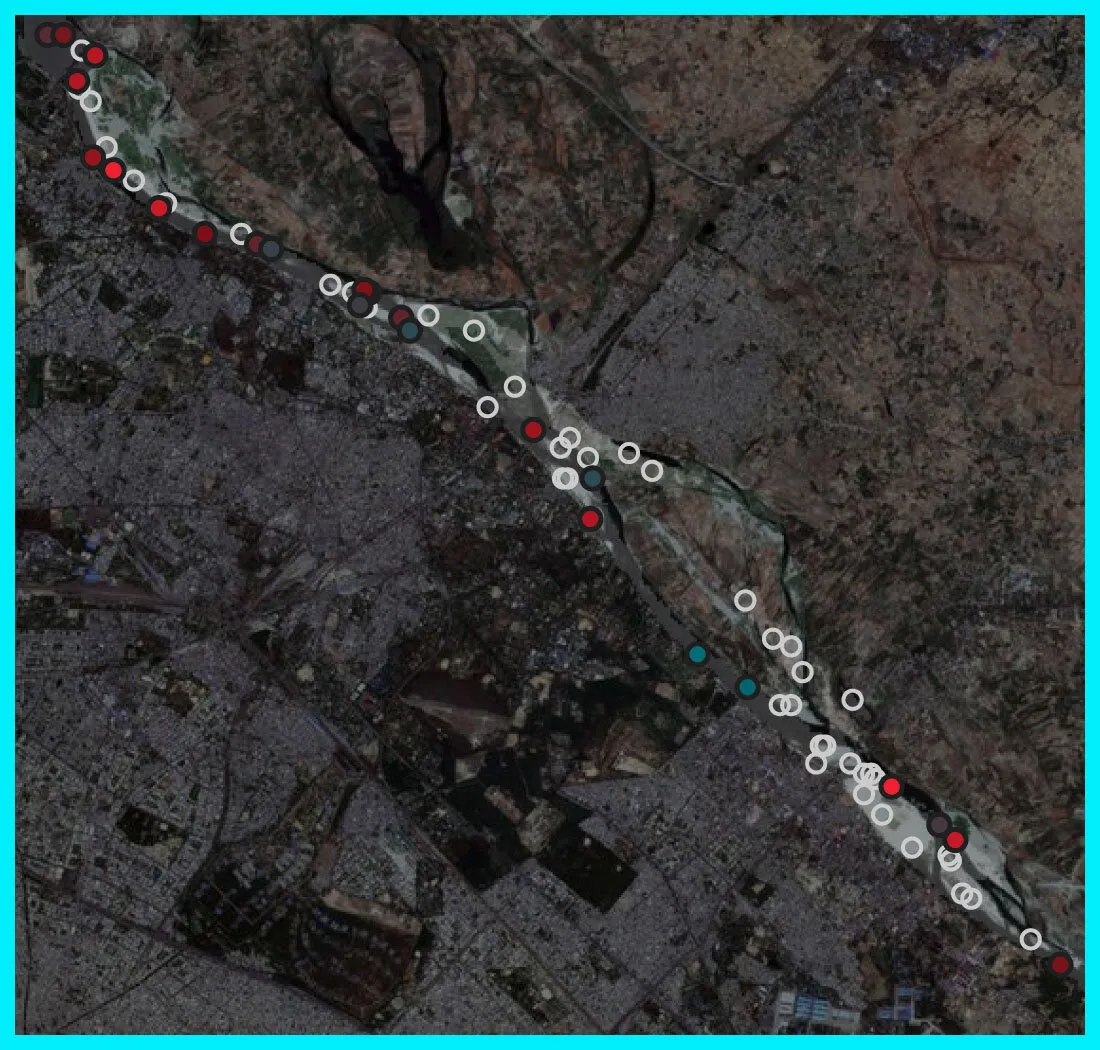
Kanpur’s Discharge Points
Government has enforced shutting down some tanneries in recent years
Source: Google Earth, Bloomberg reporting
Behind the gates of Kings International Ltd., one of the region’s largest leather exporters, managing director Taj Alam walks past hides destined for Europe, the US and Australia. The smell of chemicals gives way to rows of belts, wallets, equestrian gear and military saddlery stacked for export. The company has supplied to French sporting goods retailer Decathlon SA for decades, and counts the UK’s Ministry of Defence among its customers. It tans leather, manufactures finished products and, beneath the factory floor, operates its own primary effluent treatment plant.
“My plant treats the water so that it is good enough to be discharged into water bodies,” says Alam. Wastewater passes through a series of tanks before sludge is separated and sent to a nearby common effluent processing plant. The tannery also recovers and reuses much of the chromium used in the leather-making process. “This is a red-category industry,” he said, referring to businesses subject to India’s strictest pollution controls, where violations can trigger immediate closure orders and criminal prosecution under the Water Act. “So it has to have a proper system in place.”
Sorting and preparing hides before they are loaded into tanning drums at Kings International in Kanpur.
The company tans leather and manufactures finished products.
It also operates its own primary effluent treatment plant.
Across town, Asad Kamal Iraqi offers his own factory as evidence that leather and a cleaner Ganges can coexist. The chief executive officer of exporter AKI India Ltd. points to an integrated treatment plant and a unit that recovers chromium from wastewater before it can escape. “This chrome recovery unit is something that has helped in keeping the river clean,” he said.
Beyond his factory gates, Iraqi sees a much harder problem. “In Kanpur, more than 4,000 small manufacturers are registered for dyeing and electroplating who are using dangerous chemicals, and don’t even have access to shared effluent treatment plants,” he said. “Most of that is being directly discharged into the river.”
A few kilometers downstream, water released from the treatment plants begins a second life. It spills into irrigation channels that thread through farming villages before eventually making its way back to the Ganges. In Jana, Pewandi, Trilokpur, Wajidpur and other communities along the way, farmers tell strikingly similar stories: Over the past 15 years, they say, buyers have grown wary of produce from the area, while skin ailments, stomach problems and hair loss have become commonplace. Here, conversations about turbidity, treatment plants and enforcement dissolve into something more immediate.
In Jana, Ram Kishore Nishad, a farmer in his seventies, stands beside the channel that irrigates his fields. His family grows wheat and rice, as well as marigolds, the bright orange flowers that adorn temples, weddings and religious festivals across India. “If I tell people in the market that this is from Jana village, people don’t buy them,” he said.
From there, the water crisscrosses a cluster of farming villages through irrigation channels, into fields, groundwater and, ultimately, onto dinner tables. “River pollution also affects groundwater quality,” said Professor Vivek Kumar, from the Centre for Rural Development and Technology at IIT Delhi. “The use of contaminated river water for irrigation can degrade soil quality and lead to the accumulation of pollutants in agricultural crops, posing risks to the food chain.”
Nishad’s fingernails have turned black and yellow. One of his sons began losing his hair at a young age. “No one wants to marry their children to people from this village,” he said.
A few houses away, 41-year-old Kishore Kumar rolls up his sleeve to reveal skin lesions. “In our village there are over 5,000 people and I would say the majority suffer from skin diseases,” Kumar said. “The medicines work, but since we have no choice but to stay here, the infections keep coming back.”
An open drain cuts through farmland in Jana village, eventually making its way into the Ganges.
Villagers tend to their animals with water drawn from a hand pump in Jana.
Farmer Ram Kishore Nishad shows his damaged fingernails on his left hand — the one that comes into contact with the soil as he farms.
Residents collect water from a hand pump in the village.
For decades, the health risks associated with the Ganges were thought to be the familiar threats of diarrhea, typhoid and skin infections. Researchers are now increasingly focusing on a cluster of chronic diseases that appear unusually common along the Ganges basin, though they caution that the evidence is still emerging. “Unlike air pollution, water contamination and its impact on human health has received far less public attention,” said Raj Shankar Ghosh, a physician and also a senior adviser at the Public Health Foundation of India.
Gallbladder cancer has emerged as one of the river’s most troubling mysteries. The Ganges river basin is home to some of the highest rates of the disease anywhere in the world, particularly among women. Scientists have identified a striking geographic pattern but are still trying to explain it, investigating whether long-term exposure to arsenic, industrial contaminants and other pollutants may be contributing alongside a range of genetic and lifestyle factors. The evidence is growing, they say, but far from conclusive.
Studies have also documented chromium exposure in Kanpur, and one found groundwater arsenic concentrations in a location in Bihar reaching almost 200 times recommended levels. A 2025 study in Jajmau found significantly higher chromium levels, oxidative stress and DNA damage among both tannery workers and nearby residents than in an unexposed group. Government health surveys ordered that year, as part of an environmental tribunal case over chromium pollution in and around Kanpur, also detected elevated chromium in the blood of hundreds of residents across the region. Long-term exposure to chromium and arsenic has been associated with illnesses ranging from skin, respiratory and neurological disorders to cancers of the lung, bladder, kidney and other organs.
Yet the full health toll is difficult to measure, as weak disease surveillance has left major questions unanswered about the river’s longer-term effects on public health, said Ghosh.
Cancer registries cover only about 10% of India’s population, leaving much of the Gangetic plain outside their reach. Experts have called for stronger disease surveillance across the river basin.
Asked about the health effects, India’s water minister Patil said such problems had either disappeared or declined, and that tracking affected patients was the responsibility of state governments. “We don’t have that data and it is not our job,” he said. Health ministry officials did not respond to requests for comment.
Tucked into a quiet corner of the National Mission for Clean Ganga’s headquarters in New Delhi is the project’s digital nerve center. On a wall-sized screen, years of restoration efforts flicker into view. Operators monitor the performance of sewage treatment plants along the river, while another dashboard tracks water flow to ensure the dams that punctuate the Ganges aren’t starving it of the volume needed to sustain itself.
As data from across the vast river system pulses across the giant screen, Rajeev Kumar Mital, the mission’s director general, points to what he sees as evidence of the cleanup’s success. “We have achieved a remarkable improvement in every stretch of the river,” he says. The challenge, Mital says, has always been one of scale. The Ganges basin covers roughly a quarter of India’s landmass.
Earlier efforts struggled with that enormity. A cleanup program launched in 1985 targeted wastewater from 25 major cities but was hampered by poor planning and weak implementation, according to government audits. A successor initiative, backed by a $1 billion World Bank loan, sought to dramatically expand the effort. But in a 2023 review, the bank concluded that “the ambition to go big” had produced a project whose scale exceeded the government’s capacity to execute it.
Delays were to be expected for an undertaking of this scale, a spokesperson for the bank said. “Global experience shows that river rejuvenation is a long-term agenda,” the spokesperson said. “And similar initiatives have taken decades in several other countries.”
Sewage treatment capacity additions remain about one-third short of the program’s target for the end of this year. Government officials attribute the delays to factors including lengthy regulatory approvals, flooding and the Covid-19 pandemic. Hundreds of industries also continue to violate pollution standards, according to Indian nonprofit PRS Legislative Research.
Studies have documented chromium exposure in Kanpur, and one found groundwater arsenic concentrations in a location in Bihar reaching almost 200 times recommended levels.
Wastewater is aerated during treatment at a plant in Kanpur.
The Assi Sewage Pumping Station in Varanasi. Data from the city points to progress, though the river’s health remains contested.
Mission head Mital says the pace of spending reflects a deliberate shift in how the program was built rather than bureaucratic delay alone. Early on, the government concluded that simply constructing sewage treatment plants was not enough if states and municipalities couldn’t afford to run them. Instead, New Delhi adopted a hybrid model under which private companies build and operate the facilities, recovering their costs through government payments spread over 15 years.
The financing model solved one problem, but not another. Although the Namami Gange mission is directed by New Delhi, much of the work now falls to municipal governments responsible for permits, land acquisition and local coordination. “Decision making is very slow and collaboration between local and central institutions is not always smooth,” said Rajiv Mittal, chairman and managing director of VA Tech Wabag Ltd., one of the Namami Gange initiative’s largest private partners. It designs, builds and operates wastewater treatment plants.
Because private contractors invest upfront but only begin recovering their costs once projects are completed, delays by local authorities tie up capital for years and make the economics difficult, he said.
Much of the program’s funding is designed to follow performance: Payments are spread over time and depend on plants continuing to meet operating and water-quality standards. A majority of the program’s sewage-treatment plants are now equipped with real-time sensors meant to track how they are performing, said mission director general Mital.
Behind that digital architecture, however, the monitoring can be far more rudimentary. A former government official, who requested anonymity as they were not authorized to discuss their previous work, said sensor readings were often transcribed by hand into bulky spreadsheets, while plant operators were responsible for reporting on their own facilities. Manipulation of the data was common, the official said, including figures for water flowing into and out of plants and toxin levels in discharged water.
Mital said the government takes concerns about the reliability of the data seriously, citing routine inspections and penalties of up to 10 million rupees for noncompliance.
Sensors are only part of the challenge. Independently assessing whether the cleanup is working requires access to the underlying data, and much of it remains out of reach. Real-time river flow figures, for example, are treated as sensitive information and are often unavailable even to Indian scientists, in part because the Ganges is a transboundary river shared with neighboring Bangladesh.
Industry presents another complication. Of 3,662 heavily polluting industrial facilities, including on the Yamuna tributary, where authorities completed inspections last year, a total of 3,114 units were operational and almost 30% of those sites were noncompliant, according to an annual report.
India’s problem is often less a lack of regulation than a failure to enforce it, said Anant Sudarshan, an energy and environmental economist and a professor at the University of Warwick. The country has extensive rules and pollution standards, many resembling those in Europe or the US, but implementation is far weaker, allowing norms that exist on paper to be routinely ignored, he said.
River cleanups are rarely quick. Restoring waterways, from London’s Thames to the Chicago River, has taken decades. But the Ganges presents the challenge at extraordinary scale, with rapid population growth and urbanization adding pressure even as billions are spent trying to reverse decades of pollution.
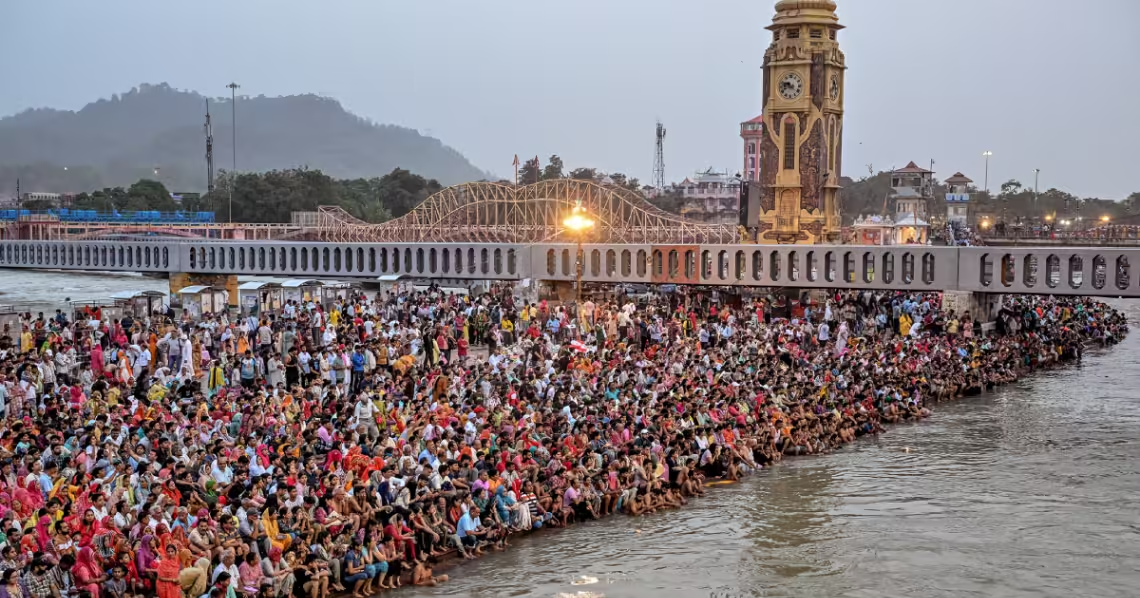
People gather at Har Ki Pauri, Haridwar’s most prominent Ganges ghat.
The river draws millions who believe its waters can wash away a lifetime of sins.
Fewer than 400,000 people live in Haridwar city permanently, but another half a million visitors can pass through at any given time.
When Haridwar takes its turn hosting the Kumbh Mela, the influx pushes local infrastructure to its limits.
City governments, meanwhile, lack the political autonomy of their counterparts in many developed countries. Power is concentrated at the state level, where leaders must balance against broader electoral priorities. “I don’t think you can get good urban governance without empowered urban bodies,” Sudarshan said. “And India just doesn’t have them.”
“I think that’s the reason why you might say the rate of progress has been slow, not just for water but also for air,” he said. Without stronger local institutions, he added, “you’re not going to be able to turn money into outcomes.”
Haridwar is where the Ganges leaves the Himalayas. The river spills out of the mountains onto the plains, drawing millions who believe its waters can wash away a lifetime of sins. New highways funnel pilgrims toward the city. Hotels and sprawling ashrams rise to accommodate them. Fewer than 400,000 people live permanently in the urban center, but another half a million visitors can pass through at any given time, transforming the ghats into a sea of bodies on auspicious days. And when Haridwar takes its turn hosting the Kumbh Mela, the influx pushes local infrastructure to its limits.
Between 180 million and 200 million people are expected to visit during next year’s event. Additional capacity is being added to manage the influx of visitors during the 2027 Kumbh Mela, said Nandan Kumar, municipal commissioner for Haridwar city.
On paper, Haridwar is one of Namami Gange’s biggest successes. Every major drain has been intercepted. Five sewage treatment plants now process most of the city’s wastewater, while nearly half of the treated water is diverted to irrigate surrounding farms.
But the satellite record shows the river changing almost as soon as it leaves the foothills. For roughly 50 kilometers downstream from Haridwar, the Ganges is growing progressively muddier, both in the dry season and after the monsoon, the opposite of what years of investment might suggest. Government monitoring stations around Haridwar show oxygen levels falling even as sewage bacteria decline, suggesting that construction, bank erosion or sand mining may account for at least some of what the satellites detect.
Haridwar’s Water Clarity
Satellite analysis shows the Ganges remains highly turbid before and after the monsoon
Source: Bloomberg analysis of satellite imagery from Copernicus Sentinel-2 and NASA Landsat
Years of investment have transformed Haridwar’s sewage infrastructure, local officials say. But the city has become a victim of its own success: Each new highway, hotel and pilgrimage season brings more people, and more sewage, than the existing system was designed to serve.
“Urbanization is occurring at a rapid pace, but the development of civic infrastructure, particularly sewage treatment plants, has not kept pace,” said IIT Delhi’s Kumar. “By the time an STP is planned and constructed to meet the needs of one area, urban expansion has already outpaced infrastructure development in other areas.”
Haridwar’s largest sewage treatment plant in Jagjeetpur intended to have enough capacity through 2028, though was already overloaded by 2023. The capacity crunch was partly a failure of planning. Government auditors found the implementing agency didn’t even have a basic database of households and businesses, where sewer lines existed or which properties were connected to them, and failed to adequately account for Haridwar’s large floating population of pilgrims and tourists. Some treatment plants consequently reached full capacity just two or three years after they were built.
“Good infrastructure has come up,” said Meenakshi Mittal, project manager for the sewage treatment plants in Haridwar. However, the floating population “makes it a challenge to meet the growing demand,” she said.
The state mission for Clean Ganga in Uttarakhand did not immediately respond to a request for comment. Design of sewage treatment plants takes into account population forecasts, along with data on households and hotel occupancy, said Sanjay Singh, chief engineer at Uttarakhand Drinking Water Resource Development and Construction Corporation.
For Swami Shivanand Saraswati, founder of the Matri Sadan ashram in Haridwar, the river’s decline is measured in memory. “Until 1986, we used to drink Ganga water in Haridwar and bathe in the river every day,” he said, perched on a simple wooden chair, disciples gathered around him. “But now we can’t.” Sewage, whether treated or untreated, should be kept out of the river altogether, organic farming encouraged along its banks and sand mining stopped, he said.
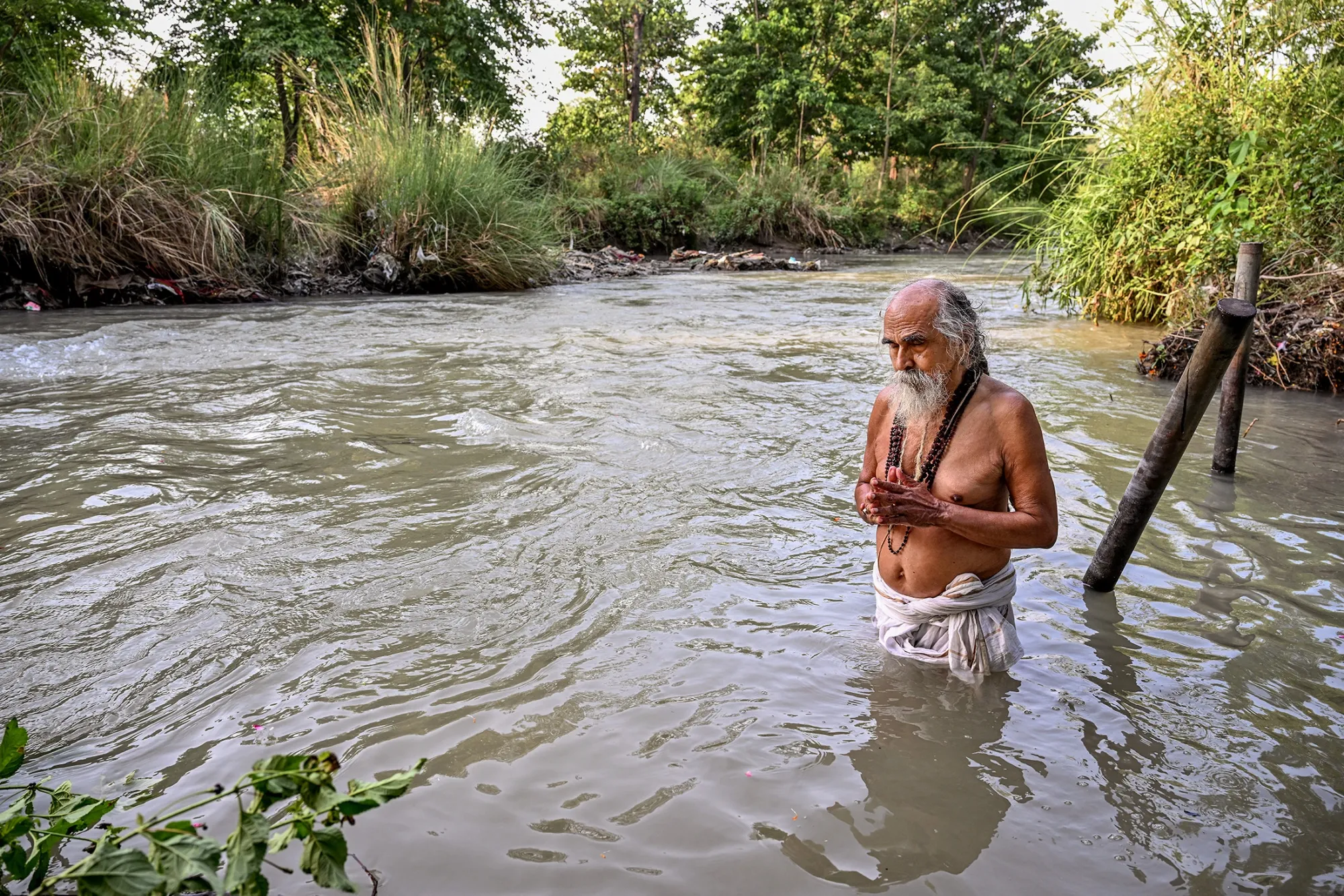
Swami Shivanand Saraswati performs his daily morning prayers and rituals while bathing in the Ganges at the Matri Sadan ashram in Haridwar.
One of his disciples, Swami Nigamananda, died after a 115-day hunger strike protesting sand mining along the Ganges, becoming a symbol of the movement to protect the river. Removing sand from the riverbed can alter the Ganges’ natural flow and destabilize its banks, making the practice of mining another front in the fight over the river’s health.
Saraswati’s vision stands in contrast to the government’s approach, which has centered on building and upgrading infrastructure. At the Jagjeetpur sewage treatment facility in Haridwar, a maze of settling tanks and concrete channels is run mainly by women — from engineers monitoring the control room, to laboratory technicians testing water quality and the security guards at the gates. Wastewater enters one end of the 68-million-liter-a-day plant murky and opaque, before emerging visibly clearer on its journey back toward the river. It is precisely the kind of transformation Modi’s government hopes to replicate across the Ganges basin.
Haridwar’s largest sewage treatment plant is in Jagjeetpur.
Wastewater enters one end of the 68-million-liter-a-day plant murky and opaque, before emerging visibly clearer on its journey back toward the river.
But the limits of that approach become apparent a few miles away. In the sprawling State Infrastructure and Industrial Development Corporation of Uttarakhand Ltd. industrial estate, or SIIDCUL, a major hub for the production of cosmetics, pharmaceuticals and auto parts, another treatment plant serves nearly 500 manufacturers.
Firms sometimes discharge untreated oils and expired products that clog the treatment works, according to an official involved in managing the estate’s common effluent treatment plant, who wasn’t authorized to speak to the media. Companies can be fined for such violations, the official said, but in some cases paying the penalty costs less than properly treating the waste. Many companies also refuse to reuse the recycled water, preferring to pump fresh groundwater because it is cheaper than trucking treated supplies back to their factories, he said.
SIIDCUL said the local pollution control board has responsibility for monitoring the treatment plant. Appropriate action is taken against companies in cases of dumping, while authorities have also encouraged firms to use recycled water, said Parag Madhukar Dhakate, member secretary of the Uttarakhand Pollution Control Board.
About a thousand kilometers downstream, the Ganges reaches the city that has defined it for centuries. The old buildings of Varanasi still lean toward the river, their carved balconies stitched to its banks like gold thread on worn silk. Pilgrims descend the stone steps carrying brass pots and flower garlands. Priests chant. Children splash.
If there is a showcase for the cleanup, it is here. Around Varanasi, the satellite record shows the strongest dry-season clearing of any major urban stretch along the river, while government monitoring points to rising oxygen levels and declining organic pollution — signs consistent with years of investment in sewage treatment. Yet even here, where the data points to genuine progress, the river’s health remains fiercely contested.
Few embody that tension more than Vishwambhar Nath Mishra. For decades, he has measured the Ganges in two ways: Every morning he enters it as a priest; every few months he tests it as a scientist.

Vishwambhar Nath Mishra returns after his morning bath in the Ganges in Varanasi.
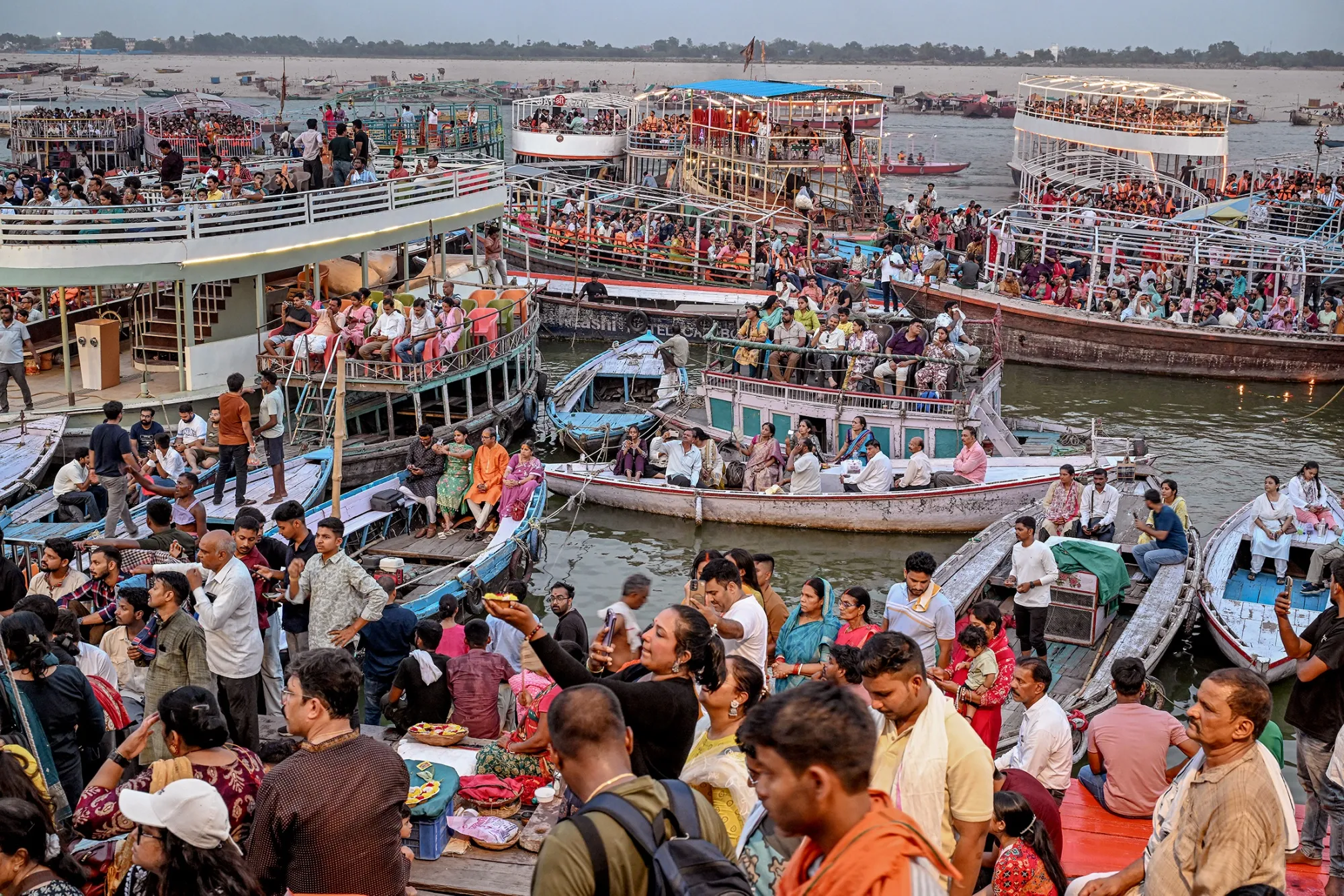
People gather at Dashashwamedh Ghat in Varanasi ahead of the Ganga Aarti, a daily ceremony of worship on the banks of the Ganges.
In a modest laboratory tucked into the maze of buildings above Varanasi’s ghats, just steps from the centuries-old home where he still prays, a technician analyzes water samples collected several times a year. The results often diverge sharply from the government’s data, particularly around stretches supposedly served by sewage treatment plants.
The discrepancy, he argues, lies in where the samples are taken. “They collect water from the cleaner stretches,” he says, “not where people actually bathe.” His standing won him an audience with Prime Minister Modi in 2024. Sitting across from the man who had pledged to restore the Ganges, Mishra recalls delivering a blunt assessment. “Nobody is going to tell you the reality, but this is the pathetic condition of Ganga Ji and water quality has not improved.”
Modi, he says, promised to review the matter after the elections. The next morning, Mishra returned to the river barefoot.
Source: www.bloomberg.com