
Where wealth goes, the future is built. That phrase of a pragmatic vision framed in constructive capitalism seems to be the axis that drives the non-stop growth of the ventures and the settlement of foreign millionaires in Dubaithe most populated city in the United Arab Emirates and not exactly by majority of Emiratis.
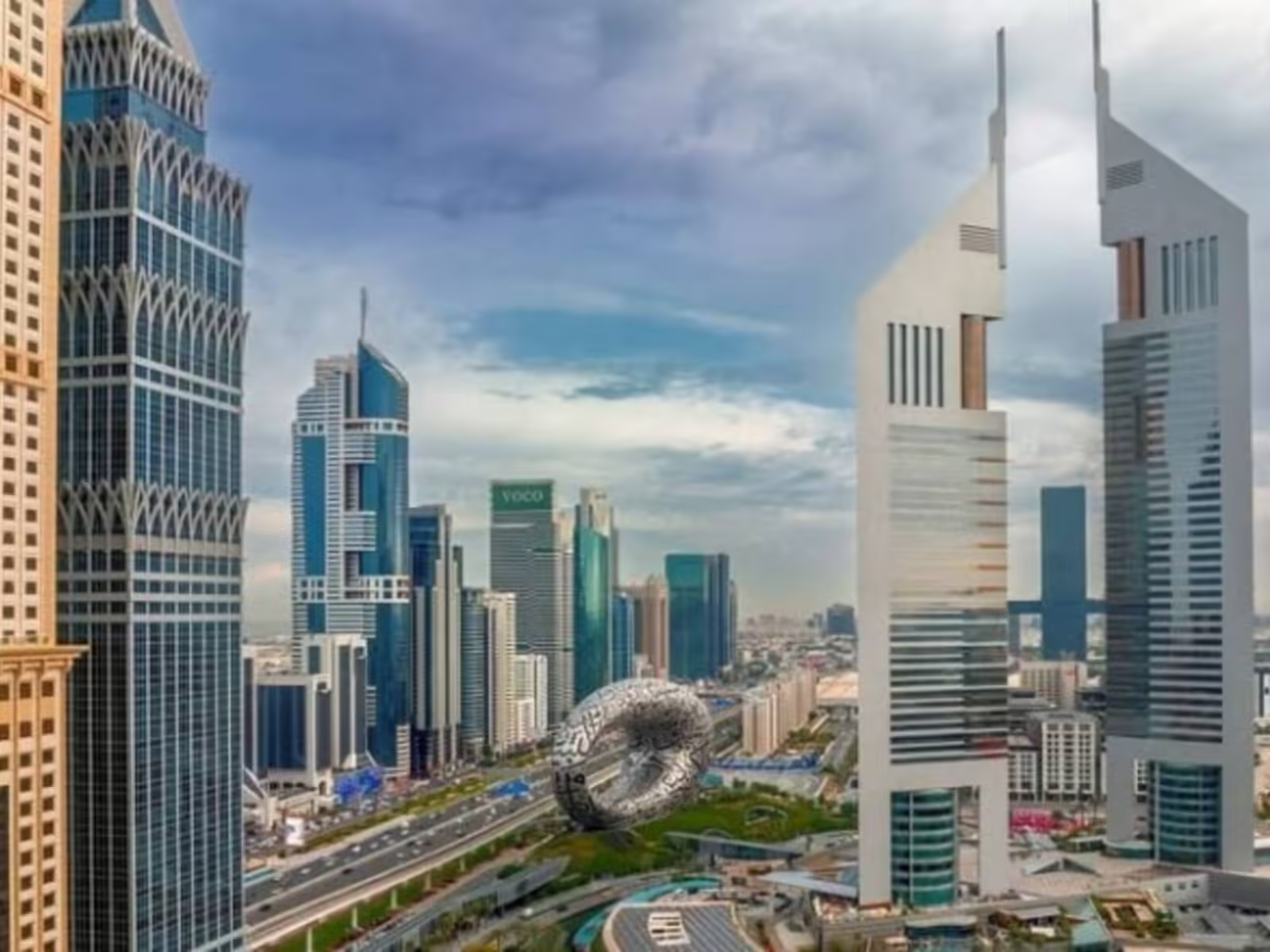
The city that was transformed from a pearl fishing port in the Persian Gulf in 1971 into a giant thanks to oil continues to focus on development, but now establishing itself as a investment, tourism and innovation centerwith a huge real estate market and long-term government plans.
Among these ambitious projects, the Agenda D33, that aims to double the local GDP until 2033, or the urban masterplan of Dubai 2040, to expand the city practically by another 100 percent in the areas built for housing, hospitality and commerce. This will allow them to go from 3 million current inhabitants to 5.8 million in seven years or 7 million in fourteen years, while they plan to quadruple the length of their beaches.
And for that, according to the locals, we work “without schedules.” There can be construction going on at midnight on a Saturday, as he discovered Clarion on a recent visit to the exclusive heart of the Emirates, where teams of workers worked alongside their trucks and high-powered reflectors while a few meters away groups of young people went out to enjoy the Dubai night in the World Trade Center hotel zone.
This unlimited but well-designed expansion seeks to attract global investors, according to the guidelines of the Dubai International Financial Center (DIFC), the main free zone and financial district of the United Arab Emirates, which strategically connects the markets of the Middle East, Africa and South Asia (Measa) with the global economy.
A DIFC spokesperson explains to Clarion that this “business ecosystem, which is home to hundreds of banks, fund managers and fintech companies, offers unmatched competitive advantages, such as 0% taxes on personal income and corporate profits”, in addition to absolute freedom to repatriate capital to foreign companies.
With a handling of almost all your processes in English and to guarantee maximum legal certainty at the international level, the DIFC operates independently of the legal system of the United Arab Emirates, as it has its own legal framework based on common law (common law) and has completely autonomous courts.
That makes it one of the “most reliable and dynamic regulatory jurisdictions for global businesses,” explains the Brazilian lawyer. Kath Zagatti, one of those responsible for the establishment of more than 500 companies from Latin America that chose in recent years to move their bases to Dubai.
Zagatti, main partner of the MH-Q consulting firm that is dedicated to optimizing private assets, says in English and Portuguese that the greatest attraction of this city is based “on its mix of legal stability and tax efficiency added to how easy it is to do business” in this city.
The lawyer from São Paulo who has been working in Dubai for 15 years, where she came because of a job offer that her husband had obtained, also acknowledges before Clarion who advised dozens of Brazilian investors “and some Argentinian investors.”

Discreetly, without giving names or clues, Zagatti assures that large investors attracted by the absence of personal income taxes set up their assets here protected by “the sophisticated legal standard that stands at the height of the calls supereridicciones such as Singapore, Hong Kong, the United Kingdom or the United States.
“In fact, also It depends on where the company is located. In the emirate you can pay the tax or not, which is only 9 percent,” he adds, referring to the Free Zones that have the benefit of zero tax.
In the analysis of the investments and wealth that come to this emirate, local authorities point out that about 120 families own 1.2 trillion dollars and that family businesses that represent 60% of local investments employ 80% of the workforce, made up mostly of Indian, Pakistani, Filipino and other immigrants from the region.

In this framework, the latest report on the Migration of Millionaires prepared by New World Wealth indicates that in 2025 some 16,500 wealthy families left Britain, followed by 7,800 from China, 3,500 from India and 1,200 from Brazil.
Thousands of themaccording to the report by the British consulting firm Henley & Partners, They landed in the Emirates, a federal kingdom that received in the last year 9,800 millionaires from different countriesmostly British. And he hopes, with his plans, projects and stability, to receive much more.
At least that’s what he says Issam Kazim, the CEO of the Dubai Tourism and Marketing Agency, who is committed to the “joint effort of the public and private sectors, with a ten-year strategy” to pure growth as the goal of “doubling the economy”.

“Es an ambitious goal and we know it and for that we have to make people’s wealth grow,” admits the official in impeccable white kandura, as the traditional Emirati tunic is called.
Far from being an illusion, Kazim explains that to achieve this objective they rely on planning and to do so “Artificial Intelligence is a central part of growth because it challenges us to produce more instead of being worried if we are going to be replaced by it.

In addition, Dubai seeks to become a global talent hub as a connector of opportunity platforms and plans reach a population of 7 million inhabitants by 2040, also with an increase in tourism to transport 16 million passengers and place the airport that is going to be expanded into the main nexus of travelers in the region.
Perhaps that is why, with so many investment projects in mind, the official is encouraged to reflect that for them It became “a blessing not to have more oil” because this change prompted them to look for new alternatives to “work with what was at hand and not be left to lament as victims of circumstances.
Source: www.clarin.com