
The Mercedes-Benz Power Converter would let software set pack voltage regardless of cell count, easing a core battery design limit
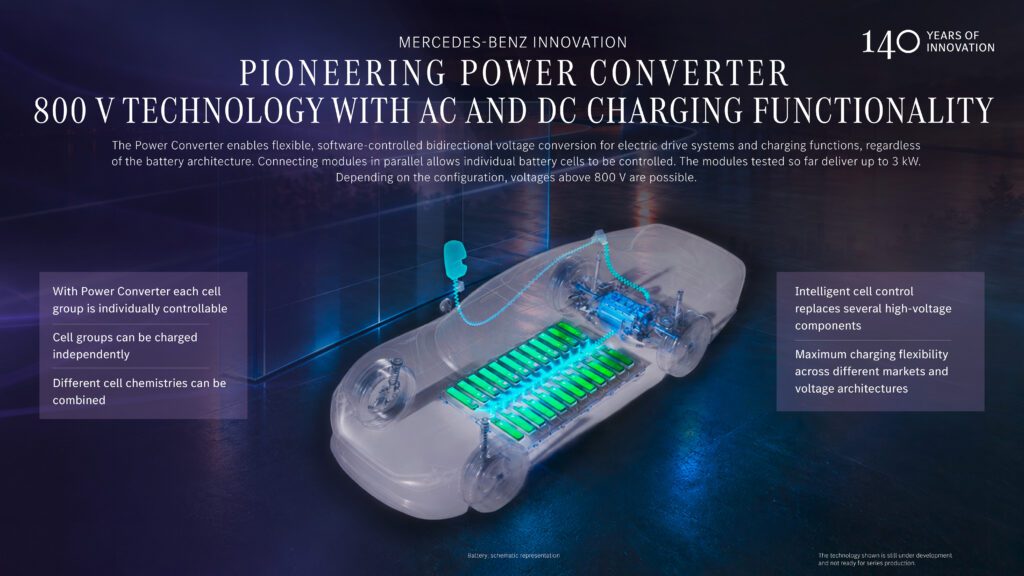
The Mercedes-Benz Power Converter uses software-controlled micro-converters at battery cell level to hold a steady output of up to 800V, whatever each cell’s charge or age. The automaker detailed the research project alongside two glass-based display concepts, with no production timing given for any of them.
The current converter generation delivers up to 3kW and handles both alternating and direct current, with scope for bidirectional charging. Because output voltage would no longer depend on how many cells are wired in series, the automaker says battery design could become far more flexible.
Multiple converters working in parallel would supply a shared high-voltage output, scaled to each vehicle. At 3kW per unit, traction-level power would rely on many working together, though combining functions now spread across separate hardware could improve range for battery-electric and plug-in hybrid models.
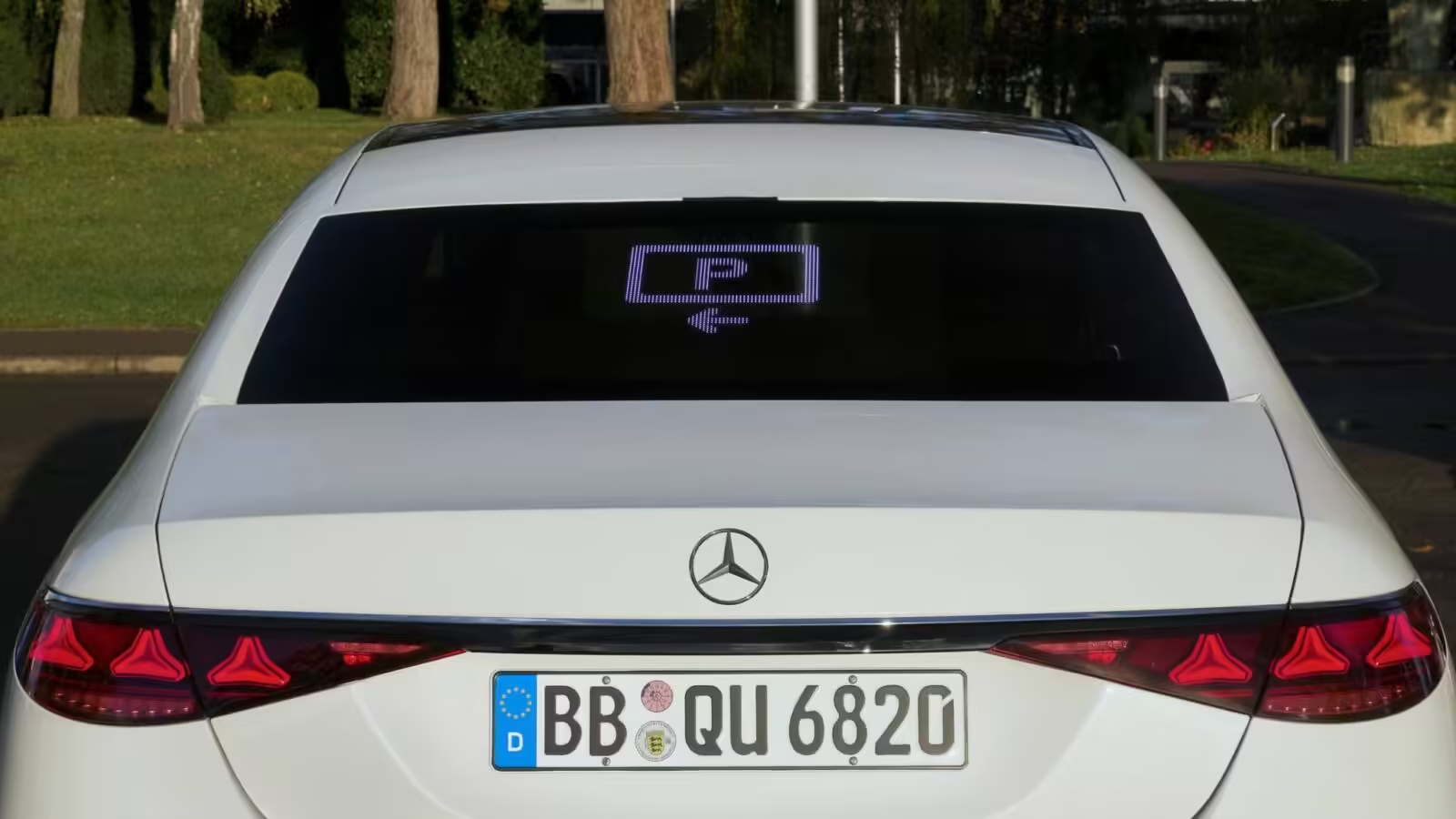
The display work embeds light-emitting diodes (LEDs) in vehicle glass. Mini LEDs in the rear window could show brake lights or warnings to following traffic, while higher-resolution micro LEDs suit animations on smaller areas.
A holographic windscreen display pairs a dashboard projector with a laminated film that keeps images visible in sunlight. Content can be limited by viewing angle, so driver and passenger see different material, from navigation to films.
Source: Mercedes-Benz
Source: www.automotiveworld.com