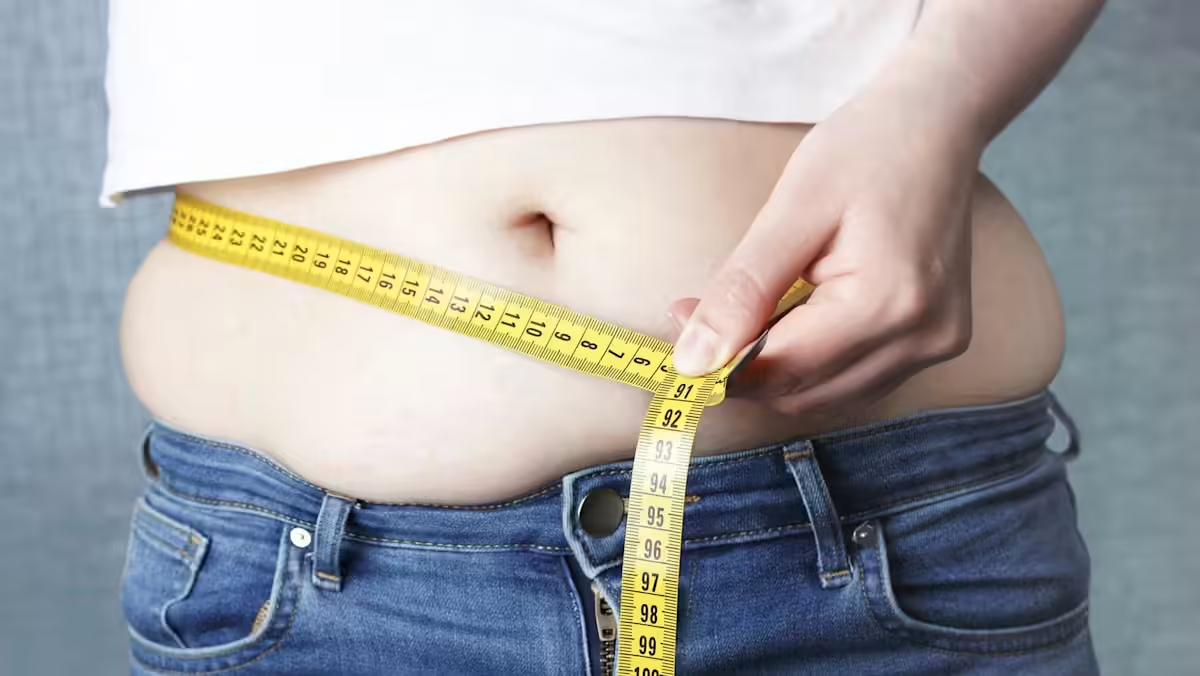

Putting on weight seems to be inevitable as you get older. What’s more frustrating for midlife women is that exercising more and eating less has little effect on that weight, which – more frustratingly – tends to accumulate around the mid-section.
There’s a name for it: menopause belly, or meno belly.
“Menopause belly refers to the accumulation of excess fat around the abdomen, particularly visceral fatwhich surrounds the internal organs,” explained Professor Yong Eu Leong, emeritus consultant at the division of Benign Gynaecology, department of Obstetrics & Gynaecology at National University Hospital (NUH).
He added: “During the menopausal transition, many women experience a shift from a pre-menopausal pear-shaped body, where fat is stored around the hips, thighs and buttocks, to a more apple-shaped body, where fat is concentrated around the waist.” On average, women gain about 2-3kg during this period, he added.
WHY MENOPAUSE BELLY HAPPENS
Declining oestrogen levels are associated with a shift in where the body stores fat, said Associate Professor Rukshini Puvanendran, co-director of KK Menopause Centre at KK Women’s and Children’s Hospital (KKH). These changes can begin during perimenopause.
Age-related muscle loss is another factor. Because muscle burns more calories than fat, even at rest, having less muscle slows metabolism, making it easier to gain fat and harder to lose weight, said Assoc Prof Rukshini.
Source: www.channelnewsasia.com