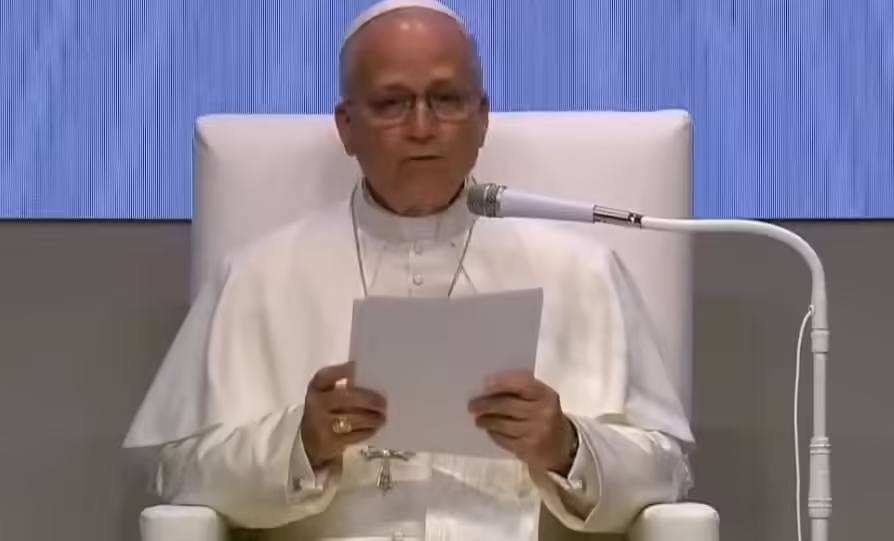

The speech given by Pope Leo In front of an audience made up of workers, union leaders, leaders of capital and members of the academic community, the Supreme Pontiff maintained that any growth that absolutizes financial benefit over personal dignity generates social exclusion and weakens community cohesion. In his presentation, the highest authority of the Catholic Church outlined an ethical roadmap that requires articulating the sacred value of employment, the social function of private property, state subsidiarity in favor of intermediate organizations and the imperative subordination of markets and new technologies to the common good.
When addressing the anthropological dimension of work activity, Leo XIV stressed that work should not be conceived as a mere instrument of conflict nor as an exclusively monetary mechanism, but as an instance of personal fulfillment and community integration. In that sense, the Pontiff warned about the dramatic consequences of unemployment in contemporary societies by pointing out that “depriving a person of work is not simply denying them an economic income; it is seriously wounding their dignity, annulling their ability to contribute to society and submerging them in social exclusion, fragmenting the cohesion of the social body and destroying community action aimed at the common good.” Quoting his predecessor Franciscoemphasized that “in a truly developed society, work is an essential dimension of social life, since it is not only a way to earn one’s bread, but also a channel for personal growth, to establish healthy relationships, to express oneself, to share gifts, to feel co-responsible for the improvement of the world.”
Regarding the economic order and the regulation of resources, the dissertation reaffirmed the classic postulates of social doctrine regarding property rights. The Pope stated that “although the Church recognizes and defends the right to private property, this right is always engraved by a social mortgage,” recalling that the earth and its fruits were conceived for the sustenance of all humanity. Under that premise, he pointed out that human beings act as custodians of an inheritance that must be administered with equity to eradicate structural asymmetries that marginalize vulnerable sectors.
Regarding the role of institutions and the principle of subsidiarity, Leo XIV separated the responsibility of the public sector and large corporations, rescuing the prominence of grassroots associations. The Bishop of Rome explained that “neither the State nor large corporations should absorb the initiatives and capacities of local communities and intermediate groups, but rather support and enhance them,” specifying that “the State does not have to do everything, but rather has the task of promoting the actions of intermediate bodies.” Along these lines, he highlighted the value of popular movements, urban collectors, artisans and informal workers, defining them as manifestations of an active subsidiarity that is organized from below to demand land, shelter and work, nodal demands of social justice.
The appeal to the business sector occupied a central section of the pontifical message, where the productive vocation was valued but rigorously warned against greed and speculation. Taking as a model the figure of the venerable Enrique Shaw, The Pope vindicated those who risk their own assets to generate employment, although he set a clear ethical limit to the search for rent by asserting that “we must remain alert to avoid the risk of greed,” adding that “the business vocation is a noble task if it is guided by the principle of the social function of property and capital. When economic profit is absolutized as the only criterion of success, the company is dehumanized and becomes a structure of sin that generates exclusion.” Faced with this, he urged the promotion of ethical investment aimed at environmental sustainability and the dignity of the worker.
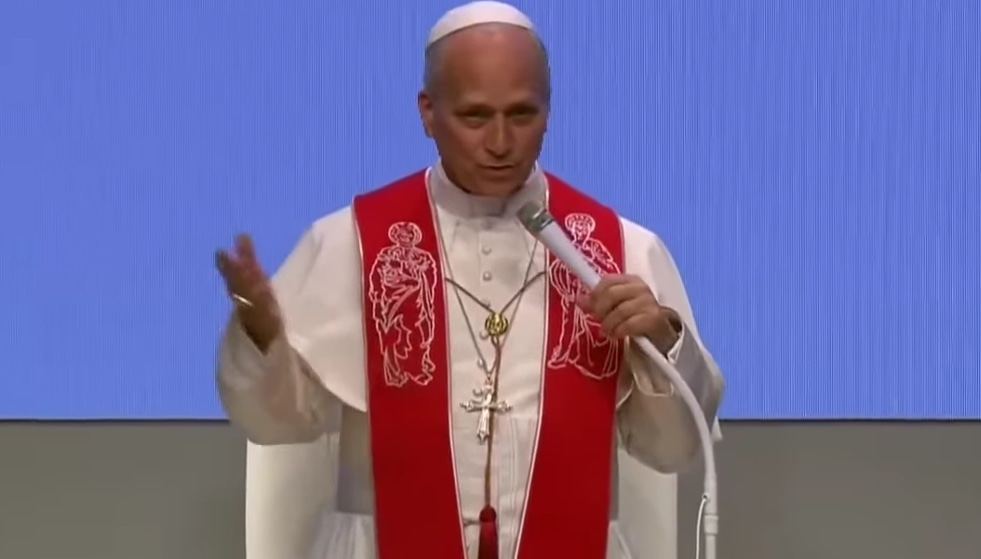
In parallel, the Holy Father examined the role of the organized labor movement, recognizing its indispensable profile to avoid the commodification of human effort but subjecting its legitimacy to the commitment to precarious sectors. Leo
Finally, the Supreme Pontiff addressed the technological transformation and the accelerated advance of automation in the workplace, warning that innovation should not threaten employment or deepen inequality. When referring to new technologies, he maintained that “the challenges of artificial intelligence and deregulated automation can put so many jobs at risk and become a true threat to adequate comprehensive human development,” categorically stating that “technique must always be subordinated to ethics. The algorithm cannot replace human discernment or the intrinsic value of the worker’s presence and effort.” He thus concluded that the State, the market and the economy must be articulated under an ethical framework where the promotion of full employment remains the guiding criterion of the human quality of any development model.
Source: tendenciadenoticias.com.ar