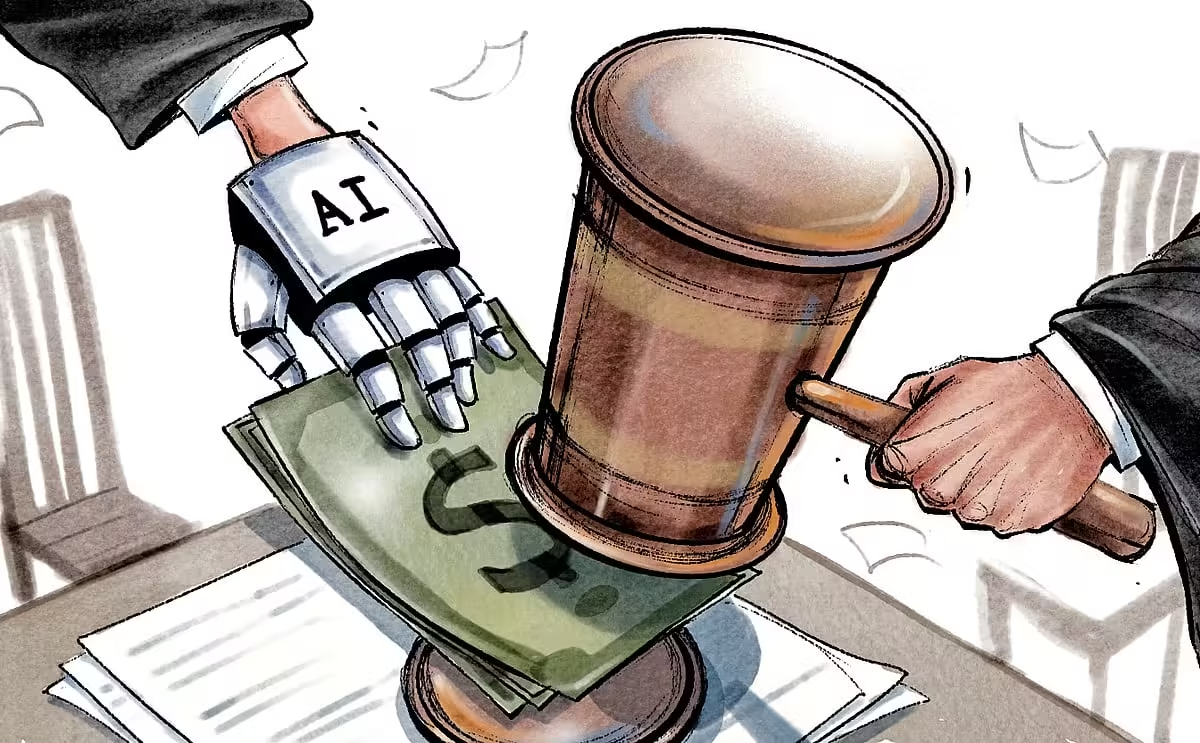

The increasing shift towards out-of-court settlements and plea bargains, is reshaping the relationship between crime and punishment. It is blurring the lines of justice by turning criminal accountability into a financial, commercial or administrative transaction. The practical logic of such light-touch approach to justice and inverted proportionality emanates from politico-economic consequences of the fall of big companies in terms of production, unemployment and the deficiencies in the investigative-judicial machinery to deal with the increasing incidence of large and complex violations.
Even the Supreme Court of India travelled this path while closing the Sterling Biotech bank fraud case in 2025, after the promoters agreed to pay a recovery package. This was despite the hitherto strong stand that settling criminal offences was a crime against society. That weight must have forced the court to emphatically add that the judgement should not be treated as a precedent. However, this case provides a real-world example of how the line between crime and punishment can blur when pragmatism intersects with criminal accountability.
The traditional ideal of criminal justice envisions a binary system: a crime is committed and proved; a proportional punishment is handed down. Even small crimes used to invoke serious punishments in some jurisdictions. Like Jean Valjean, the protagonist in Victor Hugo’s Les Miserables was awarded five years’ imprisonment by the then French judicial system for stealing one loaf of bread.
However, the modern shift towards negotiated settlements, plea bargains and deferred prosecution agreements is fundamentally challenging this paradigm in many countries. This evolution is increasingly blurring the boundary between crime and punishment, turning justice into a transaction—monetisation of justice. The message conveyed to the public is that the severity of a crime can be mitigated by the size of a corporate bank account.
This Western model risks transforming the judiciary into a marketplace where criminal liability is bargained away behind closed doors, often shielding the powerful from genuine accountability. While settlements do not entirely erase the jurisprudence, they do fundamentally alter justice delivery. Punishment is no longer a guaranteed, transparent consequence of a crime; instead, it has become a negotiable variable. A company-only-paying for settlement approach does not reduce repeated violations. Rather, it is encouraging repeat violations.
Artificial Intelligence is going to amplify this scenario many fold. The AI bosses themselves have called out loudly on the reality of some agents turning rouge and wreaking havoc with other systems. Expert explanations regarding the reasons for such a clarion call, that too from hitherto AI die-hards, vary. Many are not borrowing the ‘end of humanity’ type arguments too. However, going by even the reported incidents on rogue AI tools, the incidents will grow; in number and size, as AI becomes a stranglehold. Many of those incidents will come out as big disputes. How will those violations be punished? Punish those rogue AI? Their creators; the natural persons or the legal persons? Natural persons would say, we had warned you.
Ultimately it will be an increasing number of civil settlements; irrespective of the crime. Including, hypothetically, a nuclear disaster caused by a rogue AI tool. As long as such settlements do not affect the natural person/s responsible, the exchequers will have plenty of money coming in. Civil settlement with corporations may assuage monetary losses that can be remedied. But where harm to life is involved directly or indirectly, a monetary settlement with those companies only is truncated justice. The persons responsible should also face justice proportionately.
The world of justice should not be an inverted one. Where even small crimes of individuals get punished harshly but big corporate crimes get settled with a fine on only the company. The world of financial settlement needs a revisit.
C K G Nair | Former Director, National Institute of Securities Markets and former member, Securities Appellate Tribunal
(Views are personal)
Source: www.newindianexpress.com