
Double Oscar nominee James Longleywho won the top award at Ji.hlava Documentary Film Festival on Saturday with “Love,” will focus next on the Rohingya genocide.
Longley – who was Oscar nominated for “Iraq in Fragments” and “Sari’s Mother” – tells Variety at the Czech event, “I’ve already filmed act one of this project, working with Diane Weyermann [who died in 2021] at Participant Media, when they were still around [the company was shut down in 2024]. Next year marks the 10th anniversary of the 2017 genocide.”
He adds, “[It’s] a genocide that’s formally recognized as such by the United States, the EU and the British government, yet, surprisingly, no documentary feature has been produced on this subject. I’m uniquely prepared to make that film.”
Longley doesn’t mind being an outsider. His latest, “Mohabat,” is set in Afghanistan.
“I’m not attempting to become Afghan. I’m trying to help non-Afghans understand Afghanistan better. After fighting a war in their country for 20 years, this seems like the least we can do,” he says.
He arrived “with a camera in my hand instead of a gun” and was treated as a guest, not an enemy.
“I went to their country with the sincere goal of telling their stories, so I was accepted and afforded patience.
“I cannot describe what an honor it has been for me to live and work alongside the Afghan people, who are brave and pure of heart in a way most Americans could take a good lesson from.”
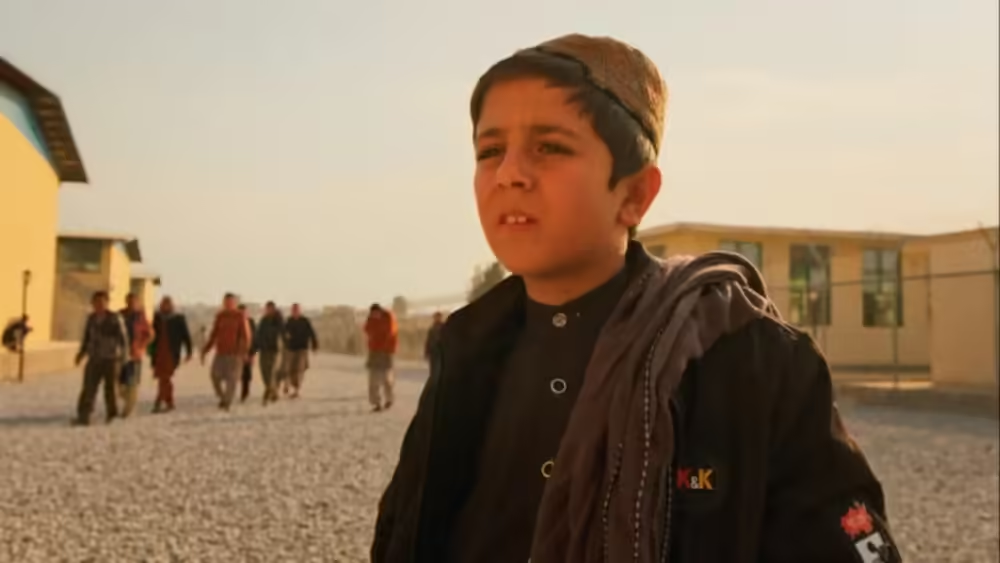
His protagonist, 12-year-old Mohabat, tries to hold his family together under Taliban rule after a U.S. drone kills his father while he’s out hunting.
“This happened during the first Trump administration, when Mike Pompeo was in charge of the drone program,” says Longley.
“During the 20-year war, such events were common and untold numbers of civilians were killed and forgotten far from the foreign journalists in Kabul. Mohabat did not want his father to be forgotten, and so he stuck with us patiently throughout two years of filming.”
During location scouting, the team visited orphanages filled with children who had lost their parents in the war.
“The sons of Afghan policemen martyred in Taliban suicide bombings share their bread with the sons of martyred Taliban fighters. Many of them wanted to tell their stories. That was never an issue,” he says.
“Mohabat believed that we would do justice to the memory of his father, a poor man with a wife and seven children, who worked as a tea seller in a large market on the edge of Kabul.”
He adds: “Elham, one of Mohabat’s friends, told us specifically that he was waiting for a foreign journalist to come and talk to them about what they had seen during the war and what they thought about it.”
Longley is no stranger to making films “about young people and for young people,” such as “Iraq in Fragments,” “Angels Are Made of Light” and now “Mohabat.”
“When we are children, we experience the world most directly – and for the first time. When I direct a documentary in Afghanistan, Iraq or Gaza and show it to a Western audience, I know I’m taking them to a new place. In this situation, it’s most appropriate to give them a child’s perspective because [they’re] like a child in those countries, experiencing something new.
“I’ve included many adults in my documentaries, but most audience members never remember them after watching the film.”
He’s influenced by Vittorio De Sica, Abbas Kiarostami, Majid Majidi, François Truffaut and other directors who “treat the lives of their child characters with great seriousness.”
“This can also work in documentaries,” he emphasizes. Especially when working in a “restrictive space.”
“Making a film in Afghanistan, either during the war or under the Taliban, with a child as the main protagonist doesn’t make the job more difficult; it makes it much easier. You’ll get permission to make a film about a kid a 100 times before you will get permission to make a film about an adult.”
He wasn’t able to film women, however.
“It would have caused a local scandal if one of the village women had appeared in our film. She would never have been able to live it down. The issue is not whether women can talk; it’s more that their neighbors would never stop talking about it,” he observes.
“Plenty of Afghan women are making their own films in secret on their iPhones, so I didn’t feel it was necessary to duplicate their efforts. I’m in no position to make a film about Afghan women, and meanwhile, Afghan women filmmakers are in no position to make the kind of film we made in ‘Mohabat.’”
He ended up joining forces with Alex Gibneywho is credited as a producer alongside Longley and Mohammad Sharif Hotak.
“Alex saw ‘Angels Are Made of Light’ and liked it. When I asked him if he would like to produce a film with me about life in Afghanistan under the Taliban, he immediately said yes.
“It’s been a joy working with him, mostly because he’s the best documentary producer alive and also a deeply intelligent person. This kind of collaboration and level of trust is a dream for any filmmaker.”
He also praises Hotak, who lived just down the road from the villages where they filmed.
“His familiarity with the place and the people was the key to making the movie. He grew up experiencing the same realities of war as the children in the film, so he could relate to them directly.”
Finding a personal angle is crucial for Longley, regardless of where he’s heading.
“I see all films and media as reflecting the politics around which they were made and the politics of those who made them. Corporate news media make products that aligns with the politics of their owners and advertisers. I make films that reflect my own politics, which are pro-human and anti-war,” he notes.
“I suspect that my films are in direct conflict with almost everything you will see on television, but I can’t say for sure – I’ve never owned a TV. I don’t care about what most of those people have to say.”
Source: variety.com