
Iran’s exiled prince Reza Pahlavi accepted Germany’s Freedom Prize on behalf of the Iranian people in Frankfurt on Saturday, the first time the award has gone to a nation rather than a person, as tens of thousands of Iranians rallied in the city for the uprising at home.
The Friedrich Naumann Foundation for Freedom presented the 2026 prize at St. Paul’s Church, the seat of Germany’s first elected national assembly in 1848. The foundation, which is affiliated with the liberal Free Democratic Party, has awarded the prize every two years since 2006 to individuals who advance civil society and liberal values. This year it chose a nation.
“Not to any group, any party or any person,” said the foundation’s chairman, Steffen Saebisch, “but to a people: the Iranian nation.”
Pahlavi, the son of Iran’s last shah and the best-known figure in the opposition, holds the prize in trust until, in the foundation’s words, representatives freely elected by Iranians can receive it.
Pahlavi said he had agreed to take the prize only on condition that he hold it as a custodian, not an owner.
“A custodian safeguards something of great value that belongs to someone else,” he said. “When the time comes, he returns it intact and in its entirety.”
That time, he said, was nearer than Tehran would admit. “One day, and I believe that day is closer than the dying clerical regime would like to admit, I will place it in the hands of its rightful owners, the Iranian people. Not on foreign soil, but in our capital, Tehran.”
He described the country as a house whose owners had been shut out. “For 47 years, Iran has been like a house whose residents, its rightful owners, have been locked out of their own home or held captive inside it,” he said. “The keys were taken from the people in 1979. I see it as my duty to help reclaim those keys and return them to their only rightful owners, the Iranian people.”
He paid tribute to the families of those killed in the struggle for freedom.
‘A nation willing to die for the right to vote’
Pahlavi built his speech on the building. In 1848 Germany’s first elected parliament sat in St. Paul’s Church and wrote a catalogue of rights that never took effect. In 1906, he said, merchants and intellectuals in Tehran forced the creation of Iran’s first parliament and “believed exactly what the men in this church in 1848 believed: that the nation is not the property of potentates, but of the people.”
Germany’s road ran through Weimar into Nazism, he said; Iran’s constitution was buried under a theocracy. “But this building teaches a lesson that tyrants never learn. The ideas of 1848 were not defeated.”
The church was bombed to ruins in 1944 and rebuilt by 1948, among the first buildings in the city to rise again. “A people standing in ruins chose to rebuild their house of freedom first. You did not forget liberty,” he said. “Well, neither have we.”
He described himself as a bridge. “A bridge carries people from one shore to another. One does not build a home on a bridge. You cross it, and then it has done its most important job.”
A German lawmaker, he said, had asked him this year whether Iranians were really ready for democracy. “I will admit the question stung.” His answer: “They prove it every time they march unarmed toward men with machine guns. They prove it when they organize strikes in a country with no free unions, and spread the truth in a country with no free press. A people willing to die for the right to vote is ready to exercise the right to vote.”
He asked the families of those killed in January, who were in the hall, to stand, and the audience to rise for them. “Daughters shielded by their dying fathers. Sons killed holding their mothers’ hands. That is the Islamic Republic.”
Pahlavi defended his support for military pressure on Iran’s rulers, a position that has divided the opposition. For years, he said, he had argued against both appeasement and war, for “maximum pressure on the regime, and maximum support for the Iranian people.”
January changed that. “An unarmed people cannot be asked to defeat, with bare hands, a state prepared to kill without limit,” he said. “We needed this humanitarian intervention and we do not apologize for it.” He said the targets should be the Revolutionary Guards and “the apparatus that turns its guns on our people,” and civilians and civilian infrastructure spared. “Every innocent Iranian lost in this war is a grief I carry.”
Pressure from outside could weaken the Islamic Republic, he said, “but it cannot replace it, and it must not try to choose what comes next. That belongs to the Iranian people alone.”
He set out four principles he called four freedoms: Iran’s territorial integrity; equal rights for every citizen “whatever their language, their origin or their beliefs”; a secular state that belongs to Shia and Sunni, Baha’i, Christian, Jewish, Zoroastrian and the non-religious “because it belongs to none of them, exclusively”; and the right of Iranians to choose their form of government at the ballot box.
“Please notice what is not on this list,” he said. “No name, no party, no system of government is on it, because all of those choices belong to the people. I will not take it from them. Nor will I allow others to.”
To Iranians who had written that he should not be the one to hold the prize, he said: “Thank you. You were able to make your objections freely, in German newspapers and on German streets, without fear of arrest or a bullet. That is exactly the freedom I am fighting for in Tehran.” And: “My hand is open. To monarchists and republicans. To the left and the right. We do not have to agree about the past to agree about the future.”
He asked Germany for three things. Justice: to prosecute the crimes of January as German courts in Koblenz had tried Syrian torturers, so that “every commander still deciding whether to fire on his own people” knows “the world is keeping a record.” Connection: help Iranians stay online, because “the regime’s most important weapon on January 8 was not a rifle. It was the off switch.” And no deal over Iranians’ heads: “Any arrangement that keeps this regime in power buys a short calm and pays for it with Iranian lives.”
He cited Tehran’s support for Russia in Ukraine, the foiled plot against RAF Fairford, the 1992 Mykonos restaurant killings in Berlin and the execution of the German citizen Jamshid Sharmahd, and asked Germany to protect Iranians living under its watch from the state’s agents.
He ended with the Berlin Wall, which fell 37 years ago this week. “No one in this hall in 1988 would have dared to predict it,” he said. “That is how dictatorships end: slowly, and then all at once. That day is coming to Iran.”
‘No people paid a higher price’
Saebisch paid tribute to Iranians killed, jailed or exiled for opposing the Islamic Republic, and to “the hundreds of thousands who, despite mortal danger, take to the streets,” the women defying the morality police, and those who risk their lives to send videos out of the country. “Freedom often comes late,” he said, “but it comes.”
The foundation’s decision was driven by the January massacre, when security forces killed thousands of protesters and shut down the internet.
“I think no people in the world paid a higher price for freedom in this year,” Ludwig Theodor Heuss, a member of the foundation’s board of trustees, told the Jerusalem Post before the ceremony. “The terrible thing is that these things go on. The killing goes on.”
Frankfurt’s mayor, Nils Kößler, said the prize was “dedicated to the people who protested and were killed in the most brutal manner,” and to “those who are in the regime’s prisons, enduring torture and facing execution at this very moment.” He ended his speech in Persian: “Be omid-e azadi,” in hope of freedom.
Marie-Agnes Strack-Zimmermann, who chairs the European Parliament’s security and defense committee, said the world had stopped talking about Iranians.
“The world is negotiating over the nuclear issue and now also over the closure of the Strait of Hormuz,” she said. “But hardly anyone is talking about the people in Iran anymore.”
She called for freezing the assets of the Revolutionary Guards and their officials and for sanctions on security personnel, judges and prison authorities.
“Anyone negotiating with Tehran must never, under any circumstances, leave human rights off the table.”
“The future of Iran will not be decided by us in this church, nor by Washington, Berlin or Brussels,” she said. “Only the Iranian people will decide, freely and democratically.”
The rally
The ceremony opened a day of demonstrations around the world that organizers said were in support of the national uprising in Iran.
The gatherings began in Australia and Japan, before dawn in Europe, and are expected to continue through the day in cities across Europe, the United States and Canada. The largest is in Frankfurt, where the city moved the main rally from the riverside to Ostpark because the original site was too small for the crowd expected.
Police planned for 24,000 marchers from the Römerberg square and 30,000 at the park, where a stage and loudspeaker towers had been built overnight.
Yasmine Pahlavi said Frankfurt police had told the couple that threats from the Islamic Republic meant her husband could not appear or speak at the rally. His office said later that he still intended to join the gathering after the ceremony.
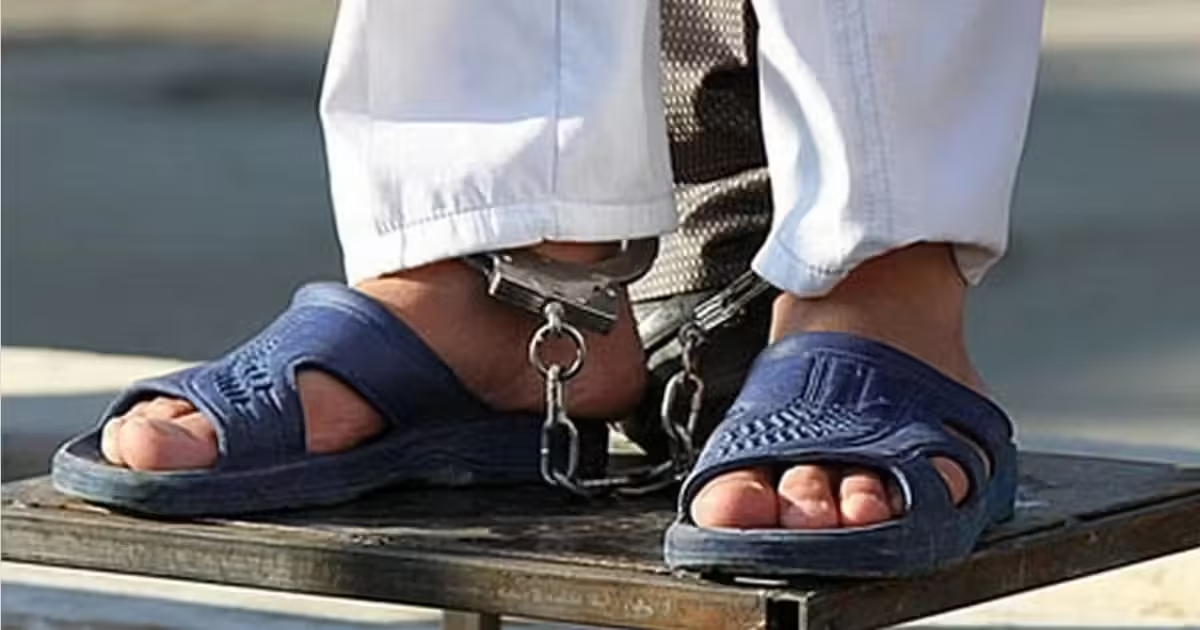
The prize came in a week when the Islamic Republic hanged two protesters, Amirhossein Maleki, 20, and Amirhossein Ebrahimi, 19, over the Isfahan protests, and days after it executed a third man in Sistan and Baluchestan. The foundation’s Heuss said more than 70 people were executed in October alone.
Source: www.iranintl.com