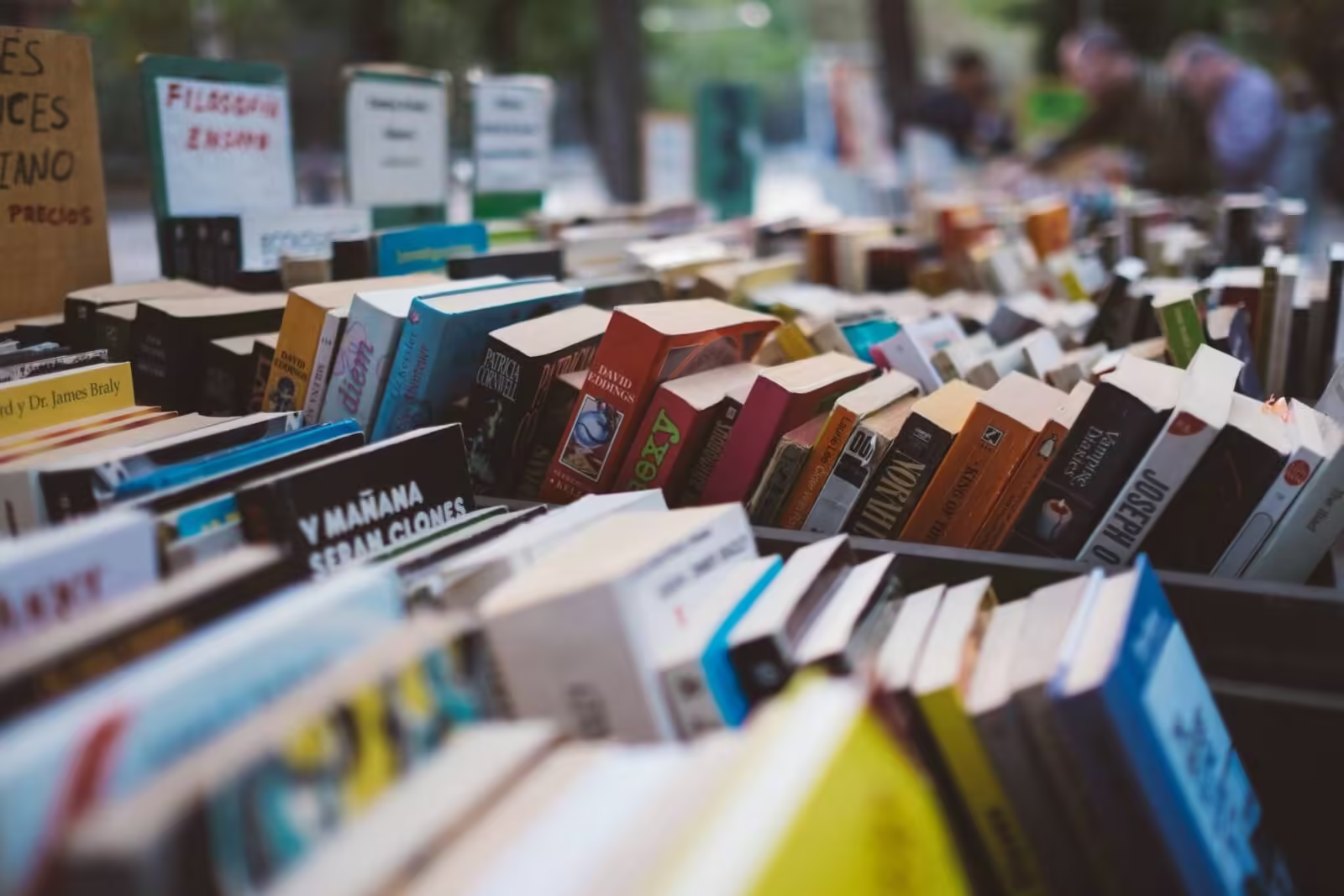

What’s India’s Gen Z reading these days? And are we reading at all? A new report by the National Book Trust (NBT) has some answers. Based on a survey of visitors to the New Delhi World Book Fair (NDWBF) in January 2026, it found young readers dipping into psychological thrillers such as The Silent Patient and YellowfaceKorean fiction like The Vegetarianand the poetry of Kabir and writings of B.R. Ambedkar.
The study, commissioned for the first time by the NBT, an autonomous body under the Union Ministry of Education, examines the reading and purchasing habits of younger audiences.
International fiction is peaking
Psychological thrillers such as Alex Michaelides’ The Silent Patient and Rebecca F. Kuang’s Yellowface emerged as popular picks, alongside Han Kang’s International Booker Prize-winning The Vegetarian and Bora Chung’s Cursed Bunny. Clearly, South Korean literature, much like its music and cuisine, is steadily building a fan following in India.
The fascination with fiction (translated or otherwise) doesn’t stop at Korea. Japanese titles, too, found their way into readers’ shopping bags (and hearts), with Toshikazu Kawaguchi’s Before the Coffee Gets Cold and Satoshi Yagisawa’s Days at the Morisaki Bookshop drawing considerable interest.
Self-help books were also in high demand, like Morgan Housel’s The Psychology of Money.
The NBT attributes this to young readers’ increasingly cosmopolitan tastes and their curiosity about cultures beyond their own.
Do young readers like Indian titles?
You bet they do! Hindi literature continues to hold its own, with Kabir’s poetry, B.R. Ambedkar’s writings, works by Osho, and several self-help titles making the cut. In a rather interesting addition to the bestseller mix, translated editions of the Constitution of India also found takers. The Palace of Illusions, too, found favour with readers.
How much are Gen Z spending on books?
The NBT’s findings drew on a sample of 3,650 visitors, who collectively splurged ₹59 lakh on books. The fair itself attracted an estimated 20 lakh visitors, with college students accounting for around 40% of the surveyed attendees.
Extrapolating the sample’s spending patterns across the total footfall, the NBT estimated that visitors spent approximately ₹323 crore on books, translating to an average individual expenditure of ₹1,615.80.
For the publishing side of things, English publishers dominated the fair, with 352 publishers operating 1,373 stalls. Hindi came next, with 156 publishers and 371 stalls. Urdu trailed behind, with a considerably smaller presence of just 24 publishers setting up 40 stalls.
Regional languages had an even more modest showing, with four Punjabi publishers, three each for Tamil and Sanskrit, two each for Bengali, Gujarati and Sindhi, and just one Malayalam publisher.
What’s Gen Z interested in reading?
According to the NBT report, themes revolving around identity, belonging and contemporary social issues were among the big draws. Fantasy and speculative fiction, meanwhile, offered readers a welcome escape from academic literature.
And yes, the cover matters. Despite growing digital consumption, young readers continue to have a soft spot for physical copies. Bonus points if they come wrapped in visually appealing, ‘Instagram-worthy’ covers.
The language equation, however, is a little more complicated. English remains the dominant choice among college-educated young readers. Not a surprise at all, actually. Hindi, meanwhile, continues to benefit from its strong regional and cultural readership.
The NBT also noted a growing interest in vernacular literature, with young urban readers increasingly turning to their mother tongues as expressions of cultural identity. That said, regional-language reading still faces an uphill battle, with limited availability and discoverability of books. The NBT believes one way to bridge this gap could be to take book fairs beyond the national capital.
And finally, kudos to the NBT for throwing open the gates to the New Delhi World Book Fair with free public entry for the first time in 2026!
Source: www.timeout.com