
November 9, 2026
Delhi air pollution worsens as firecracker ban defied on Diwali
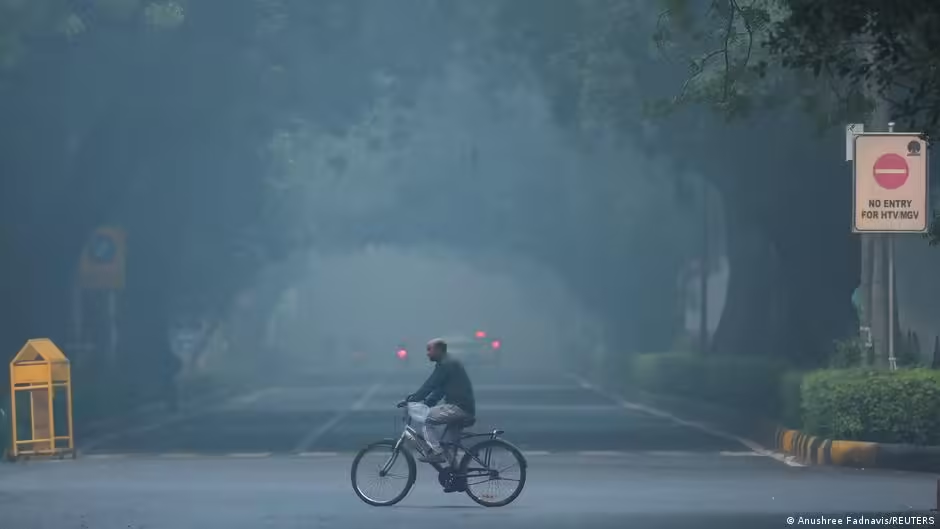
Residents of New Delhi and nearby areas have woken up breathing, or rather choking on, smoke and fine particulate matter, as revelers celebrating the Hindu festival of Diwali disregarded a firecracker ban, adding to the ongoing pollution crisis that grips the capital in the winter months.
Several parts of New Delhi and the surrounding satellite cities that make up the National Capital Region (NCR), have reported an Air Quality Index (AQI) in the “severe” category, posing significant health risks.
Skies over the capital which were lit up by fireworks on Sunday night are now blanketed with a thick layer of toxic smog.
Air pollution in parts of Delhi-NCR dangerously surpassed the World Health Organization’s (WHO) recommended 24-hour average limit on Monday by over 50 times, reports said.
IQair, that cites data from a government monitoring station in the city, put the level of cancer-causing PM 2.5 microparticles at 879 micrograms per cubic meter in Delhi’s central Mandir Marg area early on Monday, news agency AFP reported, which comes up to nearly 59 times the WHO limit of 15 micrograms per cubic meter.
New Delhi is one of the world’s most polluted capitals. The city has for many years witnessed a recurring winter smog fuelled by vehicular emission, crop-residue fires in neighboring states and industrial activity.
Millions of people celebrate Diwali with fireworks in the smog season, releasing massive amounts of fine particles — PM2.5 and PM10 — and soot in the already compromised air.
On Saturday, Delhi witnessed the worst air on Diwali eve in a decade.
Last month, India’s top court had restricted conventional firecrackers, allowing only “green firecrackers” in three-hour timeframes on Saturday and Sunday. But the Supreme Court’s ban failed to hold.
“Green firecrackers” are designed to produce lower air and noise pollution but still emit 65 to 70% of conventional firecracker pollution.
A series of winter pollution rules had also kicked in in New Delhi from November 1, including vehicle restrictions and construction bans.
Air pollution has been a Gordian knot for successive Delhi governments who blame each other for failing to tackle the issue.
But a long-term solution to curb New Delhi’s air pollution crisis remains elusive.
Source: www.dw.com