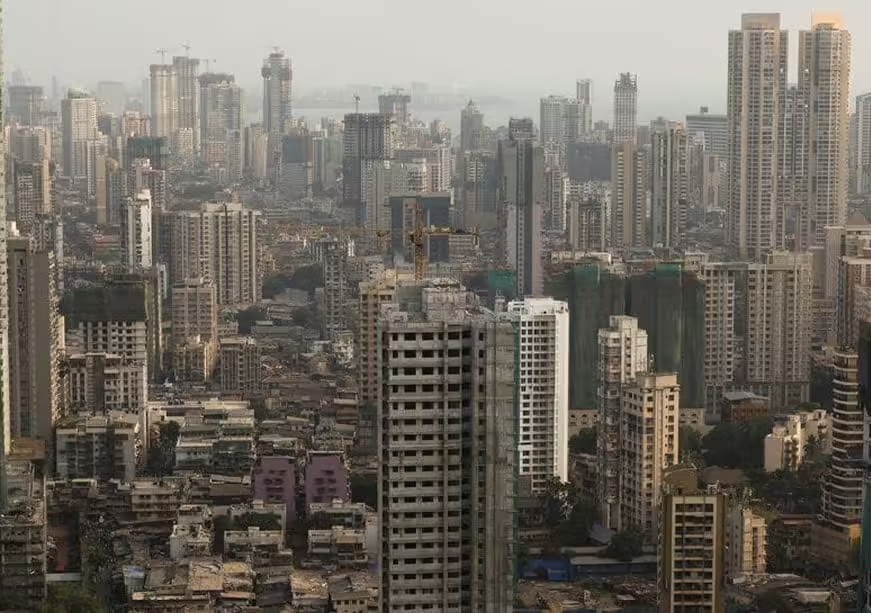

The United Nations (UN) Human Settlements Programme (UN-Habitat) released its biennial flagship publication, ‘The World Cities Report’ (WCR), in June 2026. The report examines key urban issues, with the 2026 edition focusing on housing and explicitly acknowledging the existence of a global housing crisis in its title.
Despite the housing targets set in the UN Millennium Development Goals (2000–2015) and later in the ongoing Sustainable Development Goals (2016–2030), housing shortages have risen to unprecedented levels, far exceeding those at the turn of the century. The global housing deficit climbed to 288 million units in 2023 from 251 million units in 2010. The urban population is forecast to grow by an additional 2 billion people by 2050. This growth will further deepen the current housing deficit. The report identifies several factors contributing to this widening gap.
Despite the housing targets set in the UN Millennium Development Goals (2000–2015) and later in the ongoing Sustainable Development Goals (2016–2030), housing shortages have risen to unprecedented levels, far exceeding those at the turn of the century.
Factors Driving the Housing Crisis
The World Cities Report 2026 identifies five factors that drive the housing crisis: (i) rising costs, (ii) limited supply, (iii) widespread displacement, (iv) inadequate upgrading of existing homes, and (v) informal settlements. Cities worldwide face intense pressure on housing costs. WCR 2026 finds that housing is less affordable today than it was two decades ago. Rapidly rising rents are consuming a larger share of young households’ earnings and undermining their ability to save. Globally, 44 percent of households spend more than 30 percent of their income on rent. On the supply side, higher land costs and the growing treatment of housing as an investment asset are making it difficult to deliver affordable housing. Meanwhile, the scale of informality is increasing. More than 1.1 billion people now live in informal settlements—the highest on record.
The World Cities Report 2026 identifies five factors that drive the housing crisis: (i) rising costs, (ii) limited supply, (iii) widespread displacement, (iv) inadequate upgrading of existing homes, and (v) informal settlements.
Buildings account for around 34 percent of global energy use and 37 percent of carbon dioxide (CO2) emissions, with housing alone responsible for an estimated 17 to 21 percent of total emissions. Climate change is a major and growing challenge for housing systems: climate-related hazards are projected to destroy 167 million homes by 2040, and informal settlements and low-income communities are likely to be hit hardest.
State of Housing in India
WCR 2026 reveals that India’s housing stock stood at 285 million units in 2023, with a shortage of 29 million units. Owner-occupied housing accounted for 86.6 percent of the stock and rental housing for 12 percent; the average age of the housing stock was 45 years. India’s homeownership rate of 86.6 percent was much higher than that of the developed world (Europe and North America), at 75.2 percent. In contrast, the average share of rental housing in the developed world, at 28.9 percent, was considerably higher than India’s 12 percent. The share of India’s urban population living in slums fell from 48.8 percent in 2010 to 40.8 percent in 2024. The total number of slum dwellers, however, rose from 187,463 in 2010 to 209,437 in 2024.
India runs the largest affordable housing scheme, the Pradhan Mantri Awas Yojana–Urban (PMAY-U). Launched in June 2015, the scheme has sanctioned over 12.5 million houses under PMAY-U and PMAY-U 2.0, of which more than 10 million have been completed and delivered to beneficiaries across the country. Despite this effort, a study by the Confederation of Indian Industry (CII) and Knight Frank estimates that India will face a cumulative affordable housing shortage of 31.2 million units by 2030. These figures highlight the scale of India’s housing challenge. The Declining Policy Priority of Housing
One of the most unfortunate developments, the WCR 2026 notes, is the gradual decline in housing’s prominence on national policy agendas. This decline comes despite the long-standing recognition of housing as a critical welfare and development concern and a cornerstone of poverty reduction and social stability.
One of the most unfortunate developments, the WCR 2026 notes, is the gradual decline in housing’s prominence on national policy agendas. This decline comes despite the long-standing recognition of housing as a critical welfare and development concern and a cornerstone of poverty reduction and social stability.
Five decades of experience show that market-driven, homeownership-centred approaches alone have been insufficient to meet the growing demand for adequate housing, particularly among disadvantaged populations. Overreliance on the market and owner-occupied housing has widened social and economic inequalities. Conversely, countries that retained strong public stewardship over land management, housing finance, and regulatory frameworks have achieved more inclusive and stable outcomes. Singapore is a standout example: the government combines the roles of landowner, developer, financier, and regulator. Habitat 3’s emphasis on reaffirming the state’s central role in ensuring housing affordability, resilience, and the realisation of housing rights along the lines of Singapore remains relevant for the current crisis.
Reorienting Housing Policy: Global and Indian Priorities
Several policy imperatives emerge from the WCR 2026, both globally and for India. First, housing is not just any form of infrastructure. It is essential for fostering healthy, stable families and developing human capabilities, with far-reaching socio-economic implications. It influences physical and mental health outcomes and enables children to pursue education and realise their potential.
National, state, and local governments therefore cannot remain on the sidelines and expect market forces to address the housing crisis, given that the most acute shortages are in affordable housing, a segment that has historically attracted limited private-sector interest. Addressing the housing challenge requires active and sustained government intervention at all levels. Governments should, therefore, re-establish housing as a public priority, reclaim leadership in regulating land and financial markets, strengthen oversight to curb speculation, and maintain steady investment in affordable, well-located housing.
Given the disproportionate impact of climate change on informal housing, there is an urgent need to develop housing systems that can withstand disasters and reduce the risks of displacement.
Second, in cities, housing locations should be linked to health, education, transport, and other social amenities. These locational advantages would enhance both individual and urban productivity. Informal settlements should be upgraded, and community-driven housing should be promoted and scaled up. Given the disproportionate impact of climate change on informal housing, there is an urgent need to develop housing systems that can withstand disasters and reduce the risks of displacement. Emissions can be reduced by retrofitting existing housing stock and adopting energy-efficient, low-carbon construction methods for new developments. Housing must be treated as a core pillar of sustainable urbanisation and human well-being. This, of course, will require coordinated action across different levels of governance. Effective responses depend on alignment between global, national, and local agendas, along with cross-sector collaboration.
A further area requiring policy recalibration is conventional housing finance. These institutions must move beyond an exclusive focus on homeownership and pay attention to rental housing. Policymakers, especially in India, have not sufficiently appreciated the importance of rental housing in cities. As noted in the report, the developed world has a rental housing share of around 30 percent. Large groups of residents in the labour market move between cities to relocate or take up new jobs. Most cannot or do not want to invest in housing through homeownership. To strengthen and scale up India’s rental housing sector, states must first implement the rental reforms as recommended by the Government of India.
Making affordable and rental housing central to urban policy will be essential to ensuring that housing remains accessible to all and supports broader development and human well-being.
Ultimately, addressing the housing crisis requires a shift away from an overreliance on market-led, homeownership-centred approaches towards a more inclusive model that places public responsibility at its core. Making affordable and rental housing central to urban policy will be essential to ensuring that housing remains accessible to all and supports broader development and human well-being.
Ramnath Jha is a Distinguished Fellow at Observer Research Foundation.
The views expressed above belong to the author(s). ORF research and analyses now available on Telegram! Click here to access our curated content — blogs, longforms and interviews.
Source: www.orfonline.org