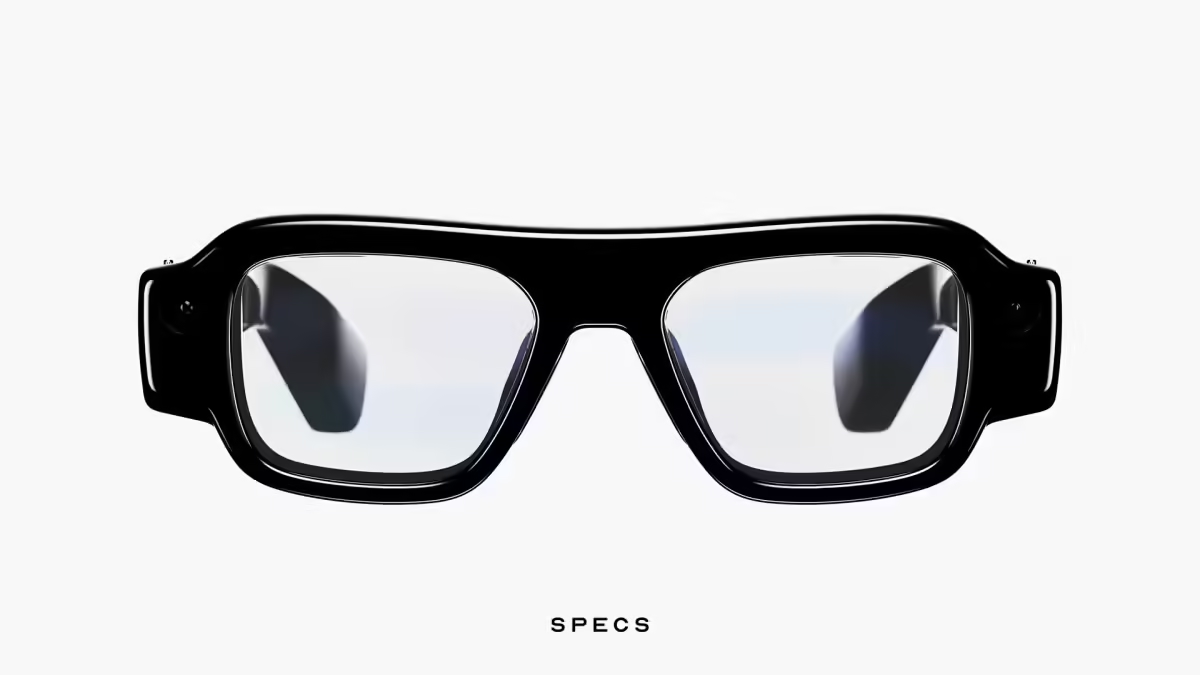

When I tried a prototype of Snap’s Specs at CES in Las Vegas earlier this year, the experience left something to be desired. The company’s AR glasses — which the company calls a “new kind of computer” — were heavy (they weighed around 8 ounces) and fit rather uncomfortably on my face. The device was also hot, and made my face feel tingly — a common side-effect of smart glasses where massive computing is happening under the hood.
Fast forward to late October, when I met back up with the Snap team at a Four Seasons in downtown San Francisco. By this time, the company had debuted Specs publicly during an event with CEO Evan Spiegel, and pre-orders of the company’s long-gestating headset were already underway.
What I can say is this: Specs has improved the form factor significantly since my first brush with the device. The glasses now weigh nearly half of what the previous version did, slimming down to 132 grams, or approximately 4.6 ounces. They were quite comfortable and, during the hour-ish that I demo-ed the device, it did not heat up like the previous version had.
Specs now comes in two sizes — 47mm and 52mm. The purpose here is purely to accommodate different head sizes, ensuring the glasses fit snugly on whoever’s face happens to be wearing them. They also now come equipped with spring hinges, which make the device more flexible and comfortable.
However, if the body of the device has improved greatly, its soul is still a work-in-progress. The glasses can be fun — but they also still seem to lack a dedicated purpose, and one struggles to imagine how, specifically, this expensive head gear ($2,200 a pop) would prove useful in a daily capacity. When I asked Snap staff what the device was really for — fun and games or productivity — the answer was vague. The device attempts to be a bunch of things at once and, in the process, ends up feeling a little rudderless.
I have racked my brain to come up with some daily use-cases for Specs. Some of the things I came up with were:
- Watching TV or movies while you’re on a train or some other form of public transportation. There are places where you just have to hang out for awhile and, not infrequently, one way to pass the time is streaming. Specs provides a much more immersive form of mobile entertainment than simply watching a video on your cell phone. The device’s integrations with HBO Max and YouTube make it an appealing entertainment option for users who are in-transit.
- Reading. Because of the immersive nature of Snap’s headset, I feel like they could be a good option for reading while traveling. When you’re reading with Specs, it feels like you’re locked into whatever text you happen to be looking at. It weirdly helped me focus. An integration for newspapers or Kindle could make the glasses a good way to read while you’re mobile (I’m envisioning the ideal setting being on a plane, train, or the back of a car).
- Taking easily shareable weird videos. Like many of Meta’s smart glasses, Specs allows users to take photographs and videos, which is an odd but fun component of the user experience. The ability to generate GoPro-like videos and easily text them to your friends is something that I could see the casual user doing on a somewhat regular basis.
By contrast, here are some of the areas I’m still not totally sold on as Specs use-cases:
- Specs as a daily workspace and productivity tool. Snap is selling Specs as a way to work. The company claims its headset can “transform almost any location into an immersive, flexible workspace.” However, I have a really hard time imagining Specs being something that the average worker is going to want to incorporate into their workflows. It’s less convenient to strap the glasses to your head than it is to simply sit at your computer typing. What can Specs provide that a cell phone and laptop can’t? The social stigma of wearing weird, large glasses and gesticulating to operate them would also seem to be a deterrent.
- A widely used gaming device. Due to the prohibitive cost of the device (again, nearly $2200), I have a really hard time imagining that there is going to be a huge audience for Specs as a gaming device. Most Xboxes are under half the price of this device. Are the games on Specs fun? Sure, kind of. But are teenagers going to be clamoring for them come Christmas time? That I’m not so sure about.
Specs is impressive for how the Snap team has managed to integrate a variety of user experiences into one unified device. There are a lot of impressive achievements here — specifically the spatial synching tech that allows two users to see the same thing simultaneously — that, with some further development, could be deployed towards some really interesting use cases.
The bottom line is that Snap’s device can continue to grow and transform as the company iterates. It’s an interesting product that — like a lot of its peers — doesn’t necessarily seem to have a clear purpose but, in time, could become many things.
What the device currently offers, however, may not be compelling enough to encourage people to shell out the cash that Snap is asking for.
When you purchase through links in our articles, we may earn a small commission. This doesn’t affect our editorial independence.
Source: techcrunch.com