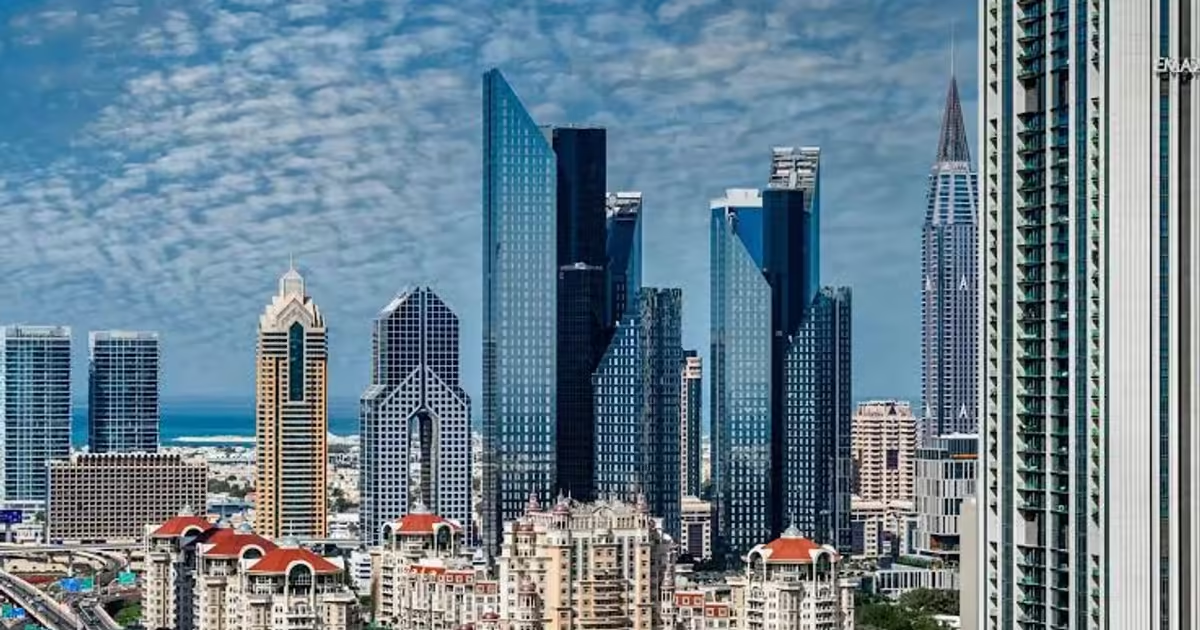

South Africa’s Absa Group became the latest lender to make that bet in late October, opening a sizeable Dubai office to better serve international clients. The country’s third-biggest bank is aiming to capture rising commercial traffic between the Middle East and Africa, serving African clients who want to do business in the Gulf as well as Gulf firms seeking a way into African markets.
Absa is following established rivals. Investec, Standard Bank and Nedbank already operate in the emirate. The Dubai branch adds to the bank’s international footprint, which already includes corridors in the UK and the US, plus a non-banking unit launched in China in 2024. Yet Dubai’s appeal extends well beyond major financial institutions, with the emirate also becoming a preferred base for privately owned businesses and a launchpad for African companies looking to expand into new markets.
The figures help explain the Dubai rush. Between 2016 and 2025 non-oil trade between Dubai and Africa grew 325%, reaching US $146 billion last.
The Chamber also reports that more than 30,000 African companies are now registered in Dubai, and that US $77 billion of African-linked investment has supported over 70,000 jobs.
Beyond the growth in trade and investment, Dubai’s appeal lies in what a lasting presence there can offer African businesses. Some commentators including Peter Burdin, former BBC Africa Bureau Chief, highlight that African firms that treat Dubai as a permanent base rather than a stepping stone will find themselves better positioned to access Gulf sovereign capital, structure deals across African markets, and compete for the infrastructure and technology partnerships that will define the continent’s next decade of growth.
The relationship is not a one-way street. Dubai and the wider UAE have become some of the biggest foreign investors in the African continent. The UAE committed more than US $110 billion to Africa between 2019 and 2023, the highest level of any single country in that period, with investments spanning ports, mines, agriculture and green energy. The UAE has also announced $1 billion to expand AI infrastructure and AI-enabled services across Africa.
Dubai’s institutions are building on the ground too. In July, Dubai International Chamber opened a representative office in Luanda, its eighth on the African continent. Dubai Chambers has also led business missions to Ghana, Ethiopia and South Africa, and it presents Africa as a central pillar of the emirate’s ‘D33’ economic agenda to double its GDP by 2033.
New Openings for Entrepreneurs
For African entrepreneurs, the UAE’s investments are already translating into easier access to customers and a better chance to scale production. Much of the capital is flowing into the infrastructure that exporters and manufacturers depend on, and Dubai-based companies are leading the way.
Ports are a clear example. DP World, headquartered in Dubai, has outlined an initial $830 million investment in Senegal’s Ndayane port, a project set to help exporters fulfil overseas orders faster and more efficiently. Its planned deep-sea port at Banana in the Democratic Republic of Congo is intended to welcome larger vessels and cut trade costs and transit times, opening up new routes to global markets.
Energy projects offer another opening. Reliable, affordable power has long been a constraint for African producers, and UAE-backed developers are now helping to ease it. UAE-based AMEA Power commissioned a 120-megawatt-peak solar plant in Kairouan, Tunisia, in December 2025, while Abu Dhabi’s Masdar has committed to mobilising US $10 billion for 10 gigawatts of African clean-energy capacity by 2030, a pipeline that promises steadier and more competitive operating conditions.
Alongside these opportunities on the continent, Dubai offers founders a place to build the relationships needed for start-ups to expand abroad. DIFC’s accelerator programmes connect participating start-ups with financial institutions, funding networks and regional market expertise.
Small Businesses Look to Export
Dubai is also courting smaller African players. The African Marketplace (AMP) Dubai 2026, held from 10 to 12 October, brought African and Caribbean entrepreneurs together with international buyers, prospective partners and the local business community. The event opened with a call to transform Africa’s small and medium-sized enterprises into serious exporters.
Taken together, these trends show how Dubai is cementing its role in connecting African enterprise with global investment and international markets.
Source: africa.businessinsider.com