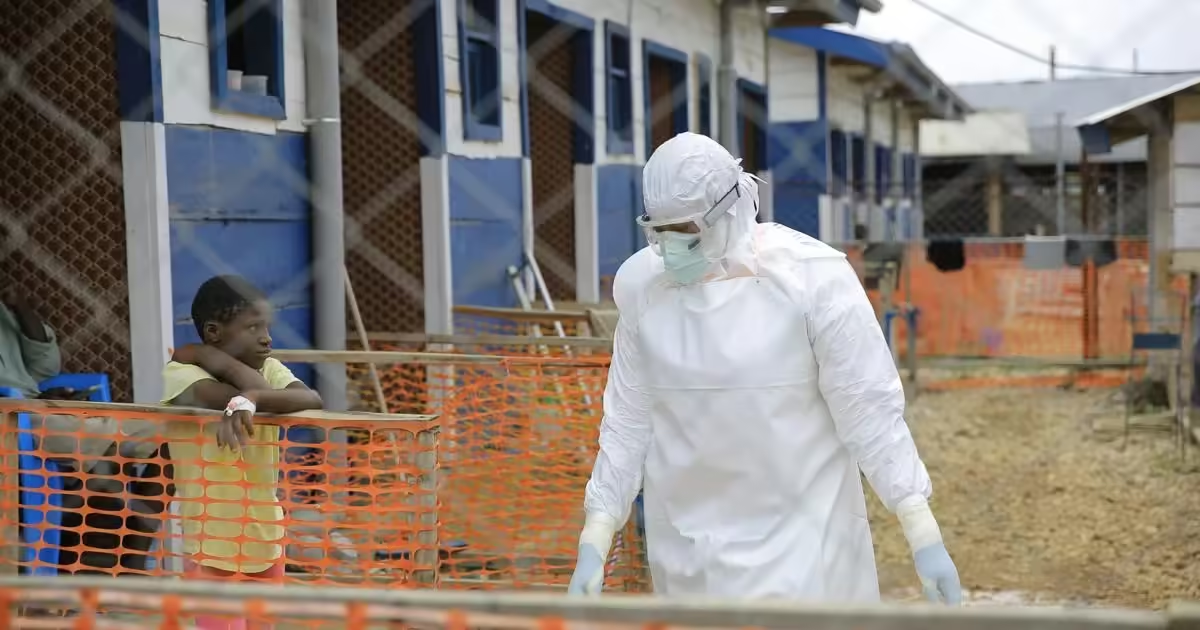

The World Health Organization (WHO) announced Wednesday, Nov. 4 that two new possible vaccines will enter clinical trials as a response to an Ebola outbreak that has killed more than 5,200 people in the Democratic Republic of the Congo (DRC).
The outbreak, caused by the Bundibugyo virus, has spread across eight provinces in the DRC and into nearby countries. With more than 10,500 confirmed cases reported in the DRC alone, it is now the second-largest Ebola outbreak on record, according to the Centers for Disease Control and Prevention (CDC).
It has become the deadliest outbreak in the country’s history with a case fatality rate of 48.6%, reported by public officials.
The vaccines are a new development to contain the outbreak. According to the WHO, there is currently no licensed vaccine specifically for Bundibugyo virus disease.
One vaccine, ChAdOx1 BDBV, is being developed by the University of Oxford and the Serum Institute of India. The other, mRNA-1469 is being developed by Moderna.
Cross-border spread complicates Ebola response
The virus can spread through contact with infected animals, touching contaminated objects or surfaces or through direct contact with the body of someone who has died from the disease, which can cause the disease to spread quickly through healthcare facilities. The current outbreak was declared in the DRC on May 15, 2026. .
Nigeria and Uganda have also declared cases of Ebola.
The spread beyond the DRC has raised concerns about cross-border transmission. The outbreak’s epicenter in eastern DRC has made it difficult for healthcare workers to reach and monitor patients, as the region is affected by armed conflict.
According to the United Nations, a nurse was killed and another healthcare worker was seriously injured in an attack while responding to an Ebola alert in the DRC’s Tshopo province on Oct. 24.
“I strongly condemn this attack and call for a thorough investigation,” Julien Harneis, the UN’s senior Ebola response coordinator said in a statement. “I urge communities to protect health workers and allow them to carry out their work safely.”
Despite the outbreak’s spread across several countries, the risk to the general American public remains low, according to the CDC.
However, U.S. officials have introduced additional precautions for international travelers to avoid spreading the outbreak into the country. Travelers who have been in the DRC within 21 days of their flight to the U.S. are temporarily restricted from boarding U.S. citizens who have been in Uganda or South Sudan and are flying back to the U.S. are subject to enhanced screening at designated airports.
Source: www.redandblack.com