
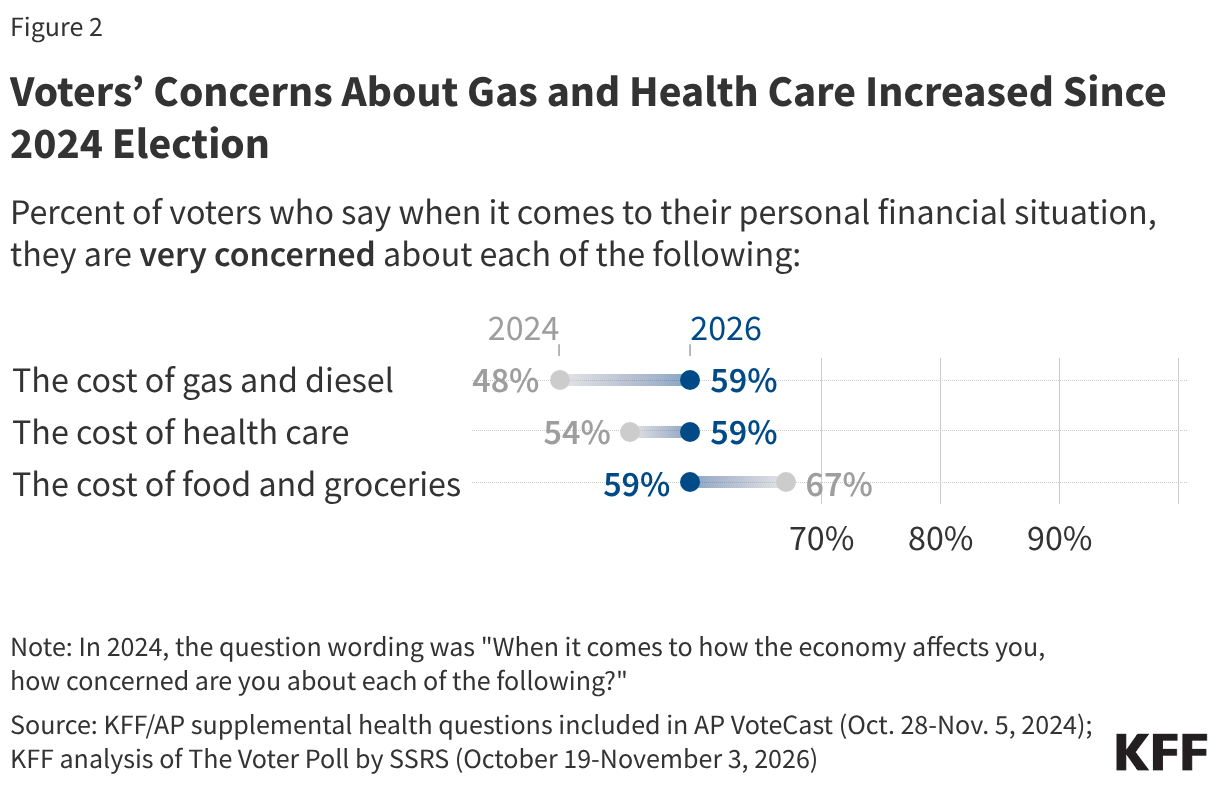
The cost of living was a top issue on voters’ minds this election, and health care costs played a key role in voters’ cost of living concerns alongside concerns over affording other essentials like gas and groceries. Among voters overall, about half said the cost of living was “crucial” to their vote for Congress, rising to about six in ten among those who voted for Democratic House candidates compared to fewer than four in ten who voted for Republican House candidates. Among voters overall, about six in ten said that when it comes to their personal financial situation, they were “very concerned” about gas and diesel, health care, food and groceries, while slightly fewer said the same about utilities. Among those who voted for Democratic House candidates, about two-thirds or more said they were concerned about the costs of these essentials, while fewer, about four in ten voters for Republican House candidates, said the same.
Compared to those who voted in the 2024 presidential election, voters’ concerns about the cost of gas and diesel were eleven percentage points higher in this election, and concerns about health care costs rose by five percentage points. At the same time, the share of voters who were “very concerned” about food and grocery costs declined by eight percentage points.
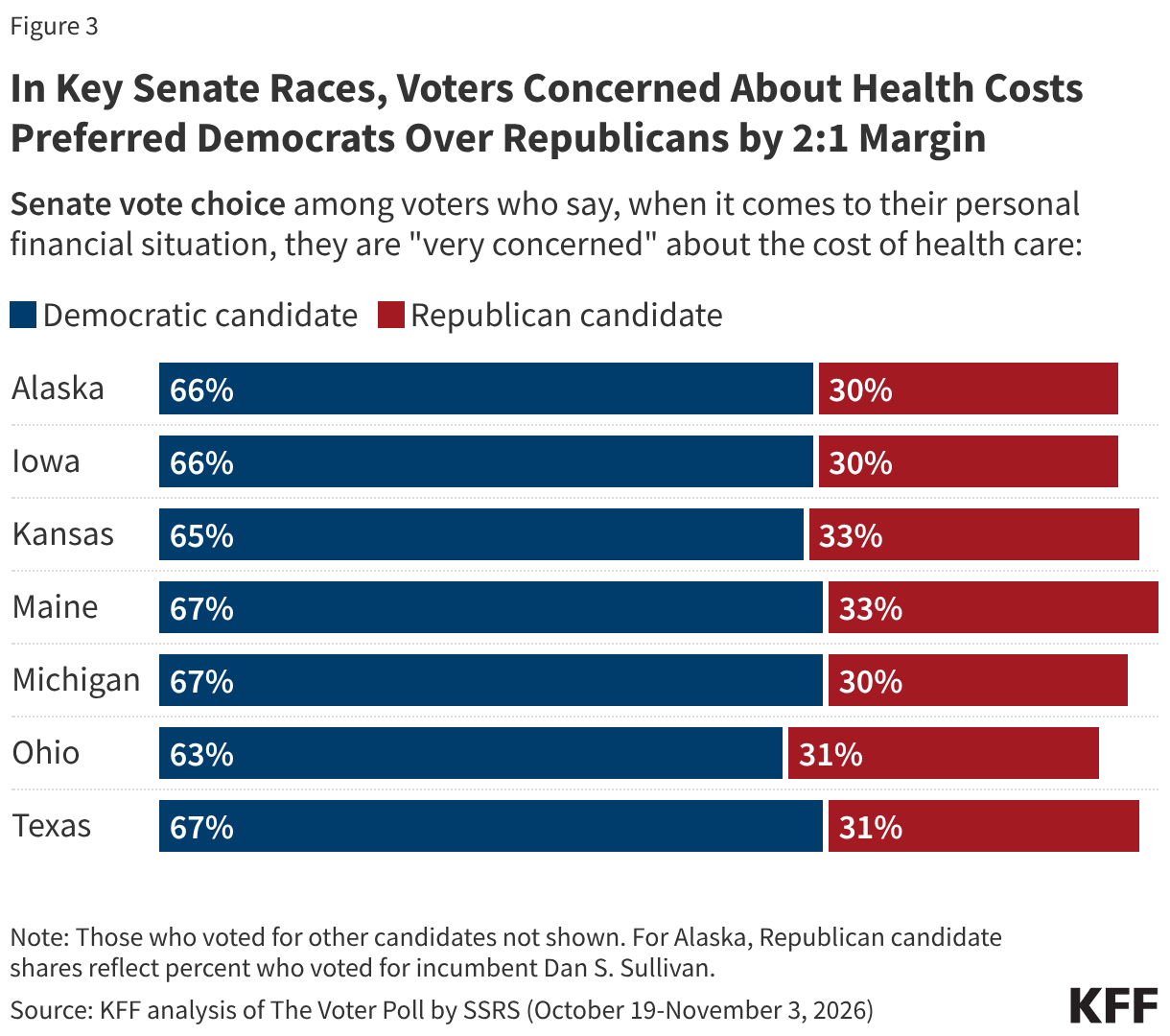
Democratic Senate candidates had a strong advantage among voters who were concerned about the cost of health care in key battleground states. About two-thirds of voters who were “very concerned” about health care costs said they voted for the Democratic Senate candidate across 7 states, while about three in ten of this group said they voted for the Republican Senate candidate. This reflects a reversal of dynamics from the 2024 presidential election, when voters who expressed similar cost concerns about health care favored President Trump over Vice President Harris by a ten-point margin.
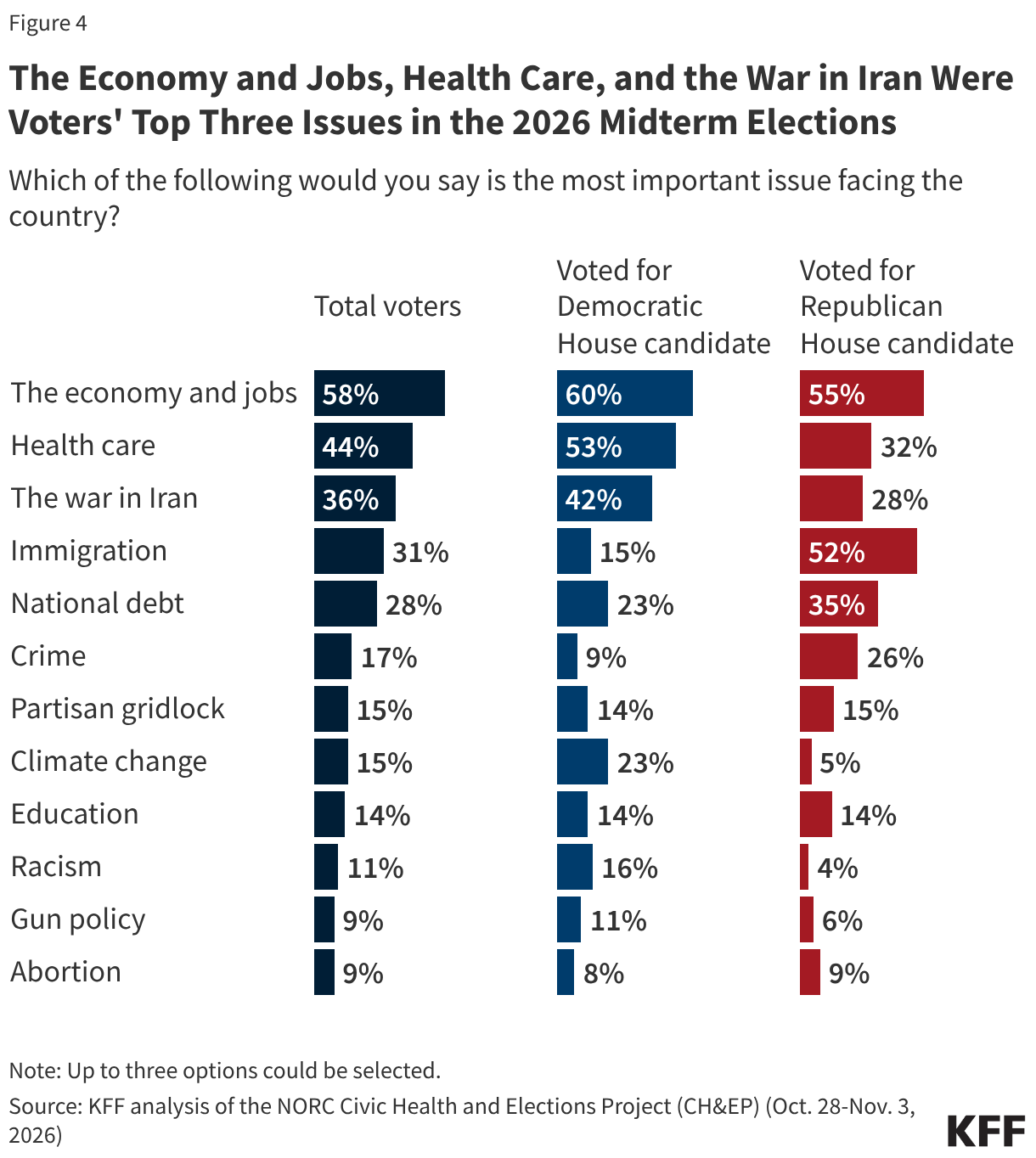
As with most previous elections, the economy was the number one issue in the 2026 midterms, with about six in ten voters overall saying “the economy and jobs” was the most important issue facing the country. While many polls ask voters to choose only one issue, NORC’s Civic Health and Elections Project poll allowed voters to choose up to three issues from a list, and health care was the second most selected issue among voters overall, with about four in ten saying it was an important issue. Health care was the second highest ranked issue for voters who said they voted for a Democratic House candidate, whereas more voters who chose Republican House candidates chose immigration as a top issue.
Source: www.kff.org