
Since June 2026, it has been available through the NHS for children aged eight and above, and adults with Stage 2 Type 1 Diabetes who meet the eligibility criteria.
Dr Danijela Tatovic from the University of Birmingham and QEHB said: “It is exciting to mark the paradigm change in treating Type 1 Diabetes. For the first time, we have a treatment that can delay progression to insulin-requiring Type 1 Diabetes, offering patients and their families valuable additional time before the condition develops further. We hope that immunotherapy will soon become a gold standard treatment for Type 1 Diabetes instead of insulin.”
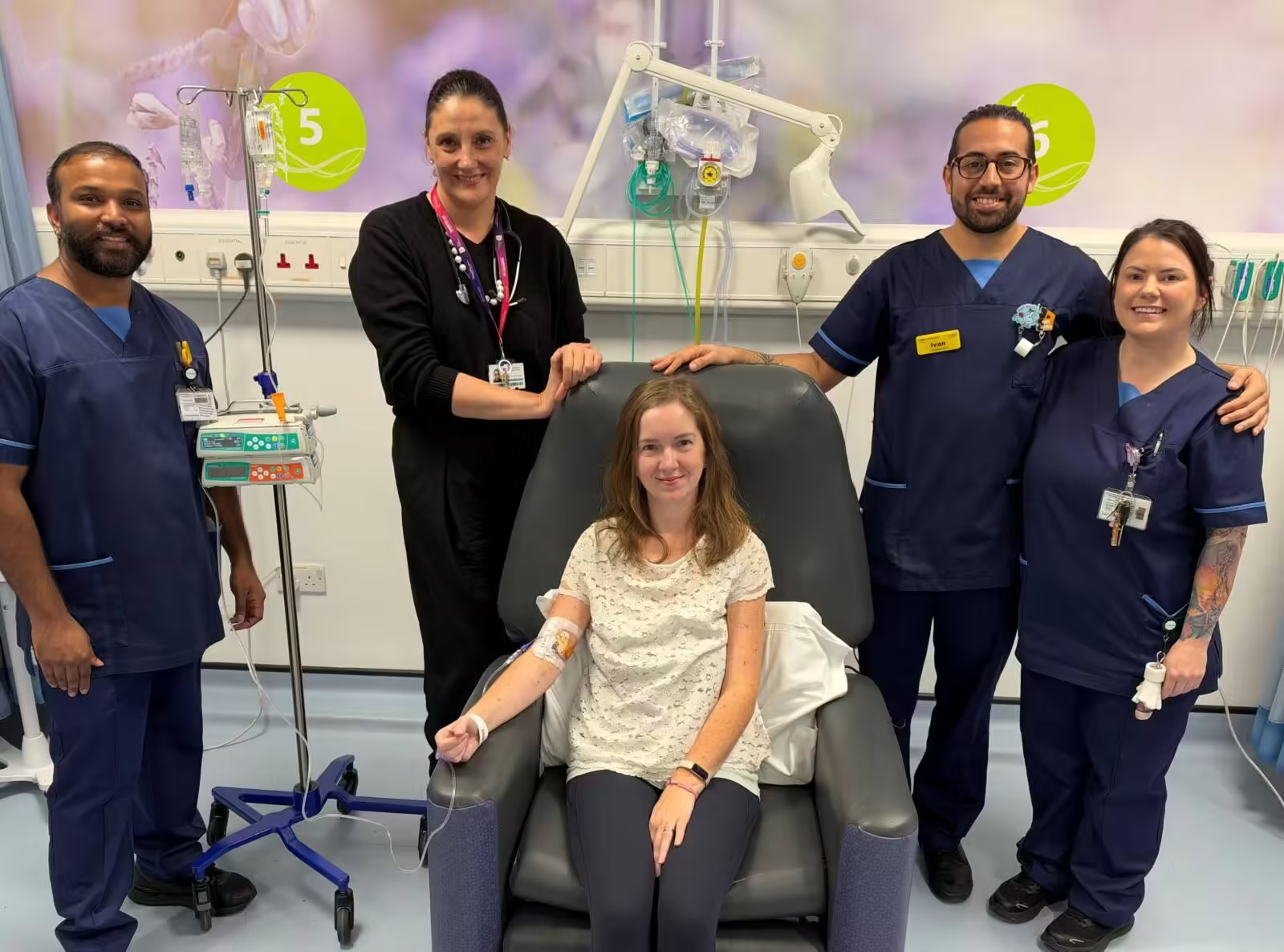
Annette Quilter, a 42-year-old from Shropshire, was identified as eligible for the treatment through specialist screening and assessment after being diagnosed with Stage 2 Type 1 Diabetes in the summer.
Speaking about starting the treatment, Annette said: “Being diagnosed was a bit of a shock but, luckily, it was picked up early enough for this new treatment to be an option for me. The team here have worked really hard to make it happen quickly, and I’m really pleased that I’ve been able to start treatment today.
“I have three small children and I’m a GP, so finding space in my life at the moment for Type 1 Diabetes and managing it every day would be an enormous ask. To have a little bit of breathing space before I need to start insulin, and time to prepare for that, means a great deal.”
How does Teplizumab work?
Research trials have shown that Teplizumab can halve the rate at which people progress to insulin treatment.
Patients receive one infusion a day for 14 consecutive days to complete the course of treatment. Each infusion (a drip into a vein) takes approximately 30 minutes, followed by a period of observation.
Annette added: “I’m very happy to be the first person in the UK to receive the treatment on the NHS, and I’m excited to see what it can do. To be diagnosed at a time when this treatment is available makes me feel very fortunate. The team have been wonderful.”
The milestone follows years of research and collaboration that have helped bring Teplizumab into routine clinical practice.
Matthew Metcalfe, Hospital Executive Director for the Queen Elizabeth Hospital Birmingham, said: “We are incredibly proud to have treated the first patient in the UK with Teplizumab at QEHB and to now be able to offer this pioneering treatment to eligible patients.
“Birmingham has been at the forefront of diabetes research for many years, and reaching this point is a testament to the collaboration between our clinicians, researchers and specialist teams, alongside colleagues at the University of Birmingham and partner NHS organisations. I’d like to congratulate everyone involved in helping bring this important new treatment to patients.”
Type 1 diabetes is a serious and lifelong autoimmune condition affecting up to 400,000 people in the UK. It is caused by an immune system attack on the insulin-producing cells in the pancreas, meaning they can no longer make enough insulin. Rapid diagnosis of type 1 diabetes is essential to avoid life-threatening complications.
The University of Birmingham’s work on Diabetes includes the development of ELSA which is a screening programme that has seen thousands of families take part in the landmark UK study led by Professor Parth Narendran and colleagues. ELSA has shown that childhood screening for type 1 diabetes is effective, and has laid the groundwork for a UK-wide childhood screening programme.
For more information about ELSA or ELSA 2, visit elsadiabetes.nhs.uk/taking-part/.
Source: www.birmingham.ac.uk