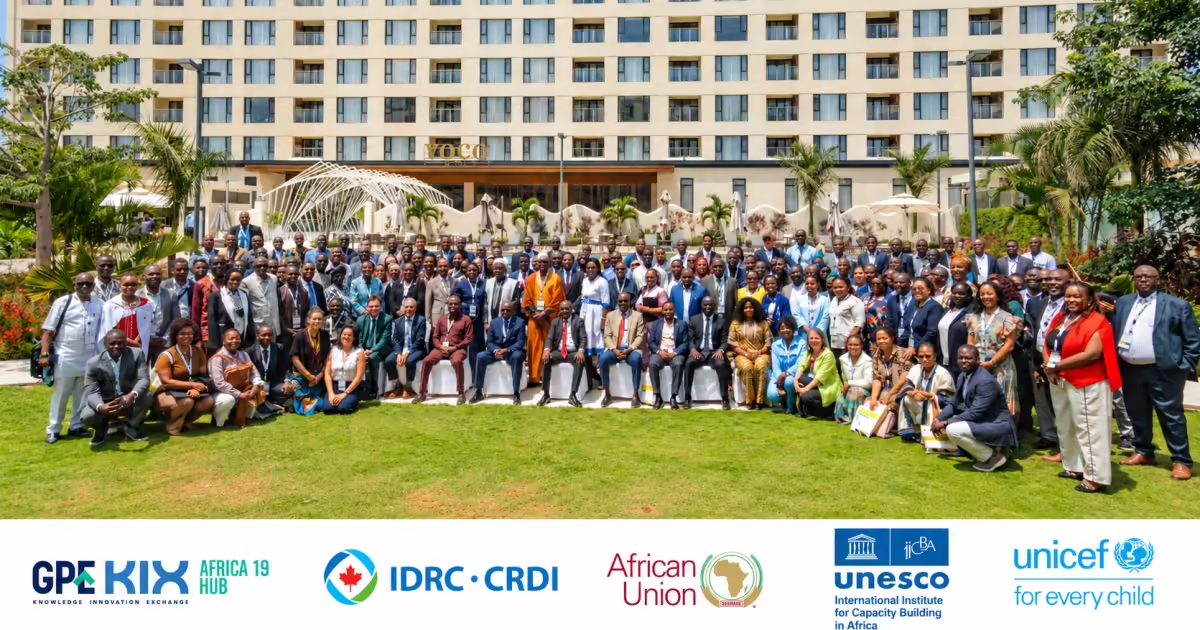

The 5th GPE KIX Africa Research Symposium opened today in Nairobi, Kenya bringing together policymakers, researchers, education and finance officials, and development partners to examine how African countries can finance equitable, quality education amid growing demand and pressure on public resources.
Taking place from 21 to 23 October 2026 under the theme “Education Financing: Navigating Fiscal Constraints, Driving Transformation,” the Symposium provides a platform to exchange country experiences and connect research with practical policy and financing decisions.
The Symposium is convened by the Global Partnership for Education’s Knowledge and Innovation Exchange GPE KIX Africa 19 and Africa 21 Hubs, a joint endeavour with Canada’s International Development Research Centre (IDRC), Canada, supporting the generation, sharing and use of evidence and innovation to strengthen education policy and practice.
During the opening ceremony, Mr. Noubatour Adoumtar, Coordinator of the African Union’s Pan-African Institute of Education for Development (AU-IPED), highlighted the importance of adequate and efficient financing for sustainable education systems. He also emphasized the value of partnerships and shared learning in addressing challenges related to resource mobilization and allocation. Kenyan Principal Secretary Hon. John Ololtuaa called for stronger connections between research, policy and budget decisions, encouraging researchers to translate evidence into practical recommendations. His remarks also underscored sustainable domestic financing, effective resource allocation and accountability.
The first day focused on understanding the pressures facing education systems, including constrained public revenues, debt burdens, growing enrolment and persistent disparities in access and learning. Participants examined the gap between financing commitments and the resources available to schools, alongside the need to sustain investment in teachers, foundational learning, learning materials and essential infrastructure.
Four priorities emerged from the discussions:
Securing adequate funding while improving spending efficiency. More effective use of existing resources is essential, but efficiency gains alone cannot close the education financing gap.
Allocating resources equitably. Financing decisions need to reflect differences in school conditions, learner needs and local circumstances, particularly for disadvantaged communities.
Ensuring timely and predictable funding. Approved budgets must translate into resources reaching schools, supported by expenditure tracking and accountability.
Connecting evidence with budget decisions. Stronger coordination between education ministries, finance ministries and parliaments can help research and reliable education data inform resource allocation and implementation.
On 22 October, the Symposium will turn to promising responses, drawing on country experiences and research to examine approaches that are improving education financing. The final day will focus on translating evidence and shared learning into policy and government action.
Participants can join the discussions online. View the programme and register for the remaining sessions
For media inquiries, please contact:
Information and Communication Directorate, African Union Commission I E-mail: [email protected]
Web: www.au.int | Addis Ababa, Ethiopia | Follow Us: Facebook | Twitter | Instagram | YouTube
Source: au.int