
- Transsion integrates phones, payments, and EVs (TankVolt), using Tecno and PalmPay to enable battery-swapping, accelerating Africa adoption while deepening China dependence.
- Chinese partnerships (Chery, ZMEV, BAIC) enable local assembly, training, and jobs but require real capacity building to reduce import reliance.
- Battery-swapping networks and app payments cut fees and increase convenience but risk locking Africa into Chinese batteries, software, and servicing networks.
What do a smartphone and an electric motorcycle have in common?
In many African countries, these different types of tech are increasingly inseparable. People use mobile financial tools on their phones to pay for their electric vehicles (EVs), as well as for charging and battery swapping.
Across the African continent, these tech offerings—from smartphones to EVs—are almost all from China.
Here’s the scenario. A bike rider or three-wheeler driver in Nigeria using a Tecno phone will most likely use the Chinese-founded Opay to pay monthly installments or for battery swapping. Most of these transactions happen online without the need for a third party.
Chinese-backed platforms in Africa tailor their services to African consumers, and the Chinese smartphone giant behind Africa’s most popular mobile brands—Tecno, Infinix, and Itel—is reinforcing this integrated ecosystem through its EV expansion strategy.
In addition to its electric motorcycles, Transsion has quickly added electric tricycles and is now introducing removable battery solutions for its vehicles, as well as what it calls “smart battery-swapping stations.”
The company’s move into Africa’s electric mobility sector has helped its TankVolt e-bikes become one of the top three electric motorbike brands since they were introduced in Uganda in 2023.
Just as Transsion revolutionized Africa’s mobile phone market with custom-made devices tailored for African consumers, building an EV ecosystem could do the same for the two- and three-wheeler sector, where riders want the solutions they need conveniently under one roof.
Beyond battery solutions, Transsion’s strong presence in the mobile app payments ecosystem with PalmPay could cut out most third parties, which often charge convenience fees that, when accumulated, can add up to sizeable amounts.
As e-mobility trends play out in many African countries, where nativizing solutions to cut costs is becoming increasingly important, watching how Transsion plays in that sector will shape the next phase of EV adoption in the two- and three-wheeler segment.
This week in the Chinese EV scene:
Rwanda Signs Vehicle Assembly, Offtake Deal With Chery
Rwanda has signed an investment agreement with Chinese automaker Chery Holding Rwanda and Ecofleet Solutions to establish an electric vehicle assembly plant, with plans to assemble more than 200 electric buses locally, which the government will then acquire for public transport. By connecting public transport electrification with domestic vehicle production, the approach gives the proposed factory an initial market while opening opportunities in electrified transport.
Why This Matters: Investing in local vehicle assembly is expensive, and the agreement with the Rwandan government to buy locally assembled buses creates an opportunity to keep capital from sitting idle. This dynamic is lacking in the push for local assembly, which may be one reason the sector is lagging behind.
Nigeria’s Yoyei Signs $115 Million 5,000 Chinese EV Partnership
Nigerian mobility company Yoyei Technologies has signed a $115 million, five-year partnership with China’s ZMEV to procure 5,000 electric vehicles. The first deliveries are expected in December 2026, and the agreement also covers charging infrastructure, technical training, maintenance, and after-sales support, with local assembly planned after the delivery of the first 2,000 vehicles.
Why This Matters: The partnership shows how African entrepreneurs are using Chinese supply relationships to create job opportunities beyond vehicle imports, including charging services and technical support. However, the proposed assembly program will matter more if it builds Nigerian engineering and manufacturing capacity, which would shift reliance from Chinese imports to sustainable local supply chains.
China’s BAIC FOTON Expanding Into Africa’s Commercial Vehicles
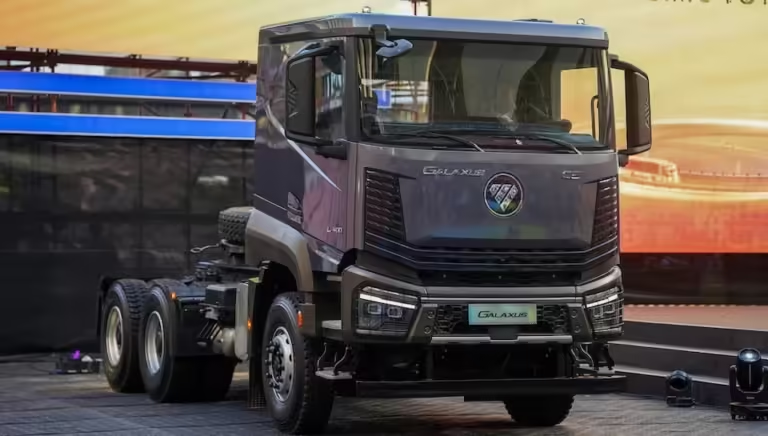
China’s BAIC FOTON is expanding its African commercial vehicle operations through new energy vehicle agreements covering 200 units in Mozambique and 100 each in Kenya and Ethiopia, alongside additional projects in Zambia. The company also signed six manufacturing cooperation agreements involving Tanzania, Kenya, and Zimbabwe, while launching new heavy trucks and a plug-in hybrid pickup for African markets.
Why This Matters: Agreements like these further show that Chinese manufacturers are extending their African strategy beyond vehicle exports into local assembly, financing, and after-sales support. It is also becoming increasingly evident that the automakers will continue pushing their brands using different strategies, including offering EVs alongside internal combustion engine (ICE) and plug-in hybrid vehicles.
SINOTRUK Distributor Introduces Sitrak Electric Trucks in Nigeria
Nigerian Sinotrucks Limited, distributor of China’s Sinotruk commercial vehicles, has introduced Sitrak electric trucks in Nigeria, targeting manufacturers and distributors seeking to reduce logistics costs. The initial rollout focuses on light trucks for urban deliveries, with plans to expand into medium-duty vehicles as charging infrastructure and market conditions improve.
Why This Matters: This rollout highlights how Chinese commercial vehicle technology is becoming a foundation for electrification beyond passenger cars, into freight and logistics. As fuel costs remain high, lower operating costs could influence business adoption and consumer prices. Businesses that adapt could be more competitive and efficient than those that remain reliant on diesel transport.
Changan Launches Huawei-Developed Deepal S09 Range-Extended SUV in Egypt
China’s Changan Automobile has launched its flagship six-seat Deepal S09 range-extended electric SUV in Oman and Egypt, expanding its new-energy vehicle offerings across the Middle East and Africa. Co-developed with Huawei, the vehicle combines a 1.5-liter turbocharged range extender, dual-motor four-wheel drive, advanced driver-assistance systems, and premium family-oriented features.
Why This Matters: The S09’s range-extender technology addresses a persistent constraint on electric mobility in markets where charging infrastructure remains uneven, allowing electric propulsion without relying exclusively on charging stations. As a premium (and pricey) vehicle, the Deepal S09 may take longer to reach ordinary buyers and will most likely be accessible as a second-hand vehicle in many African countries’ vehicle markets.
Chery’s Jaecoo J5 EV Enters Tunisia as Chinese Automaker Expands
The Chinese-made Jaecoo J5 has launched in Tunisia as the Chinese automaker expands its Jaecoo lineup in the market. The model brings another compact SUV option into a segment where Chinese automakers are seeking to attract buyers through pricing, technology and vehicle features.
Why This Matters: The expansion of Chinese electric SUV offerings gives emerging markets access to more vehicle options. While affordability remains a challenge, accompanying such launches with local assembly, technician training and reliable parts networks could help not only create a market that is not entirely dependent on China for its vehicles and parts but also empower people enough by giving them the means to afford the vehicles through substantive job creation which could spur economic growth.
Egypt Starts Dongfeng EV Production With 45% Local Content
Egypt has begun producing electric cars through state-owned El Nasr Automotive, manufacturing China’s Dongfeng MAGE models under a partnership with SN Automotive and Safi Group. The vehicles will incorporate 45% local content, while Egypt considers changes to EV import duties and component exemptions to encourage domestic manufacturing.
Why This Matters: Local EV supply chains have remained constrained due to the lack of uptake capacity. Egypt’s production model incorporating Chinese automakers could spur local manufacturing where producing components locally could reduce reliance on imports.
China’s TAILG Targets Morocco for African Expansion of Electric Motorcycles and Three-Wheelers
Chinese electric two- and three-wheeler manufacturer TAILG is seeking to expand its African operations through its Green Ride Africa initiative, with Morocco emerging as a potential hub for North African manufacturing and industrial cooperation. The company is proposing local assembly, component sourcing, battery-swapping networks, solar-powered mobility solutions, and technical training, building on its existing activities in Kenya and Ghana.
Why This Matters: TAILG’s approach highlights how Chinese EV companies are extending their African presence beyond vehicle exports into battery infrastructure, local assembly, maintenance, and skills development, particularly in the two- and three-wheeler segments that serve everyday transport and delivery businesses. However, the proposed industrial cooperation will matter most if it creates local suppliers, technical expertise, and viable after-sales networks rather than leaving African markets dependent on imported vehicles, components, and battery systems.
China’s Weichai Exports First 22 Electric Buses to Southeast Asia
China’s Weichai Truck has completed its first electric bus export to Southeast Asia, shipping 22 battery-electric chassis buses from Lianyungang to regional dealer partners. The shipment includes two vehicle configurations with seating capacities of 24 and 32 passengers, and driving ranges of 220 km and 260 km, respectively.
Why This Matters: As Chinese commercial vehicle manufacturers extend electric mobility into public transport and industrial shuttle services, they are creating additional options for fleet electrification in developing economies. The short battery ranges mean the vehicles are ideal for city operations, not long-distance travel. And this highlights the limits and opportunities of electrifying mobility. Since charging stations are not yet adequate, those who build the infrastructure will capture the value that comes with increased electric mobility adoption.
Thailand Raises Excise Tax on EV Imports, Including Chinese Models
Thailand’s Cabinet approved an increase in excise tax on imported battery-electric vehicles from 10 percent to 35 percent, while the rate for imported range-extended electric vehicles rises from 15 percent to 35 percent. The decision is intended to protect manufacturers investing in domestic production and encourage local assembly.
Why This Matters: Thailand’s policy shows how governments can use import taxation and domestic production incentives to influence where Chinese EV manufacturers invest and build supply chains. With this approach, could more Chinese investors set up shop in Thailand, or will they just pass the costs on to buyers? How this plays out will indicate whether taxation regimes build local industries or kill imports.
Chinese Automaker GAC opens its First Overseas Battery-Pack Factory in Thailand
Chinese automaker Guangzhou Automobile Group (GAC) has started production at its first overseas battery-pack factory in Thailand, supplying batteries for locally assembled Aion Y Plus electric vehicles. The Chonburi facility has a planned initial annual capacity of 7,000 battery packs, with potential expansion to 20,000, extending GAC’s Thai operations beyond vehicle assembly into battery manufacturing.
Why This Matters: As Chinese automakers begin to localize critical EV components alongside vehicle assembly, they create opportunities for host countries to develop manufacturing capacity, supplier networks and technical skills beyond bolting together parts imported from China. In Thailand, battery manufacturing could also open up opportunities for technology transfer, which could be localized to make it more autonomous and not locked to a distant IP owner.
China’s XPeng, Geely and Avatr Launch New Vehicles in Colombia
XPeng has introduced two variants of the L03 SUV in Colombia, offering buyers a fully electric version and a range-extender variant. At the same time, the state-owned joint venture Avatr Technology Co., Ltd. has introduced the 100% electric Avatr 11 and the extended-range Avatr 07 in the country. Geely, another Chinese automaker, has also opened preorders in Bogotá for the Starray EM-R.
Why This Matters: As Chinese automakers expand their reach through different powertrain options, these launches broaden choices for consumers in markets with varying charging infrastructure and affordability constraints. It also shifts competitive dynamics, which could lead to more variety, better quality, and better value in the vehicles that reach the market.
In Context:
Transsion’s expansion from smartphones and mobile payments into electric motorcycles, three-wheelers, and battery-swapping infrastructure shows how Chinese companies can offer mobility solutions “under one roof.” But will the single roof bring down the cost of EV adoption? If one ecosystem could give African riders cheaper, more convenient transport options, an Opay-style approach could reshape the African vehicle market and EV adoption across mobility modes.
The Takeaway:
Convenience comes at a cost. An integrated ecosystem could reinforce dependence on Chinese-owned batteries, payment platforms, software, and servicing networks. The potential strength of this integration makes it even more important for African countries to develop their local battery technology, component supply systems, and competing digital solutions to capture the value of the e-mobility revolution.
Source: chinaglobalsouth.com