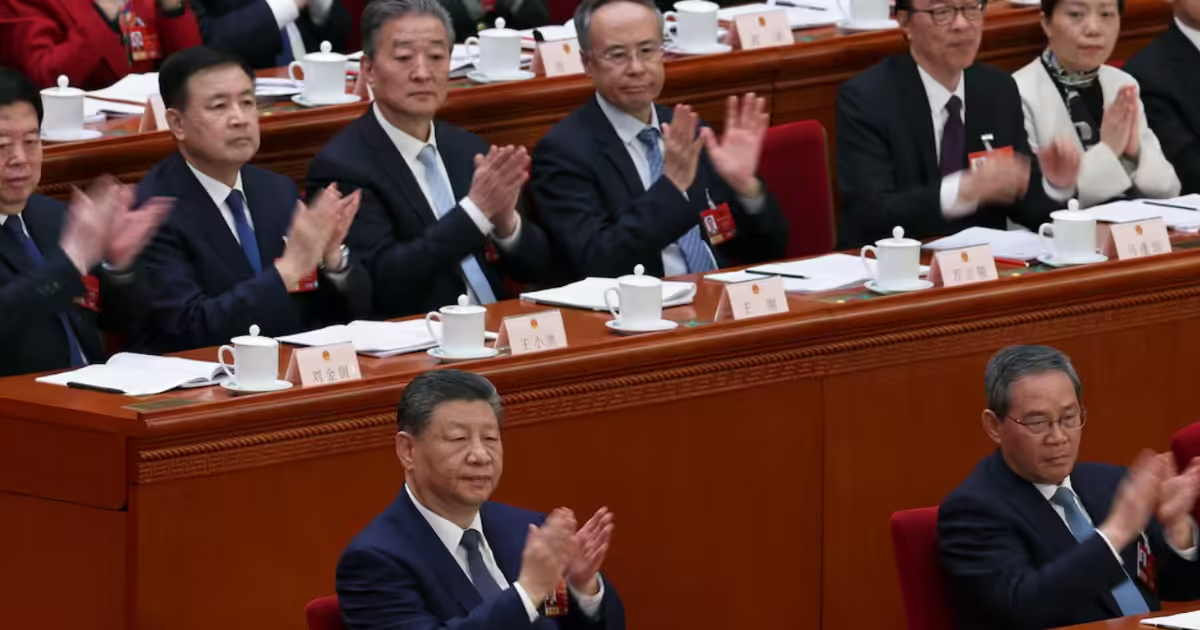

The Anti-Cross-Border Corruption Law was passed on Friday, November 6, by the Standing Committee of the National People’s Congress, according to state news agency Xinhua.
The legislation establishes a framework for handling cross-border corruption cases, international cooperation, corporate compliance and legal liability.
Its adoption comes as Chinese companies maintain a growing presence in African infrastructure, mining, energy, manufacturing and other strategic sectors, exposing an increasingly valuable commercial relationship to closer scrutiny under Beijing’s domestic laws.
Chinese companies operating across Africa face greater compliance pressure
The legislation requires Chinese companies conducting business internationally to establish anti-corruption compliance functions suited to their size, business activities and exposure to risk.
Reuters reported that the law also strengthens China’s efforts to track down fugitives, prevent suspects from fleeing overseas and recover illicit assets.
For Chinese contractors and investors operating in Africa, the requirements could increase scrutiny of transactions involving government contracts, mining concessions, infrastructure financing and public procurement. Companies may need stronger internal controls to identify bribery, improper payments and other corrupt practices connected to their overseas operations.
The implications extend across a substantial trading relationship. China-Africa trade reached a record $348.05 billion in 2025, rising 17.7% from the previous year, according to Chinese customs data. Chinese exports to Africa accounted for $225.03 billion, while imports from the continent totalled $123.02 billion, leaving Africa with a $102.01 billion trade deficit.
China’s economic interests also extend beyond merchandise trade. Its companies have invested heavily in African mining, construction, energy and transport infrastructure, while Chinese policy banks have financed major projects across the continent.
The law could strengthen Beijing’s ability to investigate corruption involving Chinese nationals and companies abroad and cooperate with foreign authorities on asset recovery. However, it does not give China automatic jurisdiction over African public officials or replace the anti-corruption laws of African countries.
For African governments, the legislation could create additional avenues for cooperation with Beijing on corruption investigations involving Chinese businesses, while raising questions about how evidence-sharing, extradition and asset recovery will work in practice.
Source: africa.businessinsider.com