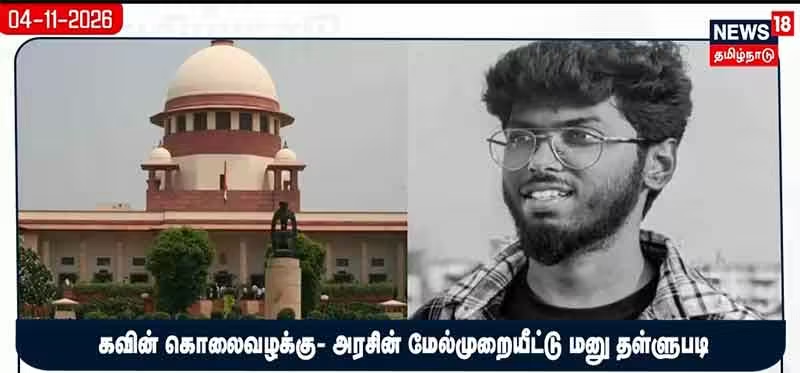

The Supreme Court’s rejection of the Tamil Nadu government’s appeal in the Kavin Selvaganesh murder case has exposed serious weaknesses in the CB-CID investigation. When the machinery of justice fails to establish accountability in an alleged caste-based honour killing, the damage extends far beyond an individual case.
The murder of 27-year-old Kavin Selvaganesh in Tirunelveli on July 27, 2025, was not merely another incident of criminal violence. It brought back an uncomfortable question that continues to haunt Indian society: Can an individual’s freedom to love and choose a life partner survive the deeply entrenched structures of caste?
Kavin, a young software professional from Arumugamangalam in Thoothukudi district, belonged to a Scheduled Caste community. He was allegedly murdered because he and a woman from a Most Backward Class were in love with each other.
What followed was expected to be a determined investigation into a crime that raised serious questions about caste prejudice, family involvement and institutional accountability. Instead, the investigation itself has become a subject of judicial criticism.
The Supreme Court’s Disapproval
On November 5, 2026, the Supreme Court dismissed the Tamil Nadu government’s appeal challenging the Madurai Bench of the Madras High Court’s decision to quash the chargesheet against Saravanan and Krishnakumari, the parents of the principal accused. Both were police sub-inspectors.
The observations of the Supreme Court were particularly significant. The judges expressed serious dissatisfaction with the manner in which the criminal case had been handled, remarking that the case had been dealt with in precisely the manner in which a criminal investigation should not be conducted.
This is an extraordinary indictment of the investigative process.
The state government’s appeal had sought to restore the charges against the couple. However, the Supreme Court declined to interfere with the High Court’s decision.
The rejection raises an uncomfortable question: If the investigating agency had sufficient material to implicate the accused, why did it fail to establish the necessary evidentiary foundation before the courts?
CB-CID Investigation Under Scrutiny
The investigation was transferred to the Crime Branch-Criminal Investigation Department (CB-CID) after the involvement of police personnel in the case came to light.
The CB-CID subsequently filed an approximately 800-page chargesheet. It alleged that Saravanan and Krishnakumari had known about their daughter’s relationship with Kavin since 2016–17. The chargesheet further alleged that Saravanan had warned his daughter and spoken to Kavin over the telephone, while Krishnakumari had contacted Kavin’s mother and warned her against the relationship.
The investigating agency also alleged that the parents had met their son after the murder and assisted in destroying evidence.
However, the Madras High Court found serious deficiencies in the evidence presented against the couple.
The prosecution relied substantially on call detail records and mobile tower locations to establish the alleged meeting between the parents and their son. The court observed that such technical evidence, by itself, could not conclusively establish that the individuals had met, much less prove the contents of an alleged conversation.
There was no independent eyewitness, CCTV footage, photograph, video recording or other direct evidence establishing the alleged meeting.
The court also questioned the prosecution’s allegation that the father had helped conceal the crime, particularly when the prosecution’s own version indicated that he had informed the police that his son had committed the murder.
These deficiencies raise serious questions about the investigative competence of the CB-CID.
A Pattern of Institutional Failure?
The concerns surrounding the investigation did not emerge overnight.
Earlier, in January 2026, the Madras High Court had expressed dissatisfaction with the CB-CID’s failure to arrest Krishnakumari, who was then a suspect in the case. The court warned that selective investigative discretion, particularly when the accused belonged to the law enforcement establishment, could undermine public confidence in the fairness of criminal investigations.
This observation deserves particular attention.
When police officers themselves become suspects, the investigating agency carries an additional responsibility to demonstrate independence, impartiality and professional integrity.
The credibility of an investigation cannot depend on the institutional position of the accused. The law must operate equally, whether the accused is an ordinary citizen or a police officer.
The State’s Responsibility cannot End with an Appeal
The Tamil Nadu government’s decision to challenge the High Court’s order before the Supreme Court indicated its willingness to contest the discharge of the accused parents. However, the dismissal of that appeal exposes the limitations of relying on litigation to compensate for weaknesses in investigation.
A government committed to justice must ensure that investigations are conducted professionally from the beginning. An appeal cannot repair evidence that was never properly collected, preserved or established.
At the same time, the Supreme Court’s dismissal does not establish the innocence or guilt of the parents as a matter of fact. It means that the chargesheet against them cannot proceed on the material examined by the courts. The case against the principal accused and other accused persons must continue according to law.
Justice Requires More Than Judicial Pronouncements
The Supreme Court’s observations should serve as a warning to the Tamil Nadu police establishment.
An investigation that fails to withstand judicial scrutiny weakens public confidence in the criminal justice system. More importantly, it deepens the suffering of families who approach the state seeking justice for their loved ones.
Kavin’s family deserves more than official assurances, lengthy chargesheets and successive rounds of litigation. They deserve a credible investigation, a fair trial and accountability established through law.
The larger question is not simply why the government’s appeal was dismissed. It is why an investigation entrusted to a specialised agency failed to establish the allegations against the accused parents with legally sustainable evidence.
Justice must not become a casualty of investigative incompetence.
When caste prejudice takes a life and institutional failures obstruct accountability, constitutional democracy faces a serious moral challenge.
Source: countercurrents.org