
ABERDEEN PROVING GROUND, Md.– “Proactive Analysis: Delivering a Decision Advantage” was the theme of the U.S. Army Operations Research Symposium, known as AORS, from Sep. 14-16. Participants were able to attend in person and virtually via MS Teams.
The U.S. Army Transformation Decision Analysis Center, known as TDAC, hosted this year’s multi-day event, which included 361 registered in person and virtual attendees. With over 82 presentations, attendees represented more than 34 organizations and 12 working groups.
TDAC Director, Larry Larimer, kicked the event off with a welcome message, sharing, “We as operations research and systems analysts (ORSAs) are to look over the horizon. We need to look at what our analysis is telling us, what the data is telling us, and be prepared to use that existing data we generated to answer questions”.
The annual event provides members of the Army’s analytic community, including U.S. government employees, contractors and approved foreign personnel from partner nations such as the United Kingdom, Republic of Korea and Germany, an opportunity to share professional knowledge gained from ongoing and completed analysis. AORS allows analysts to meet with colleagues, exchange experiences and insights appropriate for general and international audiences, and participate in constructive dialogue designed to challenge, broaden and expand the perspective of the analytical community.
This year, AORS also featured an organizational showcase hosted by operations research/systems analysis (ORSA) professionals. The showcase brought together Army officers (Functional Area 49) with data and quantitative analysis expertise and Civilian members of the Analysis, Modeling and Simulation Career Program (CP 36) where they provided organizational and technological overviews, highlighted career advancement opportunities and afforded participants an additional venue for networking.
Lt. Gen. Michael “Mac” McCurry, commanding general, U.S. Army Futures and Autonomous Systems Command served as keynote speaker by providing remarks remotely from the Pentagon.
McCurry’s keynote remarks focused on the Army’s shift from organizational restructuring to improving the processes that support faster, more effective decision-making as it modernizes for future warfare. He emphasized the growing role of analysts in helping commanders make sense of increasingly larger volumes of battlefield data, using artificial intelligence effectively and anticipating senior leaders’ decision needs. He said the Army must combine technology, data, rigorous analysis and human judgment to accelerate decisions while ensuring increased speed does not come at the expense of sound decision-making.
McCurry said, “Data alone can inundate and slow down a commander. Data with the right analysis is a game changer.” He continued to emphasize, “As you do your rigorous analysis, we need you to anticipate senior leaders’ needs so that we’re one step ahead to make those decisions faster.”
During the first day of AORS, the ORSA Hall of Fame induction and Army Analysis Awards ceremonies were held. The ORSA Hall of Fame honors those individuals who have contributed significantly to ORSA over a sustained period, have significantly influenced ORSA through doctrinal or technical accomplishment and innovative development, and have demonstrated outstanding personal leadership and noteworthy achievements that inspired others in operations research.
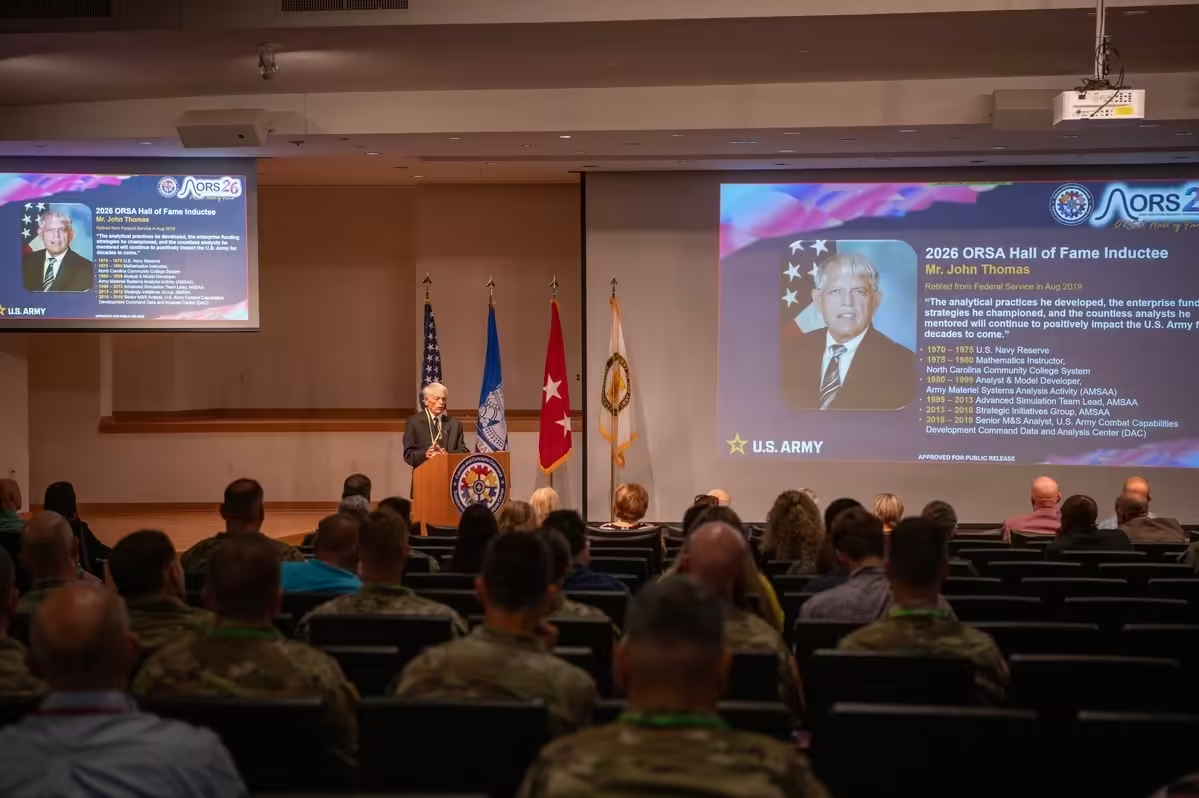
This year’s inductees were John Thomas and Allan Resnick.
Mr. John Thomas is recognized for selection to the Army Operations Research Symposium Hall of Fame. During a nearly 40-year career, Thomas advanced Army analysis, modeling and simulation through innovative work in directed energy, target acquisition, anti-armor systems and Soldier-in-the-loop simulation, influencing major acquisition and programming decisions and strengthening capabilities for Soldiers and civilians.
View original
During a nearly 40-year career, Thomas advanced Army analysis and modeling and simulation by developing innovative methodologies and pioneering capabilities in directed energy, target acquisition, anti-armor systems and Soldier-in-the-loop simulation. His work influenced major Army acquisition and programming decisions, helped develop and validate OneSAF, strengthened Army modeling and simulation capabilities, and earned recognition for his technical expertise and service to soldiers and civilians.
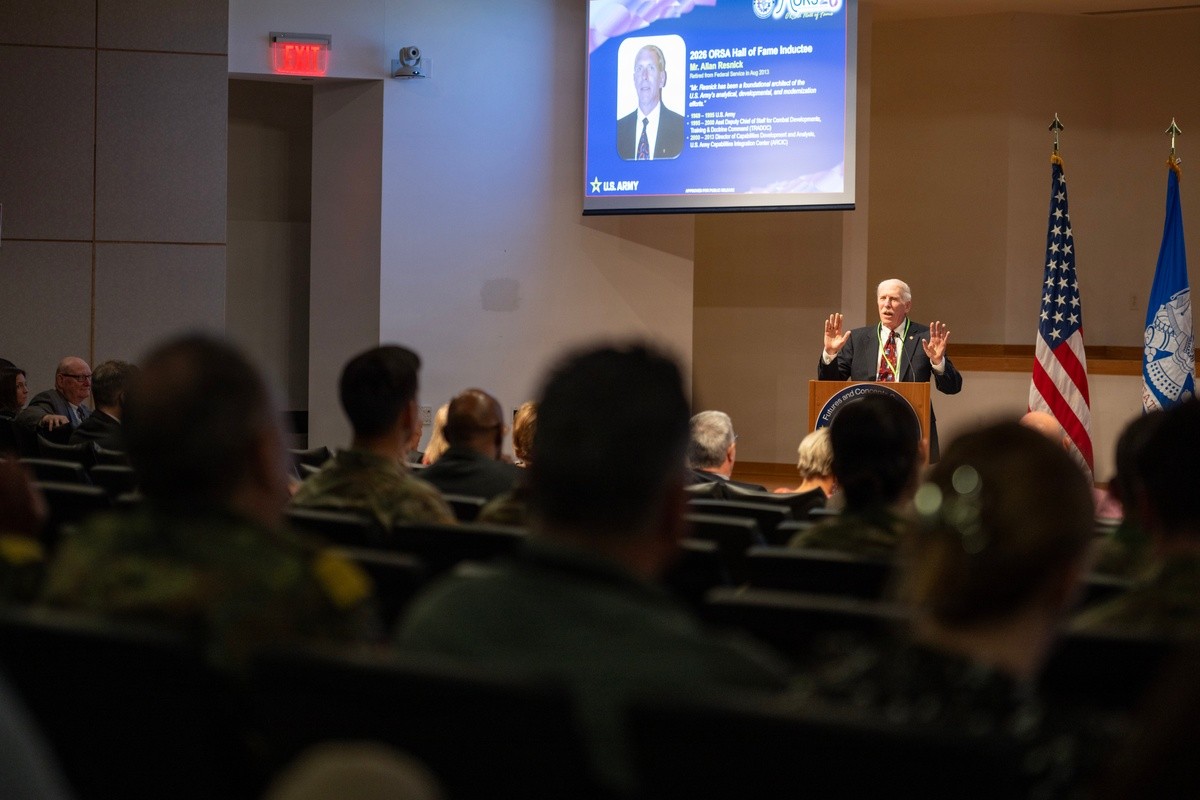
Mr. Allan Resnick is recognized for selection to the Army Operations Research Symposium Hall of Fame. Throughout his career, Resnick helped shape Army analysis and modernization through analytical concepts and models for artillery survivability, ammunition resupply and future force structure, while supporting major acquisition decisions for systems including Patriot PAC-III, ATACMS and AFATDS.
View original
Resnick, throughout his career, helped shape Army analysis and modernization by developing influential analytical concepts and models addressing artillery survivability, ammunition resupply and future force structure. He directed major cost and operational effectiveness analyses for systems including Patriot PAC-III, ATACMS and AFATDS, helping ensure significant acquisition decisions were supported by objective analysis. Resnick also developed the Capabilities Needs Analysis, establishing an enduring Army framework for identifying and assessing mission requirements.
After the hall of fame inductees were completed, additional awards recipients were recognized:
The following are the 2026 Army Analysis Award Recipients:
Dr. Wilbur B. Payne Award Winner
The United States Military Academy Operations Research Center and First Army and study participants:
May. Abaigail Crocker
Maj. Kyle Krebs
Lt. Col. Melissa Sayers
Michael Wherry
Col. David Beskow
2026 U.S. Army Junior Analyst Award Military
Maj. Melinda Sparks
Transformation Decision Analysis Center
2026 U.S. Army Junior Analyst Award Civilian
Evelyn Welling
U.S. Army Combat Capabilities Development Command
Armaments Center
AORS Best Paper Award Winner
Maj. Micah Hurst
Transformation Decision Analysis Center
“Military Entrance Processing Station (MEPS) Location and Capacity Optimization.”
Day one also featured a panel discussion with senior Army leaders, including Chris Barrett, executive director of the Army Evaluation Center; John Helms, technical director of the Center for Army Analysis; Cody Beck, deputy director of TDAC; and Col. Sean Madden, chief data science officer for U.S. Army Western Hemisphere Command.
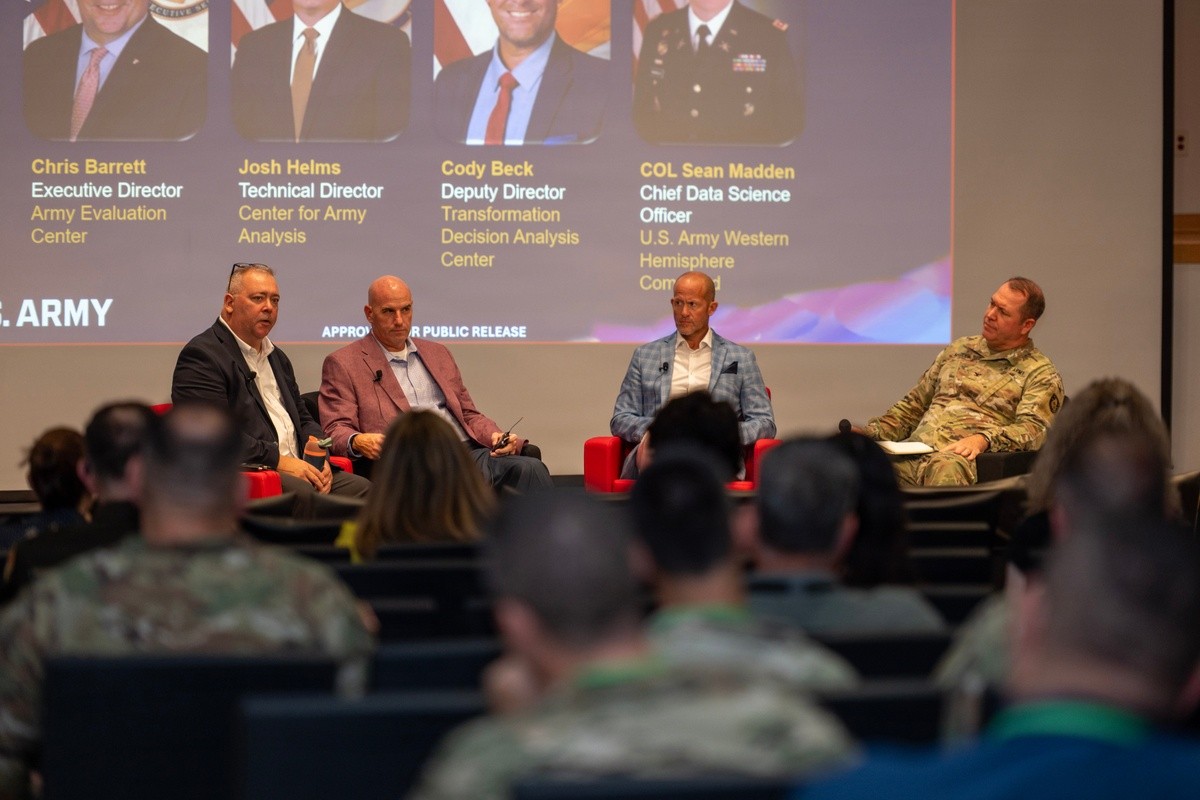
Senior Army leaders participate in a panel discussion during the Army Operations Research Symposium, including Chris Barrett, executive director of the Army Evaluation Center; John Helms, technical director of the Center for Army Analysis; Cody Beck, deputy director of TDAC; and Col. Sean Madden, chief data science officer for U.S. Army Western Hemisphere Command. The panel examined how the analytic community can provide agile, rigorous support amid rapid technological change, focusing on operational decision cycles, data accessibility in theater and workforce challenges.
View original
This panel’s discussion focused on current operational decision cycles and rapid technological disruption that demands a decisive shift from traditional, protracted analysis toward proactive, agile analytic support. In this session, senior leaders examined the strategic imperatives facing the analytic community. Panelists addressed balancing analytic speed with rigor, ensuring standardized data accessibility in theater, and overcoming workforce deficits stemming from recent hiring constraints and personnel shaping initiatives.
The discussion also explored modern mentorship models required to accelerate junior analyst readiness, strategies to dismantle joint and allied data silos, and practical approaches to communicating uncertainty so operational commanders can act on complex analysis with complete confidence.
Please check out https://www.aors.army.mil/ for more info on AORS.
Source: www.army.mil