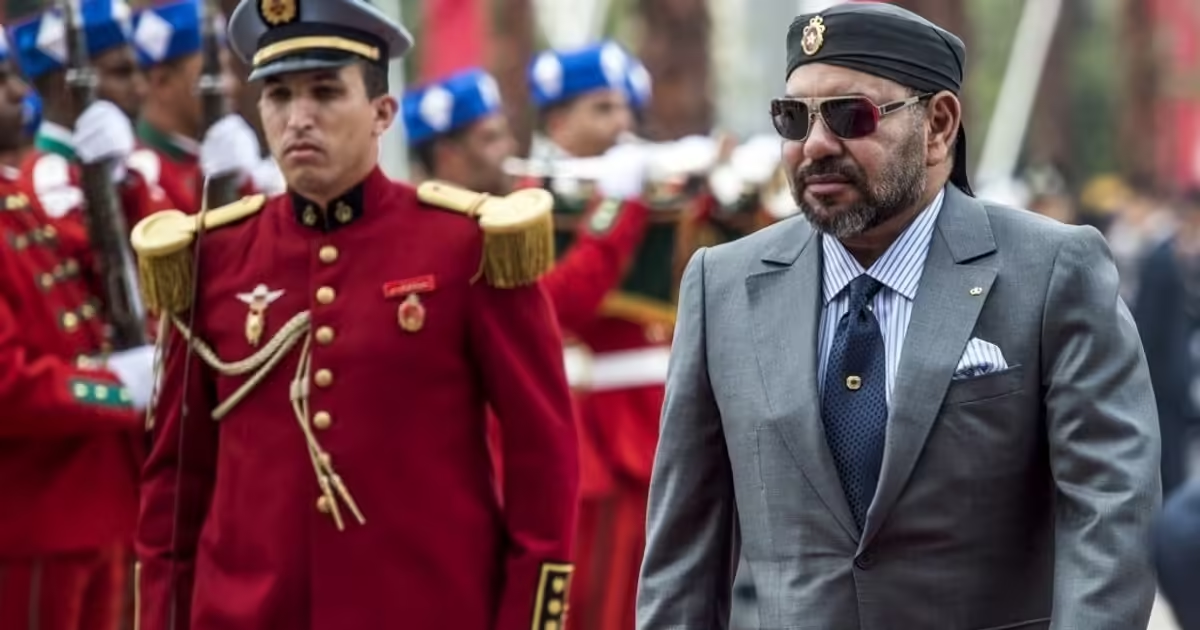

The directive opens a sensitive new phase in one of Africa’s longest-running territorial disputes, following a US-Russia clash at the UN Security Council that left members unable to extend the mandate of the United Nations Mission for the Referendum in Western Sahara, known as MINURSO.
King Mohammed VI issued the instructions during a working meeting at the Royal Palace in Rabat on Wednesday, 4 November.
The monarch identified three immediate priorities: defending Morocco’s territorial integrity and national unity, protecting national security, and safeguarding residents, particularly those in what Morocco calls its southern provinces.
Morocco’s official Royal Cabinet statement said the King instructed the relevant authorities to implement the priorities with “firmness and vigilance” within their respective areas of responsibility.
The meeting was attended by Head of Government Fatima Ezzahra El Mansouri, Royal Adviser Fouad Ali El Himma, Interior Minister Abdelouafi Laftit and Lieutenant General Mohammed Berrid, inspector general of the Royal Armed Forces and commander of the Southern Zone.
However, the Royal Cabinet did not announce additional military deployments, changes to Morocco’s existing security arrangements or the establishment of a new command structure.
Russia and the US leave MINURSO without a mandate
MINURSO’s mandate expired at midnight on 31 October after the Security Council failed to agree on the future of the mission.
A US-drafted resolution received 11 votes but was vetoed by Russia, while China and other council members abstained. A competing Russian proposal to extend MINURSO until October 2027 received only three votes and failed to secure the nine required for adoption.
The United Nations subsequently confirmed that MINURSO’s operations had ended and warned that the mission’s departure did not remove the Western Saharan population’s right to self-determination. It also urged all parties to exercise restraint amid the risk of renewed hostilities.
The outcome ends the mandate of a mission established by the Security Council in 1991 to support a proposed referendum in which Western Sahara’s people would choose between independence and integration with Morocco. That referendum was never held.
Morocco administers most of Western Sahara and considers the territory part of the kingdom. The Polisario Front, which is backed by Algeria, seeks an independent state.
Rabat has proposed autonomy for the territory under Moroccan sovereignty. The United Nations continues to describe Western Sahara as disputed territory and says any political settlement must provide for self-determination.
Morocco takes charge of the UN withdrawal
King Mohammed VI instructed the Interior Ministry’s MINURSO Coordination Office to work with the United Nations on the mission’s liquidation and withdrawal.
The office will coordinate the departure of personnel and the handling of facilities, vehicles and equipment to ensure the process proceeds in an orderly manner.
At the time its mandate expired, MINURSO had approximately 200 civilian employees, military observers and staff officers drawn from more than 35 countries. It operated from its headquarters in Laayoune, nine field sites and a liaison office in Tindouf, Algeria.
The UN has dispatched a smaller liquidation team to oversee the disposal or transfer of equipment.
Morocco said its commitment to the ceasefire would remain unchanged despite MINURSO’s departure. The King also ordered the continuation of development projects in the territory and instructed officials to monitor events closely.
The Royal Cabinet presented the end of the mission as a diplomatic gain for Morocco and said international support had increasingly shifted towards its autonomy proposal.
The UN, however, said it would continue pursuing a peaceful and mutually acceptable political solution through Secretary-General António Guterres’ personal envoy, Staffan de Mistura.
A consequential test for Africa’s wealthiest monarch
Mohammed VI’s intervention places his authority directly behind Morocco’s transition into the post-MINURSO period.
The King has occupied the throne since 1999 and exercises significant influence over Morocco’s political, diplomatic and economic direction. He is widely described as Africa’s wealthiest monarch, although no authoritative, current breakdown of his personal fortune is publicly available.
His wealth is associated with extensive interests held through the royal family’s investment structures, including Al Mada, whose portfolio covers banking, mining, energy, telecommunications, retail and real estate.
The immediate test is whether Morocco can oversee MINURSO’s withdrawal without triggering renewed instability along the territory’s ceasefire lines.
The UN has warned that the Security Council’s failure to agree on the mission’s future leaves the territory without the peacekeeping structure that had monitored conditions for more than three decades.
Morocco’s order combines a firm assertion of sovereignty with a commitment to the ceasefire. Its implementation will determine whether the conclusion of MINURSO becomes a controlled diplomatic transition or the beginning of a more volatile phase in the Western Sahara dispute.
Source: africa.businessinsider.com